
Bonus Abuse Risks: What Players Can Lose and How to Stay Safe

The main bonus abuse risk for a player is losing the bonus, the winnings attached to it and sometimes the whole account, and the cause is often a small rule slip rather than fraud. Operators use "bonus abuse" as a broad label, so a second account, a bet over the stake cap or a shared household connection can all land in the same bucket. Knowing where the lines sit, and keeping a record of how you played, is the best protection for your balance.
This guide is for players who claim welcome offers, reload bonuses and bonus codes. It explains what counts as abuse, what it can cost you, how a legitimate player can get flagged by mistake, and what to do if that happens.
TL;DR
- Bonus abuse means exploiting a promotion beyond its intended use, most often through multiple accounts, fake identities or technical loopholes. Claiming an eligible offer once, within the terms, is not abuse.
- The realistic risks are forfeited bonus funds, voided winnings, blocked future promotions, a closed account and a withheld withdrawal.
- Most player-side trouble comes from rule breaking, not fraud: a second account, a bet above the maximum stake, or a restricted game.
- Keep your own records of every bonus, bet and withdrawal request, and read the terms before you claim.
- Provably fair verification proves a single bet was not tampered with. It does not decide whether you were eligible for a bonus.
Table of Contents
- What bonus abuse actually means
- Hunting, rule breaking and fraud are not the same thing
- The risks you actually face as a player
- How legitimate players get flagged by mistake
- Terms to read before you claim anything
- Where provably fair verification helps, and where it stops
- Staying on the safe side: a practical routine
- If your account is flagged or a withdrawal is held
- Our perspective
- Check the numbers before you claim
- FAQ
- Sources
What bonus abuse actually means
A bonus, in the UK Gambling Commission's glossary wording, is funds or an equivalent an operator adds to a customer's account for placing wagers, including deposit-matching funds and free spins. A promotion is the offer wrapped around that bonus, subject to its terms and conditions. That is a British regulator's definition, but the structure is the same in most markets, including the US.
Bonus abuse is what happens when someone gets more out of that promotion than the operator intended. Fraud-prevention company SEON describes it as using fake identities, multiple accounts or technical loopholes to claim the same bonus repeatedly or circumvent eligibility rules. Its typical iGaming picture is a person who opens new accounts to claim bonuses again and again, then disappears after cashing out.
The term is looser than it sounds. One glossary treats it as an operational label for suspected misuse, covering a claimed terms breach, a duplicate-eligibility concern or deceptive identity activity. Those are different situations with different evidence behind them. That matters to you, because an operator that says "bonus abuse" may mean anything from a crime to a misread rule.
Hunting, rule breaking and fraud are not the same thing
Players often hear that using bonuses cleverly is "abuse." It helps to separate three categories. One operator-side analysis from Scalara Labs draws the lines like this:
| Category | What it looks like | What kind of problem it is |
|---|---|---|
| Fraud | Stolen identities, stolen payment methods, forged documents | A crime |
| Rule breaking | A second account, betting above the maximum stake | A terms-of-service matter |
| Advantage play | Using the offer exactly as written, in a way worth more than the operator priced | A design issue for the operator, not a reason to punish the player |
Another professional write-up describes the same spectrum from the operator's side: bonus churning by real people meeting real requirements can be permitted by the terms, abuse violates terms through duplicate identities or fake qualifying events, and fraud involves deception about identity or funds.
The practical test that separates hunting from abuse is identity and intent, not the size of the payout. A crypto-focused research team puts it plainly: a user who reads the terms and claims one eligible bonus is hunting, while a user who spins up fifty wallets to claim the same bonus fifty times is abusing it. Every promotion carries an implicit assumption of one reward per real person. Abuse breaks that assumption.
Common examples
These are the patterns operators and fraud teams describe most often:
- Multi-accounting. Opening several accounts to claim a new-customer offer more than once, from a second email address at the simple end to fabricated identities at the extreme end. A fraud-prevention vendor lists this alongside fresh IP addresses and synthetic IDs.
- Self-referral loops. Referring your own extra accounts to collect referral rewards.
- Fake or borrowed identity. Using someone else's documents or payment method, or details that do not match the person playing.
- Terms violations. Betting above the maximum stake while a bonus is active, playing excluded games, or using a prohibited strategy.
The first three are the serious ones. The last is where honest players usually get hurt.
The risks you actually face as a player
The consequences are set by the specific operator's terms and conditions, so the exact penalty varies. These are the outcomes players report and operators' bonus terms commonly describe.
1. Bonus and winnings forfeited
The most common penalty is that the bonus balance and anything won with it are removed. This is typically written into the terms as the remedy for a breach. If you break a condition such as a stake cap, the operator may argue that every spin after that point was played in breach, which is why a single mistake can wipe out a long session.
2. Withdrawal held up or refused
When an account is under review, a cash-out request can stall. Operators ask for identity documents, proof of address and source of funds. That is a normal step, but it becomes a risk when your details do not match the account, or when you have a second account the operator can link to you.
3. Account closure and wider bans
A flagged account can be closed. In one reported case from New Jersey's regulated market, a player who played bonus games and withdrew after reaching $10 was permanently banned across several sister brands without a stated reason, and his emails to the operators and the state's Division of Gaming Enforcement drew no response from the state. One report is not a pattern, but it shows why records matter: a ban can reach beyond one site when brands share a parent company.
4. Blocked from future promotions
Even without a closure, an operator can restrict an account to standard play, with no more bonus eligibility. For a bonus-driven player, that quietly removes a large part of the value of the account.
5. Legal exposure when fraud is involved
Borrowed or fabricated identities and stolen payment methods are fraud, not a terms dispute. This is the category where criminal law can apply. If your use of bonuses is honest and uses your own identity and funds, you are not in this category.
How legitimate players get flagged by mistake
A lot of the unease around bonus abuse comes from false positives. Operators watch for signals of duplicate customers, and some of those signals can describe an innocent player. The glossary cited above notes that using an offer advantageously within its lawful terms is not automatically the same as fraud, and that a shared household or device alone may not establish a duplicate-customer allegation.
Still, these everyday situations can trigger a review:
- Shared Wi-Fi or a shared device. Two family members or roommates on the same connection, each with an account.
- VPN or proxy use. Masking your location is a well-known abuse signal, and in a regulated US state it can also conflict with location rules.
- Mismatched details. A name, address or payment card that does not match the verification documents.
- A previous closed account. Opening a new account after an old one was closed, or after a self-exclusion, can look like evading a restriction.
- Fast bonus-and-withdraw patterns. Claiming, meeting the minimum, and cashing out quickly, repeated across offers.
Self-exclusion deserves its own mention. Under the American Gaming Association's 2025 responsible gaming guidelines, self-excluded players cannot redeem points, bonuses, comps or free play while excluded. If you have excluded yourself on one platform, our piece on why self-exclusion needs more than one ban explains why that status matters on others. If gambling has become a problem for you, the National Problem Gambling Helpline (1-800-GAMBLER) is the place to talk to someone.
Terms to read before you claim anything
Most bonus disputes come down to a clause the player did not notice. In the US, the AGA's responsible advertising guidance expects offers to carry full, clear and transparent terms, with material terms close to the headline claim. It also says an offer should not be called "free" or "risk free" if you must risk your own money. A legal practice guide to US gaming law adds that operators must clearly disclose all material conditions, with no font or color scheme obscuring essential information. In other words, the terms should be findable. Find them before you click claim.
Use this checklist for every offer:
- Eligibility. Who qualifies: new customers only, one per household, one per device, certain states only?
- Wagering requirement. How many times the bonus (or deposit plus bonus) must be played through. Our four-step wagering requirements guide shows the math.
- Bonus type. Whether the bonus is sticky or cash-first changes what happens to your own money. See sticky bonus vs cash bonus.
- Maximum bet. The largest stake allowed while the bonus is active, and whether it applies per spin or per round.
- Game restrictions. Which games count toward wagering, and which are excluded or count at a lower percentage.
- Max cashout. Whether winnings from the bonus are capped.
- No-wager offers. These still have conditions. Our explainer on what a no wager bonus means lists what to check.
- Bonus buy and feature rules. Some terms restrict bonus buys while wagering. Whether a buy is worth it at all is covered in the math and data on bonus buys.
Write down the answers or take a screenshot of the terms on the day you claim. Terms can be edited, and a dated record is your reference if there is a dispute.
Where provably fair verification helps, and where it stops
Provably fair games let you check the outcome of an individual bet with a server seed, a client seed and a nonce (a counter that increases with every bet). If the revealed server seed produces the result you saw, the game did not tamper with that bet. That is a strong guarantee about game results.
It answers a different question from bonus eligibility. A fair bet record does not tell you whether the operator considers you eligible for an offer, whether your account passes a duplicate check, or how a withdrawal review will end. Those are account and terms decisions. Our article on what a fair play audit proves draws the same boundary for audited games.
Verification is still useful in a dispute because it gives you clean, checkable facts: exact bets, stakes, times and results. If an operator says you exceeded a stake cap, your own bet history, checked against the seeds and nonces, shows what you actually wagered. And if you doubt a game's results more broadly, see what the evidence shows about Pragmatic Play.
Staying on the safe side: a practical routine
Use one account, in your own name. It is the single most effective rule. Multi-accounting is the abuse pattern every source above names first.
Keep your details consistent. The name, address and payment method on the account should match your identification. Verify your identity early, before you have a balance you want to withdraw.
Stay under the stake cap. Set your bet size once, below the maximum stated in the terms, and leave it. Do not adjust it mid-session when you are on a streak or chasing a loss.
Play eligible games only. Check the contribution table. A game that counts for 0% wagering still burns the clock and can breach the terms.
Do not mask your location. Skip VPNs and proxies. They are a standard abuse signal and can conflict with licensing rules.
Log everything. Keep screenshots of the offer page, the terms, your balance before and after claiming, and every withdrawal request with its time. If the operator supplies a bet ID, save it.
Plan the bankroll around the requirement. Wagering requirements are a numbers problem. Working out the expected cost of clearing a bonus before you claim it tells you whether the offer is worth taking, and keeps you from stretching into larger bets than the terms allow. If you are on a VIP tier, the inputs behind the Stake monthly bonus are worth understanding before you plan around it.

If your account is flagged or a withdrawal is held
Stay calm and stay in writing. A sensible order of steps:
- Ask for the specific reason and the clause. "Bonus abuse" is a label. You are entitled to ask which term the operator says you broke.
- Send your records. Your screenshots, bet history and verified identity documents answer most duplicate-account and stake-cap claims directly.
- Use the operator's complaints process. In the US, state regulators often send customer-service matters back to the operator first. The Maryland Lottery and Gaming Control Agency, for example, says complaints about deposits, withdrawals and promotional offers or credits should be addressed to the casino or operator, while regulatory complaints go to its Gaming Division.
- Escalate to your state regulator if the operator holds a license in your state and does not resolve the matter. Find the agency that licenses the operator and use its complaint form.
- Do not open a new account to get around a decision. That turns a disputed case into a clear multi-accounting case.
Regulators do not always respond quickly or with a remedy, as the New Jersey case above shows. That is another reason to document before you need to.
Our perspective
Most players we hear from are not trying to abuse anything. They want to know whether an offer is worth claiming, and whether they will get paid if they win. The gap between those two questions is where bonus abuse risks live.
We built Stakestats around transparency for gamblers who use Stake.com and other provably fair sites. That means server seed and nonce bet verification, real-time RTP, volatility and hit rate stats across 2,500+ Stake Engine games, max win and bet replay lookup, bankroll analyzers and a bonus code aggregator. The point is the same each time: give you facts you can check instead of claims you have to take on trust.
For bonuses, that means doing the math before you claim. Know the wagering requirement, know your stake limit, know what the game's real volatility looks like, and keep a record of what you played. A player who does that is hard to mistake for an abuser, and is in a far better position if a question ever comes up.
Ian
Check the numbers before you claim
If you want to claim bonuses with a plan instead of guesswork, Stakestats puts the tools in one place: bet verification with server seed and nonce, live game stats, max win and bet replay lookup, bankroll analyzers and a bonus code aggregator, plus guides that walk through the math step by step.
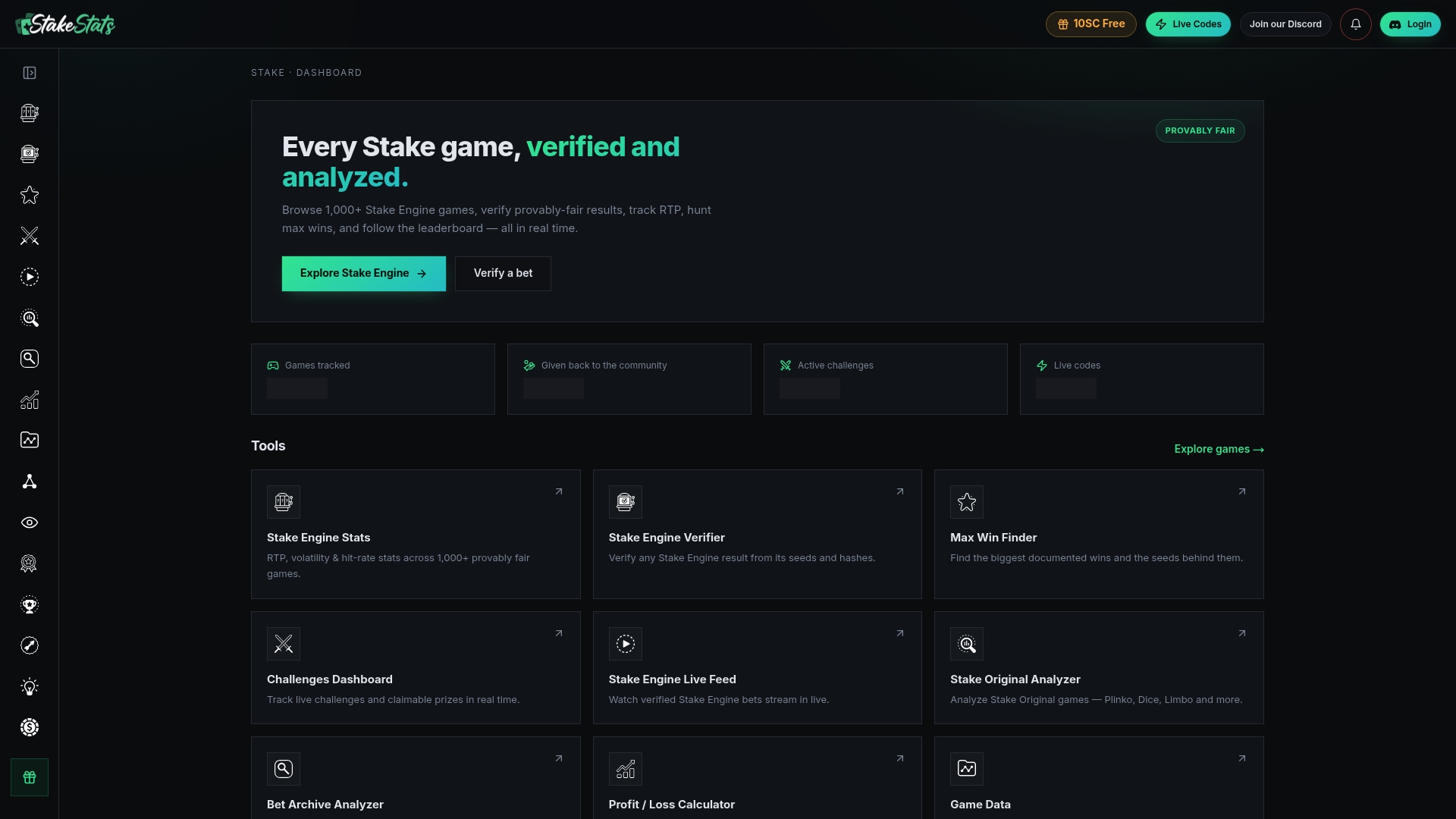
Start with the stats for the game you plan to play, then check the offer terms against your bankroll. Our guide on finding a slot's max win and checking that it is real is a good first read, and the demo mode vs real money safety checklist covers the step before you deposit.
FAQ
Is claiming a bonus on several sites bonus abuse?
No. Each operator's offer is a separate promotion, and claiming one eligible bonus per site, under your own identity and within each set of terms, is ordinary use. Abuse is claiming the same offer repeatedly on the same operator with extra accounts, fake identities or loopholes. Always check each site's own eligibility rules.
Can I lose my winnings for breaking a bonus rule by accident?
Yes, if the terms say so. Many bonus terms treat a breach, such as betting above the maximum stake, as grounds to remove the bonus and the winnings from it. That is why you should note the maximum bet before you start and keep your stake below it. If you think a penalty was applied unfairly, ask the operator which clause it relied on and send your records.
Will my family member and I get flagged if we share a connection?
It can trigger a review, but a shared household or device alone does not establish a duplicate-customer claim. Use accounts in your own names with your own payment methods and verified documents. If the operator asks, explain the household situation in writing and provide your identification.
Does a provably fair bet record protect me in a bonus dispute?
It helps with one part: it shows exactly what you bet and what each result was. It does not decide whether you were eligible for the bonus or whether the operator accepts your account. Use it alongside screenshots of the terms and your withdrawal history.
What should I do if a withdrawal is held after a bonus?
Ask the operator for the reason in writing, supply any identity documents it requests, and keep copies of everything. If the issue is not resolved, complain to the operator first, then to the state regulator that licenses it. Do not create another account to retry the withdrawal.
Sources
- Fair and transparent terms and practices: Glossary of terms, UK Gambling Commission
- What Is Bonus Abuse & How to Stop It, SEON
- Bonus Abuse Prevention: Eligibility, Accounts and Rewards, RubyScore
- Sign-Up Bonus Abuse, The Outlier Lab
- How to prevent bonus abuse in online casinos, Scalara Labs
- Bonus Abuse, NowG.net glossary
- Why is promo abuse a problem in ecommerce?, Ravelin
- 2025 Responsible Gaming Regulations and Guidelines, American Gaming Association
- Gaming Law 2025, USA, Chambers
- Contact Us, Maryland Lottery and Gaming
- Why New Jersey's Regulated Market Is Failing the Low Roller, Casino Reports