
Is a Bonus Buy Worth It? What the Math and the Data Say

For most players, a bonus buy is not worth it as a way to win more. It is a premium you pay for speed and for a sharper swing in results. The game's long-run return stays negative either way, and in a published analysis of thousands of purchases, most buy series did not earn back what they cost. That doesn't make bonus buys "bad." It means you should know exactly what you are paying for before you click.
Below we break down what a buy costs, what "bonus buy RTP" really tells you, what the data on real purchases shows, how to size a bankroll for it, and the situations where it can make sense.
TL;DR
- A bonus buy skips the wait for a feature. It does not give you a better expected return, and the house edge still applies to every dollar you spend.
- Buys commonly cost 50x to 100x your bet, and some cost far more, so one click can equal a whole session of spins.
- In an analysis of 10,200 purchases across 113 games, the average game returned 0.93x of the price paid, and most individual series lost money.
- Average and typical are different. Rare huge hits lift the average, while the typical buy returns a fraction of its cost.
- If you buy at all, size your bankroll by the buy price, not the base bet, and check the game's stated RTP for the buy mode first.
Table of Contents
- What a bonus buy actually is
- What "bonus buy RTP" means
- Why most buys lose even when RTP is high
- Bonus buy vs. regular spins
- When a bonus buy can make sense
- When to skip it
- How to size a bankroll for buying bonuses
- Are bonus buys available in the US?
- Our perspective
- Check the numbers before you buy
- FAQ
- Sources
What a bonus buy actually is
A bonus buy (also called a feature buy) lets you pay a fixed price to enter a slot's bonus round immediately instead of waiting for scatters or another trigger to land. The price is a multiple of your current bet. According to one guide to bonus buy costs, buys typically run 50x to 100x the stake, and some titles offer several tiers, including options as high as 2,000x.
That structure matters more than the feature itself. In the base game you spread your spending across many small bets, with small wins arriving along the way. With a buy you make one large bet and see nothing until the bonus resolves. The same guide describes it as variance that is spread out in normal play and concentrated in a buy.
Here is the practical effect. At a $1 base bet, a 100x buy costs $100 in one click. Someone who would normally play 100 spins for that money gets a single shot at the feature instead.

What "bonus buy RTP" means
RTP, or return to player, is the percentage of wagers a game returns on average over a very large number of plays. A 96% RTP means $4 is kept by the house for every $100 wagered, in the long run.
Many games publish a separate RTP for the buy mode. Sometimes it is a little higher than the base game, sometimes a little lower, and sometimes identical. The Spinarium explainer puts it plainly: whether a buy changes the RTP depends on the provider and the game, so you have to read the game's information before buying. Where a provider does show a slightly higher figure for the buy, one UK-focused explainer notes that it reflects how the math model is built and not a real player advantage, because the expectation is still negative.
So when you look up bonus buy RTP, use it for two things only:
- Comparing the cost of playing: a 94% buy mode costs you more per dollar than a 96.5% one.
- Spotting a difference between modes: if the buy RTP is lower than the base RTP, you are paying extra for the convenience.
Do not read a figure like 96% or even 97% as "I will get most of my money back." That is a long-run average, and the next section explains why it misleads on a single purchase.
A worked example
Take a game with a 96% buy RTP and a 100x buy at $1 per base bet.
- Price per buy: $100
- Average return per buy over a huge sample: $96
- Average cost per buy: $4
That $4 looks small, and over millions of buys it is. But no single buy returns $96. A typical outcome is far below $100, and a rare one is several multiples above it. The $4 average is the blend of both.
Why most buys lose even when RTP is high
RTP is an average, and averages in slots are carried by rare events. Slots Science simulations found that the average buy returns the game's RTP, but the typical buy returns only a fraction of its cost and most buys lose. The rare big hits carry the average.

Think of it like a lottery ticket with decent odds of a small prize and a tiny chance of a jackpot. The expected value can look reasonable while most tickets are losers.
Real purchase data points the same way. A Slotester analysis of 10,200 bonus buys across 113 games found the average game returned 0.93x of the price paid, and most individual series of buys failed to recoup their cost. Results by game varied widely, which is why a single long losing run, or a single big win, tells you very little about the game.
Bonus buy vs. regular spins
| Regular spins | Bonus buy | |
|---|---|---|
| How you spend | Many small bets | One large bet |
| Time to the feature | Unpredictable, can be long | Instant |
| Wins on the way | Frequent small returns | None until the bonus resolves |
| Variance | Spread over many spins | Concentrated in one outcome |
| Long-run expected return | Game's base RTP | Game's buy RTP, often close to base |
| Bankroll needed | Based on the base bet | Based on the buy price |
A buy compresses the same house edge into fewer, bigger decisions. That means faster swings in both directions, and a faster path to the bottom of your balance if the early buys miss.
When a bonus buy can make sense
There are a few legitimate reasons to buy. None of them is "it wins more."
- You want the feature, not the grind. If the base game bores you and the bonus round is why you play, paying for it is an entertainment choice. Budget it as entertainment.
- You are chasing a max win. Buys give you many more shots at the top multiplier per dollar of time spent. The cost is that you also burn through funds faster, so only do this with money you accept losing.
- You are clearing a wagering requirement. Some players use buys to turn over a bonus faster. Check the terms first, because many casinos restrict or exclude bonus buy play when you are wagering with a bonus, and a rule violation can void winnings. Our bonus code aggregator is a handy place to compare offers before you read the fine print on each.
- You are testing a game's volatility. A few small buys can show you quickly how swingy the feature is. A handful of results is still a tiny sample, so don't draw conclusions from it.
When to skip it
- You are playing with a small balance. If one buy is 20% or more of your bankroll, a couple of misses end the session.
- You are trying to win back a loss. Raising the price of each decision is the fastest way to deepen it.
- The buy RTP is lower than the base RTP and you don't specifically want the feature.
- You are playing to stretch the session. Regular spins give you far more play per dollar.
How to size a bankroll for buying bonuses
Base your plan on the buy price. A rough way to think about it: if you want a session to survive a normal run of misses, you need many buy-ins, not a few. One source of bonus buy math suggests at least 30 buy-ins to absorb the variance, which at a $100 buy would mean $3,000. Treat that as a guide to the scale involved, not a promise of safety, because no bankroll size removes a negative expectation.
A simple routine:
- Decide the total amount you can afford to lose, before you start.
- Divide it by the buy price. If you get fewer than 10 buys, drop to a cheaper tier or play regular spins.
- Set a stop-loss and a win goal in advance, and stick to both.
- Track results over many sessions, not one.
Our bankroll analyzer helps you run these numbers, and the profit and loss tracker shows what your sessions really added up to.
Are bonus buys available in the US?
It depends on where you play. Real-money online slots are legal in only a handful of states. One state-by-state overview lists seven: Connecticut, Delaware, Michigan, New Jersey, Pennsylvania, Rhode Island and West Virginia, with a minimum age of 21 in the states where they are legal. Whether a particular slot shows a buy option in a regulated state is up to the operator and the game version offered there, so check the game's info screen.
Some other countries have gone further. Bonus buys have been banned at UK Gambling Commission licensed casinos, as that explainer on UK rules notes, which shows how seriously regulators treat the feature.
If you are in a state without legal online casinos, check your local law before depositing anywhere. Gambling is for adults only, and if play stops being fun, call the National Problem Gambling Helpline at 1-800-GAMBLER.
Our perspective
We built Stakestats because players deserve to see the numbers behind a game, not just a headline RTP. Looking at the way people use buys, we see the same pattern again and again: they judge a game by a short run of results, when the only honest view comes from the math and from many outcomes.
Three things we'd tell a friend:
- Price the buy in bets, not in dollars. "100x" is a bet size, and the lower the multiple, the gentler the variance.
- Look at the volatility, hit rate and max win together. A high RTP with a very rare big payout means most buys will feel like losses.
- Verify rather than trust. On provably fair games you can check that each outcome was generated honestly. That removes doubt about rigging, but it does not turn a negative-expectation game into a positive one.
Treat a buy as a purchase of entertainment and of variance. If you can name what you are buying, a bonus round on demand, then you are making an informed choice. If the honest answer is "to win," the math says to spin normally or stop.
— Ian
Check the numbers before you buy
On Stakestats you can look up real-time RTP, volatility and hit rate for more than 2,500 Stake Engine games, so you can see how swingy a feature is before you pay for it. You can also use our bet replay and max win lookups, and our provably fair verification tools to confirm that your own bets were fair.
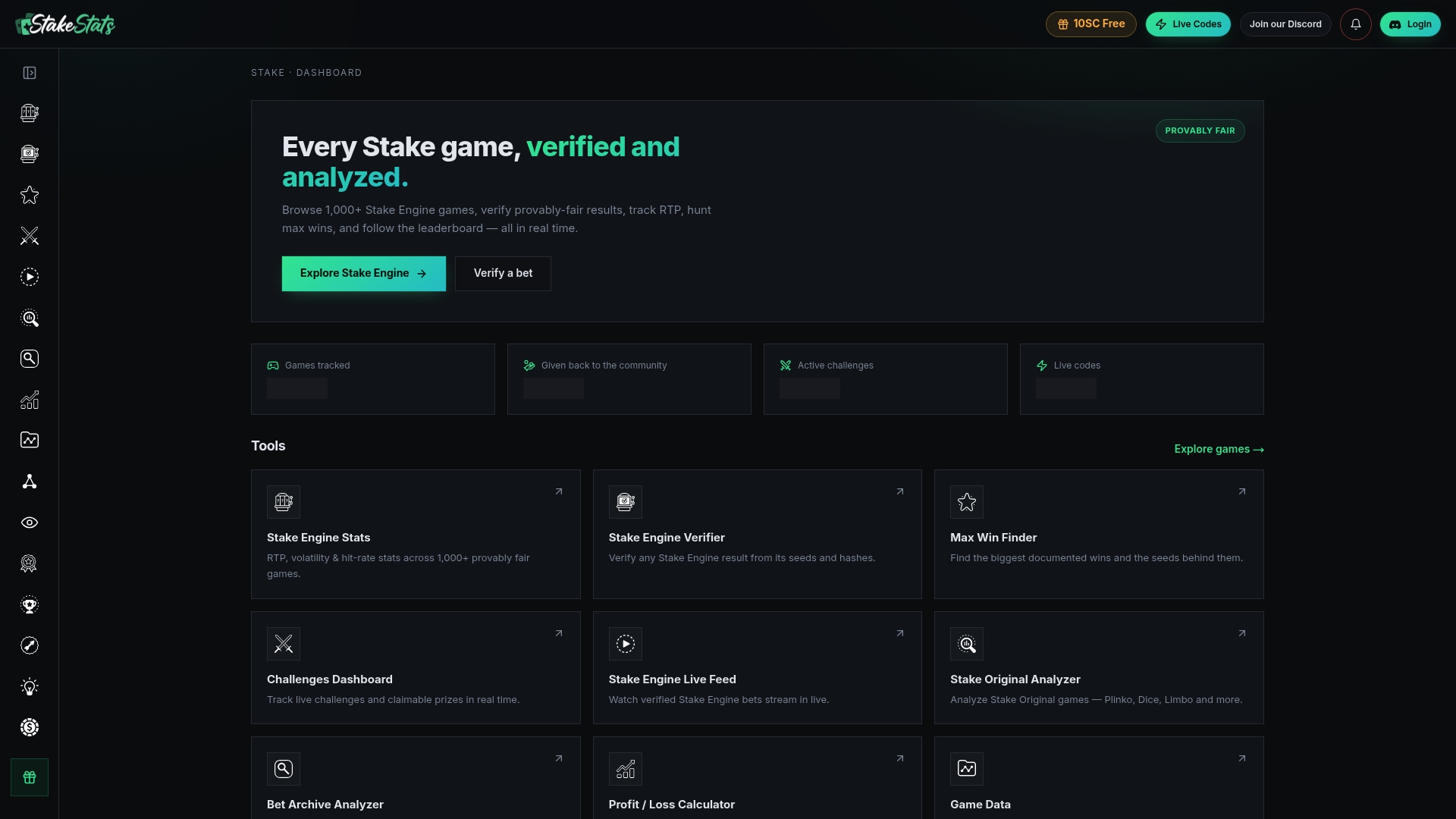
Start with the Stakestats home page to find the game you are considering, then run your numbers through the bankroll analyzer.
FAQ
Are bonus buys worth it?
Usually not as a way to make money. The expected return is the same negative long-run figure as ordinary play, and in one analysis of 10,200 purchases the average game returned 0.93x of the price paid. They are worth it only if you value the feature itself and budget for the swings.
Does buying a bonus change the RTP?
Sometimes slightly, and it varies by game and provider, so read the game's information screen. Even when the buy RTP is a little higher, it is still below 100%, which means the house keeps an edge on every buy.
Why do I lose most of my bonus buys if the RTP is 96%?
Because RTP is an average over a huge number of plays, and rare very large wins carry it. Simulations show the typical buy returns a fraction of its cost, while a few big hits pull the average up to the stated RTP.
How much bankroll do I need to buy bonuses?
Plan in buy-ins, not base bets. At a 100x buy, ten buy-ins is already 1,000 times your base bet, and more is safer. Only use money you can afford to lose, and set a stop-loss before you start.
Is a bonus buy a good way to clear a wagering requirement?
Only if the casino's terms allow it. Many operators restrict or exclude buy features while a bonus is active, so read the bonus terms first. Our bonus tools can help you compare offers.
Sources
- Spinarium: bonus buy slots, costs and RTP
- NewSlot: bonus buy slots explained
- Slots Science: bonus-buy studies
- Slotester: is buying the bonus worth it?
- Way2Win: bonus buy math
- BettingUSA: legal online slots by state