
How to Build a Betting Strategy From Scratch

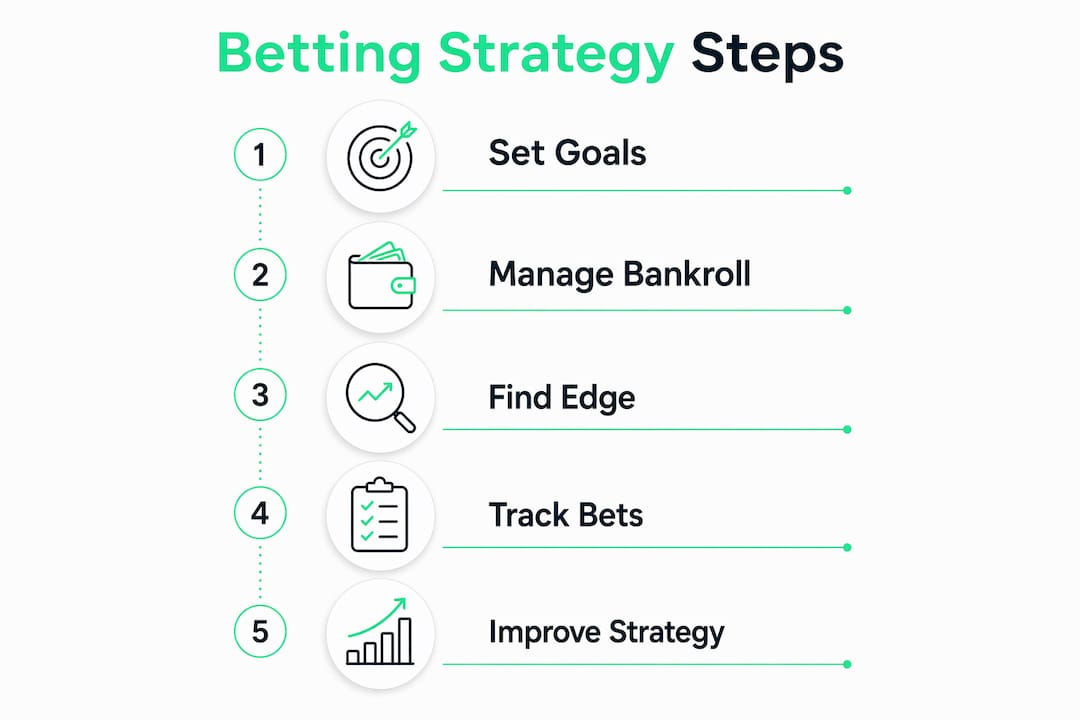
Building a betting strategy from scratch means defining your goals, protecting your bankroll, picking one market to specialize in, and tracking every bet you place. Most bettors skip at least one of those steps. That is why most bettors lose.
Here is the core process:
- Define specific, measurable betting goals before placing a single wager
- Understand how the US sports betting market works and where the edges are
- Set strict bankroll rules and never deviate from them
- Choose one sport or market and build genuine knowledge there
- Track every bet, measure closing line value, and refine based on data
- Prioritize discipline and emotional control above all else
What are your betting goals, and are they realistic?
Vague goals produce vague results. "Make money betting" is not a goal. "Achieve a positive return on investment over 500 tracked bets while risking no more than 1–2% per wager" is a goal you can actually measure.
Before you create a betting plan, answer three questions:
- What is your primary objective? Profit, entertainment, or learning the craft?
- How much time can you commit? Research takes hours. Casual bettors who skip it pay for it in losses.
- What is your risk tolerance? A beginner with a $500 bankroll should not be chasing the same targets as someone with $5,000 and two years of tracked data.
Common beginner goals worth setting: break even in the first 90 days, build a clean record of 200+ tracked bets, and learn to read line movement before worrying about profit.
How does the US sports betting market actually work?
Legal sports betting now operates in the majority of US states, with each state licensing its own sportsbooks under distinct regulatory frameworks. The American Gaming Association tracks state-by-state legalization, and raig.org provides responsible gambling resources specific to US bettors.
A few things every beginner needs to understand:
- Odds formats: US sportsbooks default to American odds (moneylines like +150 or -110). Decimal odds are available on most platforms and are easier for calculating expected value.
- Common bet types: Moneylines (pick a winner), point spreads (win by a margin), and totals (combined score over/under) cover the vast majority of action on NFL, NBA, MLB, and NHL markets.
- Bookmaker margin: Every line is priced so the book profits regardless of outcome. That built-in margin, called the "vig," means you need to win more than 52.4% of spread bets just to break even at standard -110 pricing.
Understanding the vig is the single most important concept for any beginner. You are not just competing against other bettors. You are competing against a margin that never sleeps.
Bankroll management basics for beginners
Your bankroll is the only thing standing between you and being forced to quit before your strategy has a chance to prove itself. Protect it accordingly.
The industry standard for beginners is to bet 1–2% of your total bankroll per wager. At 2% per bet, even a brutal losing streak can significantly reduce your bankroll, while betting 10% per bet risks a catastrophic loss during a similar streak.
Two practical structures work well:
- Flat staking: Same dollar amount on every bet. Simple, removes emotion, easy to track. Best for beginners.
- Variable staking: Adjust size based on perceived edge. Requires accurate probability estimates. Better suited to experienced bettors with hundreds of tracked bets.
Splitting your bankroll into tiers adds another layer of protection. Keep a base bankroll you never touch, a monthly session pool, and a daily session amount. When the daily session bankroll hits its stop-loss, you stop. No exceptions.
Pro Tip: Write down your profit target and stop-loss threshold before every session. Predefining these rules in writing is what separates disciplined bettors from everyone else. A rule you set before the session is much harder to override emotionally during it.
How do you develop a real edge in betting?
Edge comes from knowing something the market has not fully priced in. The fastest way to develop that knowledge is to specialize. Building one well-calibrated probability model for a single market consistently outperforms trying to cover multiple sports at once.
Pick one sport you already follow closely. Then go deeper:
- Study line movement in that market. Where does the line open? Where does it close? Sharp money moves lines.
- Focus on bet types with accessible data. NFL spreads and NBA totals have deep public datasets going back years.
- Learn value betting basics: a value bet exists when your estimated probability of an outcome exceeds the probability implied by the odds.
Line shopping is the easiest edge available to any bettor. Holding accounts at multiple sportsbooks and consistently taking the best available price requires no model and no special knowledge. A team priced at +200 at one book and +215 at another is the same bet with a materially different expected return. Over hundreds of bets, that gap compounds into a real difference.

How do you test, track, and improve your strategy?
A betting strategy without records is just a habit. Records turn your betting into a dataset you can actually learn from.

Log every bet with these fields: date, sport, bet type, odds, stake, result, and your estimated probability at the time. After 200+ bets, patterns emerge that tell you where your edge actually lives.
The metric that matters most is Closing Line Value (CLV). CLV measures whether your bets consistently beat the market's final closing odds. Consistently beating the closing line means you are identifying value before the market corrects it. Consistently losing to it means the market knows more than your model does, regardless of your short-term win rate.
Tracking bets and results also removes the emotional distortion that follows losing streaks. When you have data, you can evaluate your process instead of reacting to outcomes.
Before betting real money, backtest your approach against historical data. A strategy that looks good across 50 bets proves almost nothing. One that holds up across several hundred gives you something to work with.
Professional insights every beginner should internalize
The gap between the small percentage of bettors who profit long-term and everyone else is not sporting knowledge. It is process.
A few principles that professionals apply consistently:
- Bet value, not favorites. Betting on value rather than favorites increases the chance of long-term profit. Odds differences, not pick accuracy, determine profitability.
- A strategy is not a system. A complete betting system integrates data inputs, staking rules, record-keeping, and a review cycle. Strategy alone tells you what to bet. A system tells you what to bet, how much, when to stop, and when to revise.
- CLV over win rate. Professionals track closing line value as their primary success metric, not whether they won last week.
- Consistency through streaks. Following the same staking and market rules regardless of recent results is what makes performance measurable. Changing your approach after three losses destroys any chance of learning what works.
The Stakestats Stake Engine and Profit and Loss Tracker give you the infrastructure to apply these principles without building everything from scratch in a spreadsheet.
How to use statistical data and trends to inform your bets
Data is only useful when it is specific and testable. "Team X has been playing well lately" is not data. "Team X covers the spread in 68% of home games following a road loss" is a hypothesis you can backtest.
Start with publicly available sources: team and player statistics from official league sites, historical odds from major tracking databases, and line movement data. Focus on variables that survive scrutiny across multiple seasons, not just the last few weeks. Recency bias is one of the most expensive mistakes a beginner can make.
Useful variables to test: adjusted scoring margin, rest days and travel distance, home/away splits, and opening-to-closing line movement. Variables to treat with skepticism early on: weather data for spread bets, composite power ratings built by someone else, and anything described as a "lock" by a public handicapper.
Common mistakes to avoid when building a betting strategy
Most beginners do not fail because their strategy is wrong. They fail because they abandon it too early or break their own rules under pressure.
The most costly mistakes:
- Chasing losses. Increasing bet sizes after a losing run to recover faster converts a normal variance swing into a structural bankroll collapse.
- Betting too many markets. Spreading across five sports with surface-level knowledge in each produces worse results than deep focus on one.
- Ignoring line shopping. Consistently taking the first price you see rather than the best available is the equivalent of handing the sportsbook extra margin on every single bet.
- Skipping records. You cannot evaluate a strategy you have not tracked. No records means no feedback loop, and no feedback loop means no improvement.
- Reacting to short-term results. A strategy with genuine positive expected value can lose 15 bets in a row. That is variance, not failure. Tweaking your rules after every cold stretch kills any chance of learning what actually works.
Responsible gambling resources like gamblingtherapy.org offer support if betting stops feeling like a structured activity and starts feeling like a compulsion.
Stakestats gives you the tools to put this into practice
Building a betting strategy from scratch is easier when you have the right infrastructure. Stakestats provides a bankroll analyzer to set unit sizes and track exposure, plus provably fair verification tools for transparent play on Stake.com and similar platforms.
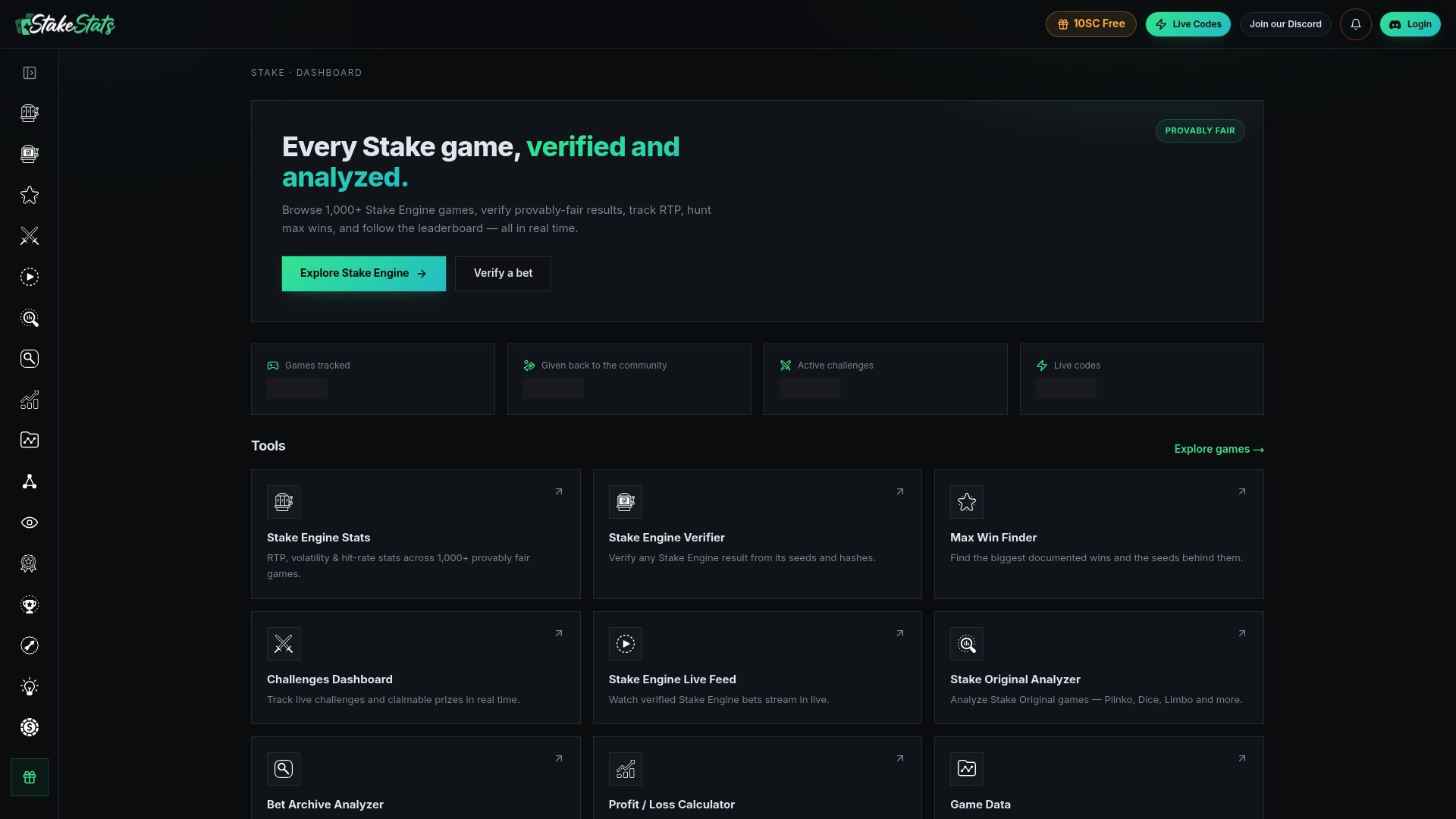
Start with the Stakestats platform to bring structure to your betting from day one.
Key Takeaways
Building a betting strategy from scratch requires clear goals, strict bankroll rules, market specialization, and consistent tracking before any edge can show up in results.
| Point | Details |
|---|---|
| Bet 1–2% per wager | Beginners should bet 1–2% of their total bankroll per wager to manage variance safely. |
| Specialize in one market | Building one well-calibrated model for a single market outperforms spreading across many sports. |
| Track closing line value | CLV is a more reliable success metric than win rate for assessing real edge. |
| Write rules before sessions | Predefining stop-loss and profit targets in writing prevents emotional decisions mid-session. |
| Value beats picking winners | Betting on mispriced odds, not just favorites, is what drives long-term profitability. |