
Gaming vs Gambling: Key Differences Explained

Gaming is defined as skill-based play where player decisions directly influence outcomes, while gambling is chance-based wagering against a house edge with real money at stake. The difference gaming vs gambling represents is not just semantic. It shapes how activities are regulated, monetized, and experienced psychologically. Understanding this distinction matters more than ever as modern game design increasingly borrows mechanics from casino floors, blurring lines that once seemed clear.
What is the core difference between gaming and gambling?
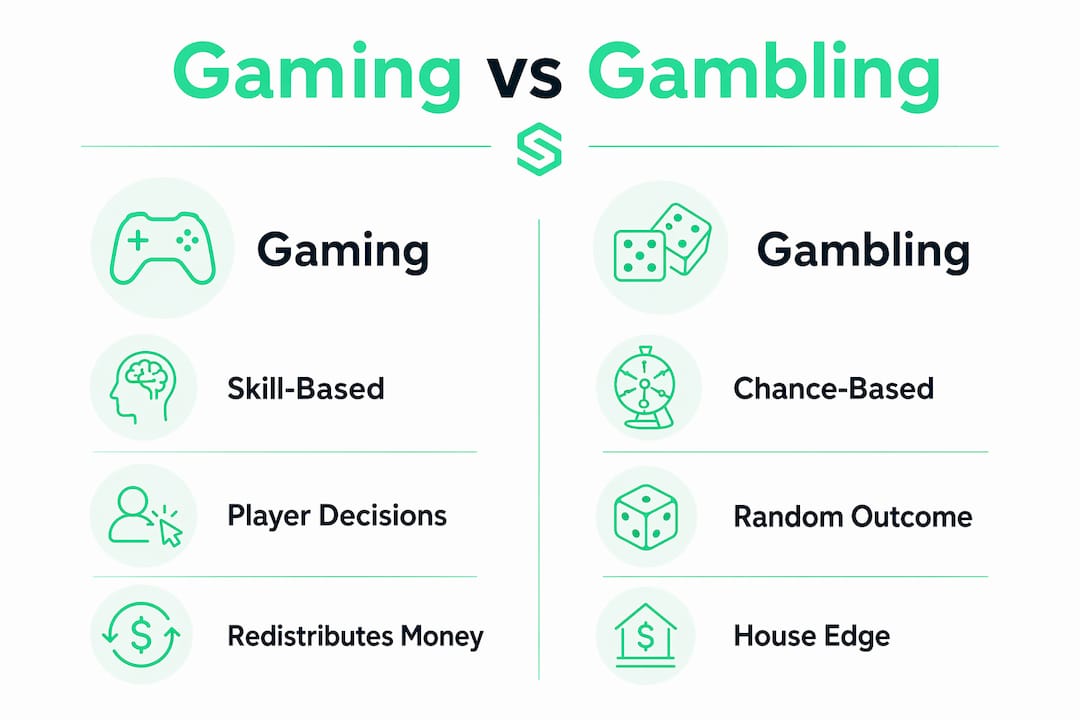
Gaming is primarily skill-based with outcomes shaped by player ability, practice, and decision-making. Gambling relies on random events where no amount of skill changes the underlying odds. That single mechanical difference drives everything else: legal classification, addiction risk, and how money flows.
The house edge is gambling's defining feature. In roulette, blackjack, or slot machines, the casino always holds a mathematical advantage over every player. No strategy eliminates that edge. Skill gaming works differently. Competitive skill games pit players against each other, measuring reaction speed, accuracy, and strategy. The goal shifts from beating the house to outperforming peers.
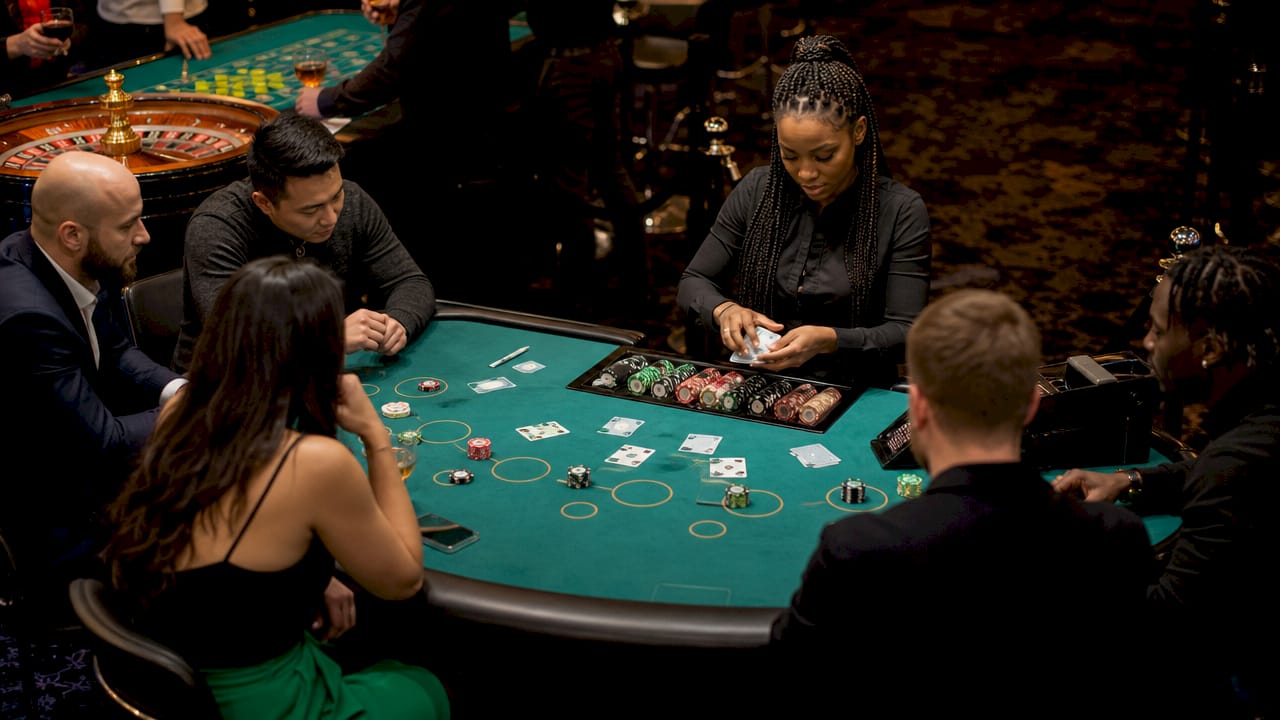
This distinction also affects money flow. Skill gaming redistributes money between players based on performance rather than extracting capital for a house. Gambling, by design, transfers wealth from players to operators over time. That is a structural difference most players never consider.
Skill versus chance: a practical comparison
| Element | Skill gaming | Gambling |
|---|---|---|
| Outcome driver | Player decisions and ability | Random number generators or chance events |
| House edge | None (player vs. player) | Fixed mathematical advantage for the operator |
| Improvement over time | Yes, through practice | No effect on underlying odds |
| Money flow | Redistributed among players | Extracted by the house |
| Examples | Competitive video games, chess tournaments | Slot machines, roulette, sports betting |
How do monetization models blur the line?
Modern games have adopted monetization strategies that make the gaming versus gambling distinction far harder to draw. Loot boxes are the clearest example. A player pays real money for a randomized virtual reward, with no guarantee of what they receive. Loot boxes mimic gambling by wagering real money for uncertain outcomes, using the same psychological triggers that keep casino players at the table.
The mechanics driving this behavior are not accidental. Game designers borrow directly from behavioral psychology research developed in casino environments. Variable reward schedules, where rewards arrive unpredictably rather than consistently, produce stronger habit formation than fixed rewards. Near-miss experiences, where a player almost wins a rare item, create the urge to try again. Progression loops reward continued play with incremental gains, making stopping feel like a loss.
Key gambling-like features now common in mainstream games include:
- Loot boxes with randomized rewards purchased with real or premium currency
- Gacha mechanics requiring repeated spending to collect complete sets
- Pay-to-win systems where purchased items provide competitive advantages
- Battle passes with time-limited rewards that pressure recurring spending
- Skin gambling where cosmetic items are traded or wagered on third-party sites
Pro Tip: Check whether a game's premium currency can be converted back to real money or traded externally. If it can, the game's monetization system may meet the legal definition of gambling in your jurisdiction.
The psychological impact is real. Variable reward schedules and near-miss experiences create habit-forming behavior that mirrors gambling addiction pathways. This is not a side effect of poor design. It is often the intended outcome.
What legal definitions separate gaming from gambling?
Law has historically used the skill versus chance test to classify activities. If skill predominates, the activity is gaming. If chance predominates, it is gambling. That framework is now under pressure from regulators worldwide.
Legal frameworks like OGA 2025 and CGST Act 2017 prioritize monetary stakes over the skill versus chance distinction when classifying online games. Under these frameworks, any game requiring a deposit may be classified as gambling regardless of how much skill it involves. That shift has major consequences for players and operators alike.
Regulatory bodies are moving toward definitions based on monetary stake presence and the electronic medium's properties rather than skill dominance tests. A chess tournament played online for cash prizes could theoretically fall under gambling regulations in some jurisdictions under this logic. That is how far the legal definition has drifted from the original skill versus chance framework.
| Jurisdiction | Classification approach | Key implication |
|---|---|---|
| India (CGST Act 2017) | Monetary stake presence | Cash-entry skill games taxed as gambling |
| India (OGA 2025) | Electronic medium plus deposit | Broad reclassification of online games |
| Belgium | Loot boxes as gambling | Paid loot boxes banned in games |
| Netherlands | Chance plus prize test | Loot boxes with tradeable items banned |
| United States | State-by-state skill tests | No federal standard; varies widely |
Some jurisdictions consider banning randomized reward elements outright to reduce addiction risks. Belgium and the Netherlands have already moved in that direction. The regulatory trend points toward stricter classification, not looser. Players who engage with monetized games need to understand the legal environment in their country, not just the game's marketing.
Transparency regulations alone are not enough. Disclosure requirements that tell players the odds of receiving a rare loot box item do not eliminate the psychological pull of the mechanic. The information exists, but the behavioral trigger remains active.
What are the psychological and cultural effects?
The thrill players feel in both gaming and gambling activates the same dopamine pathways in the brain. Modern game design employs behavioral techniques perfected in casinos, including intermittent reinforcement schedules, to maximize engagement and spending. That shared neurological mechanism is why the two activities can feel identical even when their structures differ.
Cultural perception still separates them sharply. Gambling carries social stigma in many communities and is restricted to adults in virtually every legal system. Gaming is broadly accepted across age groups and is marketed to children. That gap in cultural treatment creates a real risk: gambling-like mechanics embedded in games reach audiences that gambling regulations were designed to protect.
Key considerations for players and parents include:
- Age exposure: Children encounter loot boxes and gacha mechanics in games rated for general audiences, with no age verification required for purchases.
- Spending escalation: Microtransaction systems are designed to normalize small purchases that accumulate into significant spending over time.
- Addiction overlap: Problem gambling and compulsive gaming share behavioral markers, including loss chasing, preoccupation, and withdrawal symptoms.
- Skill illusion: Games with gambling-like mechanics often reward early players generously to create a false sense of skill or control.
Pro Tip: Use the bankroll analyzer from Stakestats to track cumulative spending on games with monetary risk. Seeing total spend over time is one of the most effective ways to recognize when a habit has crossed into problematic territory.
The cultural acceptance of gaming also makes it harder for players to self-identify when their behavior has become harmful. A person who spends $200 a month on loot boxes rarely frames that as gambling. The same spend at a casino would trigger a very different self-assessment.
Key Takeaways
Gaming and gambling differ fundamentally in outcome mechanics, money flow, and legal treatment, but modern monetization has made those differences increasingly difficult to identify without deliberate scrutiny.
| Point | Details |
|---|---|
| Skill versus chance | Gaming outcomes depend on player ability; gambling outcomes depend on random events with a fixed house edge. |
| Money flow structure | Skill gaming redistributes money among players; gambling extracts money for the operator over time. |
| Monetization convergence | Loot boxes and gacha mechanics replicate gambling triggers inside games marketed to all ages. |
| Regulatory shift | Laws like OGA 2025 now classify games by monetary stake presence, not skill dominance. |
| Psychological overlap | Both activities activate dopamine pathways, making gambling-like game features genuinely habit-forming. |
Where the line actually gets drawn
I have spent years watching players on provably fair platforms struggle to articulate why a slot machine feels different from a competitive card game. The honest answer is that the line is real but thin, and modern game design has been deliberately erasing it.
The skill versus chance framework made intuitive sense when gaming meant chess and gambling meant roulette. That clarity is gone. A mobile game can be genuinely skill-based in its core mechanics while running a loot box economy that functions exactly like a slot machine. Players experience both systems simultaneously and rarely separate them mentally.
What concerns me most is the age exposure gap. Gambling regulations exist because society recognized that chance-based monetary risk causes harm, especially to vulnerable populations. Those protections do not automatically extend to a $4.99 loot box in a game rated for ages 12 and up. The regulatory frameworks are catching up, but slowly.
My practical advice is this: treat any game mechanic that takes real money and returns a randomized outcome as gambling, regardless of what the game calls it. That framing changes how you budget, how you set limits, and how you talk to younger players about what they are actually doing. The label on the box does not determine the risk.
— Ian
Stakestats tools for informed play
Understanding the distinction between gaming and gambling is the first step. Knowing exactly what you are dealing with when you play on a provably fair platform is the second.

Stakestats provides the transparency tools that serious players need. The provably fair verification feature lets you confirm that game outcomes are genuinely random and not manipulated. The Stake Originals Analyzer gives you a detailed breakdown of game mechanics, house edge, and historical performance data. For players managing real monetary risk, the bankroll analyzer tracks cumulative spend and helps you recognize patterns before they become problems. Informed play starts with accurate data, and Stakestats delivers both.
FAQ
What is the main difference between gaming and gambling?
Gaming is skill-based, with outcomes shaped by player decisions and practice. Gambling is chance-based, with outcomes determined by random events and a fixed house edge favoring the operator.
Is gaming considered gambling if real money is involved?
Not automatically. Skill gaming that redistributes money among players based on performance is legally distinct from gambling in many jurisdictions. However, frameworks like OGA 2025 now classify any game requiring a monetary deposit as gambling, regardless of skill elements.
Are loot boxes considered gambling?
Belgium and the Netherlands have classified paid loot boxes as gambling and banned them. Other jurisdictions treat them as unregulated purchases. The legal answer depends entirely on where you live.
How do I recognize gambling-like mechanics in a game?
Look for real money purchases that return randomized rewards, near-miss feedback, and variable reward schedules. If you pay money and receive an unpredictable outcome, the mechanic functions as gambling regardless of the game's label.
Why does the gaming versus gambling distinction matter for parents?
Gambling regulations protect minors from chance-based monetary risk. Games with loot boxes and gacha mechanics deliver the same psychological triggers to children without triggering those protections, making parental awareness the primary safeguard.