
25% Hit Rate in Slots: How Players Should Plan 100–500 Spins
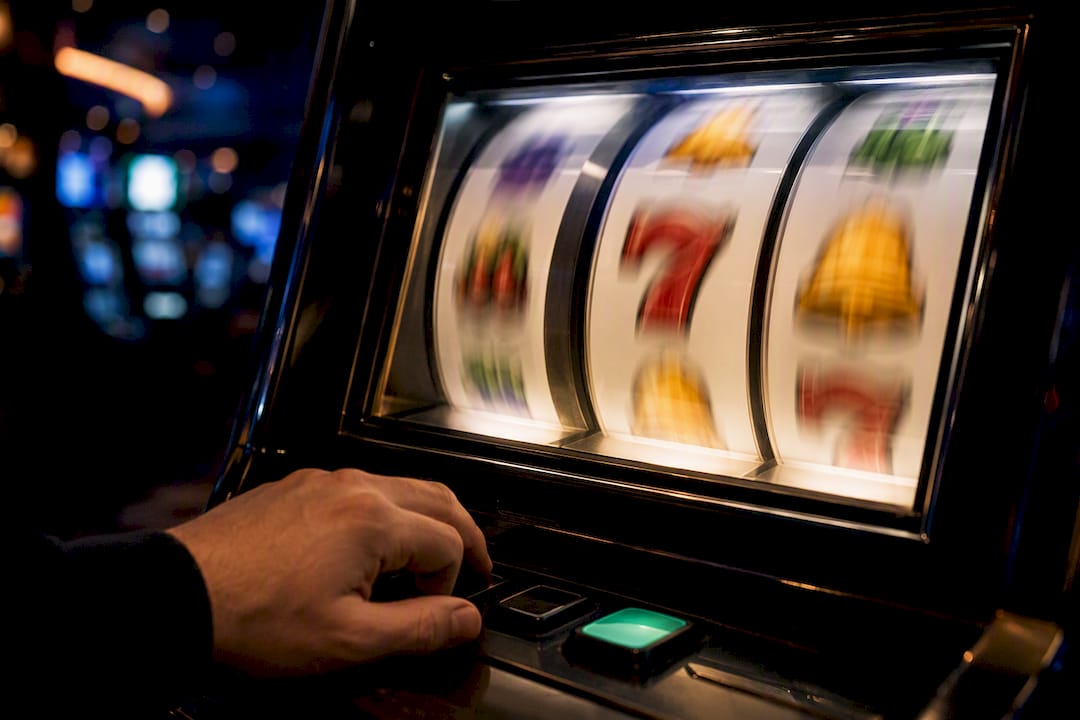
Hit rate, also called hit frequency, tells you how often a slot returns any payout at all, regardless of size. A hit rate around 25% means roughly one in four spins pays something back, even if that payout is smaller than your bet. It's a theoretical, long-run probability baked into a game's math model, not a guarantee for your next session.
TL;DR:
- Most online slots have a theoretical hit rate between 20% and 30%, with higher rates on low-volatility games and lower on high-volatility ones.
- Small sample spins often do not reflect the game’s true hit rate because thousands of spins are needed for convergence towards the theoretical figure.
- Hit rate measures how frequently any win occurs, but it does not indicate the size of wins or overall profitability, which depend on RTP and volatility.
- Published hit rate data is often hard to find, but it can sometimes be found on in-game info screens, provider PAR sheets, or estimated based on volatility ratings.
- Using verified, real-time data on hit frequency helps players optimize session length and stake sizing, reducing the risk of bankroll depletion.
Table of Contents
- How Is Slot Hit Rate Calculated?
- How Does Hit Rate Differ From RTP and Volatility?
- What Is a Typical Hit Rate for Slot Machines?
- Where Can You Find a Slot's Published Hit Rate?
- How Should Hit Rate Shape Your Bankroll Plan?
- How Stake Stats Helps You Verify Hit-Frequency Data
- The Real Value of Knowing Your Hit Rate
- Try the Stake Stats Bankroll Analyzer
- Sources
How Is Slot Hit Rate Calculated?
The formula is simple: divide the number of winning outcomes by total outcomes, then multiply by 100.
- Count the winning combinations. A game's math model defines every symbol combination that pays, based on reel strips and paylines.
- Divide by total possible outcomes. If a simplified model has 1,000 possible spin outcomes and 250 of them pay something, that's 250 ÷ 1,000 = 0.25, or a 25% hit rate.
- Compare theoretical versus observed. The 25% figure is a model output verified through large-sample simulated spin testing, not something you'll see confirmed in a 50 spin session.
That last point trips up a lot of players. If you spin 50 times and land 10 wins, your observed rate is 20%, not 25%. Small samples are noisy. Session-level hit rates need thousands of spins to converge toward the theoretical figure, which is why judging a machine's math from one sitting almost always leads you astray.
How Does Hit Rate Differ From RTP and Volatility?
These three terms get tangled together constantly, and mixing them up leads to bad game choices. Here's the distinction:
- RTP (Return to Player): the percentage of all wagered money a game returns over its full theoretical lifecycle.
- Volatility: how unevenly wins are distributed, meaning the size and spacing of payouts.
- Hit rate: how often any win lands, independent of how big that win is.
- Win rate: how often a spin returns more than you staked.
That last distinction matters more than most guides admit. Hit frequency counts any credited payout, while win rate only counts spins that beat your original bet. On multi-line slots, a $1 spin can trigger a payout of $0.20 across a side line, and that counts as a "hit" even though you lost $0.80 net. This is called Losses Disguised as Wins (LDW), and it's rampant on games with 20+ paylines.
Pro Tip: Two slots can share the same 96% RTP but feel completely different. One might hit 35% of spins with mostly small, LDW-style payouts. The other might hit 18% of spins with fewer but larger wins. Same math, different rhythm.
What Is a Typical Hit Rate for Slot Machines?
Most online slots land somewhere in a predictable band, and volatility is the variable that pushes the number up or down. Industry figures generally put average hit frequency between 20% and 30%, with some explainers citing a rough midpoint near one hit in every four spins, or about 25%.
- Low volatility, high frequency: 30% or higher. Frequent small wins, gentle bankroll swings.
- Medium volatility: roughly 20% to 30%. A balance of steady action and occasional bigger hits.
- High volatility, low frequency: under 20%, sometimes well under 10%. Long dry stretches punctuated by rare, large payouts.
Bonus features run on a separate clock entirely. A slot might hit 25% of spins overall while triggering its free-spins bonus only once every 200 to 500 spins. Overall hit frequency and bonus-trigger frequency are two different numbers, and confusing them is one of the most common mistakes new players make when picking a game.
Where Can You Find a Slot's Published Hit Rate?
Finding this figure isn't as easy as checking RTP, which most jurisdictions require in an info panel.
- Check the in-game info screen first. Some providers include hit frequency alongside RTP and max win, though publication is inconsistent across the industry.
- Look for provider PAR sheets. Probability Accounting Reports are the technical documents studios use internally, and some publish simplified versions for regulators or affiliates.
- Estimate from volatility ratings when nothing is published. A game labeled "high volatility" with a modest max win is a reasonable bet for a hit rate under 20%, while a "low volatility" label usually points toward 30% or above.
When no official figure exists, verification tools that run or track large-sample data are your best substitute for a provider's own testing.
How Should Hit Rate Shape Your Bankroll Plan?
Hit frequency should set the pace of your session, not your expectation of profit. Those are two different jobs, and mixing them up is how bankrolls disappear faster than planned.
- Match your spin budget to the game's frequency band. A common rule of thumb: plan for 100 to 150 spins on low-volatility, high-frequency slots, 150 to 250 for medium-frequency games, and 300 to 500 spins for high-volatility titles that hit less often but pay bigger when they do.
- Size your stake to survive the dry stretches. A high-volatility game needing 400 spins to show its character means a $100 bankroll should bet roughly $0.25 per spin, not $1.
- Never confuse frequency with edge. A 35% hit rate on a game with 88% RTP will still bleed your bankroll faster than an 18% hit rate game running 97% RTP. Frequency shapes the ride; RTP and house edge shape the destination.
Shift to a high-volatility title and drop to $0.20 spins, and that same $100 stretches toward the 400 to 500 spin range these games typically need to show their real payout pattern.
How Stake Stats Helps You Verify Hit-Frequency Data
Published hit-rate figures are only useful if you can trust them, and that's where verification tools earn their keep.
- Real-time stats across many Stake Engine games, including RTP, volatility, and hit-frequency tracking pulled from actual play data rather than marketing copy.
- Bet replay and max win lookup tools, letting you check whether a game's observed payout pattern matches what the provider claims.
- A bonus code aggregator and similarity graph, useful for comparing games with similar mechanics when a specific title's data is thin.
- A bankroll analyzer that turns hit-frequency and volatility inputs into concrete session plans, rather than rough rules of thumb.
Cross-referencing a provider's claimed figures against observed data from thousands of tracked spins gives you a far more reliable picture than trusting a single info panel.
The Real Value of Knowing Your Hit Rate
Hit rate tells you how a session will feel, not whether it will be profitable. Combine it with RTP and a hard bankroll limit, and you've got an actual decision framework instead of a gut feeling. If you like steady, frequent action, lean toward higher-frequency games and accept the smaller average payout. If you can tolerate dry spells for a shot at bigger hits, high-volatility, low-frequency slots fit better. Either way, set your loss limit before you spin, not after you're chasing one.
— Ian
Try the Stake Stats Bankroll Analyzer
Provider info panels and PAR sheets tell you the theory. Stakestats shows you what's actually happening across 2,500+ Stake Engine games, tracked in real time instead of pulled from marketing claims.
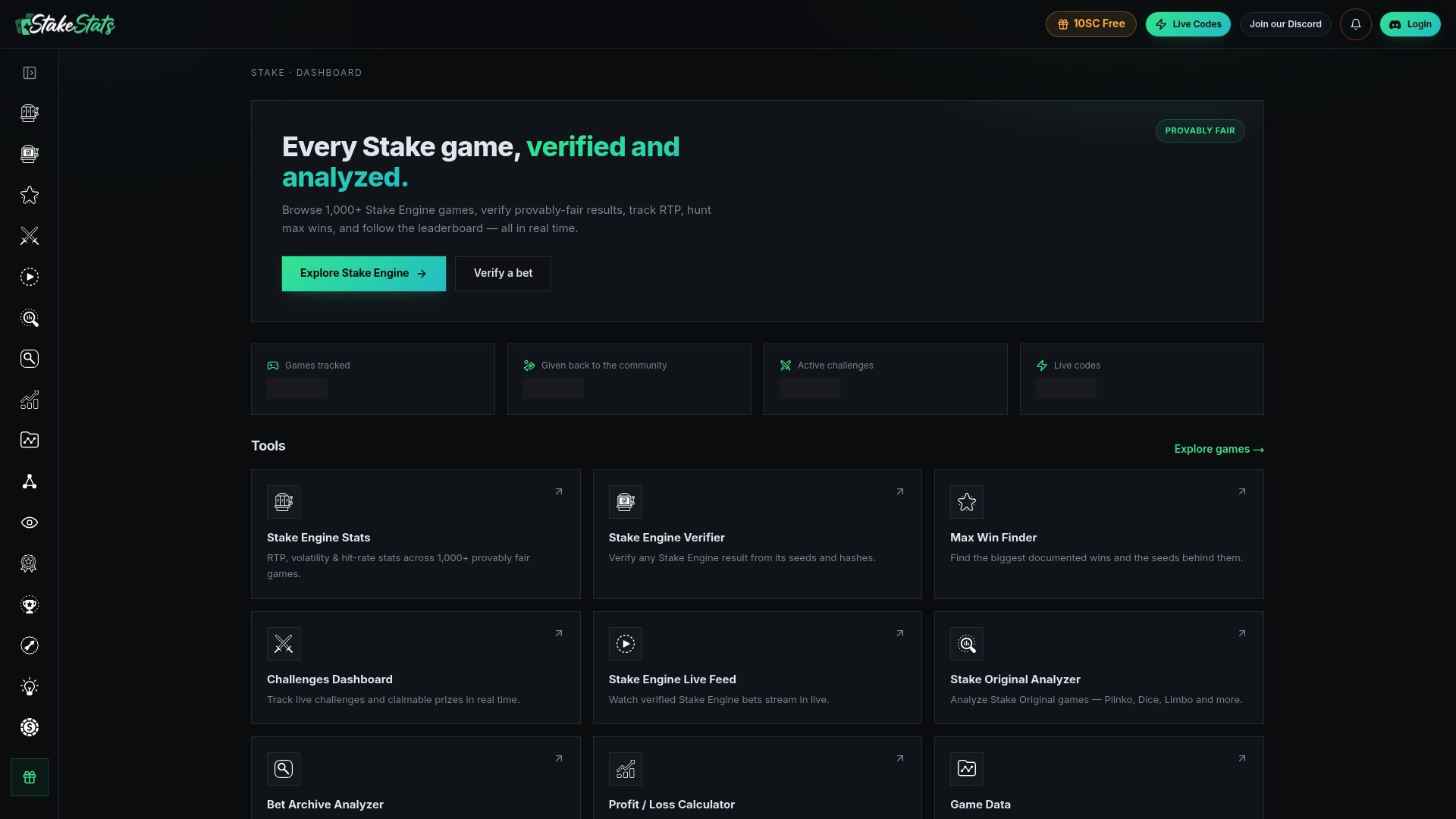
Once you know a game's real hit-frequency behavior, the next step is sizing your session correctly. The bankroll analyzer takes your stake, your bankroll, and a game's volatility profile, then builds a realistic spin plan around it instead of a guess. Pair that with bet replay and max win lookups to confirm a title's published stats match its observed pattern, and you're playing with the same data the provider had when they built the game. Check your bankroll plan against a game's real numbers before your next session.
Sources
For deeper technical detail, Blask's hit frequency breakdown covers PAR sheet mechanics, while Slot Simulations' guide explains publication practices across providers.