
Stake.us Legality by State: LA Suit, IGB Letters, Fairness Checks

Stake.com is not available to U.S. players, and attempting to access it from the United States violates its own terms. Stake.us, the sweepstakes-style sister site, is a different story: whether you can use it depends entirely on which state you're in, and that list of eligible states keeps shifting as regulators push back.
TL;DR:
- Stake.us checks your physical location through geofencing, so travel or a move can block an existing account; VPN access violates its terms and risks funds.
- Stake Cash may be obtained free through promotions or mail requests, but cash redemption depends on platform thresholds and playthrough rules that can change.
- Illinois regulators demanded that Stake.us block residents or remove cash offerings; Los Angeles sued over alleged unlicensed gambling and sought residents’ losses.
- Before depositing or seeking redemption, check the current list of restricted states, review age and identity verification rules, and save dated copies of relevant terms.
Table of Contents
- Stake.com vs Stake.us: What's the Real Difference?
- Which States Currently Block or Allow Stake.us
- How the Sweepstakes Model Tries to Avoid Being Gambling
- Enforcement Actions Reshaping Stake.us Availability
- Checklist: Confirm Your Eligibility Before You Play
- Verifying Fairness and Protecting Your Bankroll With Stakestats
- Where This Is Headed and What Cautious Players Should Do
- Verify Before You Play, Not After
- FAQ
- Sources
Stake.com vs Stake.us: What's the Real Difference?
Stake.com and Stake.us look similar on the surface, but they operate under completely different legal theories, and that distinction matters more than almost anything else in this conversation.
Stake.com is an offshore, real-money crypto casino. You deposit cryptocurrency, place bets with it, and withdraw winnings the same way. It was never built for U.S. compliance, and it's blocked to U.S. players as a result. Some players try routing around that block with a VPN, but doing so breaks the platform's own terms of service and can lead to frozen funds or forfeited winnings if the operator detects the workaround. There's no legal protection for you in that scenario, since you'd be violating the terms you agreed to.
Stake.us runs on a sweepstakes model instead. Rather than wagering real money, you play with two currencies: Gold Coins, which have no cash value and exist purely for entertainment, and Stake Cash, which can potentially be redeemed for cash prizes under specific conditions. This dual-currency structure is the backbone of the legal argument that sweepstakes casinos aren't gambling at all, since no purchase is required to receive Stake Cash through promotional giveaways.
The practical takeaway is straightforward. If you're in the U.S., Stake.com isn't an option, period. If Stake.us is accessible where you live, your experience hinges on understanding exactly how Stake Cash redemption works, what thresholds apply, and what the terms say about eligibility. Treat the fine print as mandatory reading, not boilerplate, because the redemption mechanics are where most player frustration and most regulatory scrutiny concentrate.
Which States Currently Block or Allow Stake.us
Stake.us doesn't operate uniformly across the country. The platform maintains a list of restricted states where access is blocked entirely, and that list has grown as state regulators and city attorneys have taken action against sweepstakes casinos.
Geofencing is the mechanism that makes this enforceable. If you're physically located in a restricted state, the platform blocks your access even if you previously created an account while living elsewhere or while traveling. Your device's location, not your billing address or state of residency on paper, determines what you can do in the moment.
A few practical points worth keeping in mind:
- Restricted states are blocked at the technical level through geofencing, not just by policy language.
- Being registered doesn't guarantee access if you later move to or travel through a restricted state.
- The list changes as new cease-and-desist letters, lawsuits, or settlements land, so a state that's open today may not stay that way.
- Using a VPN to bypass a geofence violates platform terms and puts any funds or winnings at risk.
Pro Tip: Check the restricted-states page directly before every session, not just before you first sign up. These lists change without much public fanfare, and relying on last month's information can cost you access to funds you thought were secure.
Because enforcement is accelerating rather than slowing down, the safest habit is treating your eligibility as something to reconfirm regularly rather than something you check once and forget.
How the Sweepstakes Model Tries to Avoid Being Gambling
Gambling, under most U.S. legal frameworks, requires three elements: a prize, an element of chance, and consideration, meaning the player has to pay or risk something of value to participate. Remove any one of those three, and the activity typically falls outside gambling law.

Sweepstakes casinos like Stake.us are built around eliminating consideration. Gold Coins are sold in packages but carry no cash value and can't be redeemed for anything, so playing with them resembles a video game more than a wager. Stake Cash, by contrast, can be obtained for free through methods like mail-in requests or promotional giveaways, which is the legal hook that lets the platform argue no purchase is required to win real prizes.
Once you have Stake Cash, though, you can typically use it to play the same games as Gold Coins, and under the right conditions, redeem it for cash. That redemption path is exactly where the legal theory gets tested. If Stake Cash functions, in practice, just like a casino chip you bought with money, then the "no consideration" argument starts to look more like a technicality than a meaningful distinction. Regulators and plaintiffs in several cases have zeroed in on this redemption equivalence, arguing that when free-to-obtain currency behaves identically to purchased currency once it's in your account, the sweepstakes label doesn't hold up to scrutiny.
That argument is precisely what's driving the enforcement actions reshaping where Stake.us can legally operate.
Enforcement Actions Reshaping Stake.us Availability
Two recent actions illustrate how fast the legal ground can shift under a sweepstakes platform, and why "available in your state today" is not a permanent guarantee.
The Illinois Gaming Board issued a cease-and-desist letter asserting that Stake.us may be operating an illegal online casino under Illinois law. The letter demands that the platform either block Illinois residents entirely or discontinue its cash and crypto-linked offerings in the state. This is a textbook example of how a state regulator can force a platform's hand without a court ruling: compliance or blocked access, with little middle ground.
Separately, the Los Angeles City Attorney filed a lawsuit alleging that Stake.us operates as an unlicensed online gambling enterprise. The suit seeks remedies including recovery of funds lost by California residents and injunctive relief to stop the platform's operations in the city's jurisdiction. Unlike a regulatory letter, a civil lawsuit like this can drag on for months or years, during which access and redemption terms may shift repeatedly.
Beyond these two, industry trackers have documented a pattern across multiple states:
- Regulatory letters typically demand either full geofencing of residents or removal of cash-value features.
- Civil suits can target the platform's funds directly, which sometimes complicates or delays redemption for players in the affected jurisdiction.
- When a platform exits a state under pressure, it usually either blocks access outright, strips out redemption options for those residents, or rewrites terms to limit exposure.
For you as a player, the consequence is the same regardless of which path triggers it: access can disappear, and redemption can become harder, with little advance warning.
Checklist: Confirm Your Eligibility Before You Play
A few minutes of verification can save you from a frozen account or a blocked redemption later. Here's the sequence worth running through before you deposit anything or attempt a cashout.
- Visit the Stake.us restricted-states page directly and confirm your current state isn't listed.
- Open the platform from your actual device and location, without a VPN, to see what access you're really granted.
- Read the terms section covering age requirements and know-your-customer (KYC) rules, since most platforms require you to be 21 or older and to verify identity before withdrawing.
- Check the specific redemption thresholds and playthrough requirements tied to Stake Cash before assuming a balance is cashable.
- Screenshot the relevant terms and restricted-states page on the date you check, in case policies shift later.
Expect KYC to involve a government-issued ID and possibly a proof-of-address document before any withdrawal clears, a standard step that protects both you and the platform from fraud claims.
Pro Tip: Set a recurring reminder to check for regulatory news on Stake.us every few weeks. Enforcement actions tend to surface with little warning, and documenting your own access attempts gives you a paper trail if a dispute ever arises over your account.
Verifying Fairness and Protecting Your Bankroll With Stakestats
Knowing whether you can legally access a platform is half the picture. The other half is knowing whether the games themselves are behaving the way they should, which is where our tools come in.
We built server seed and nonce verification so you can independently confirm that a game's outcomes match its provably fair mechanics rather than taking an operator's word for it. Alongside that, real-time RTP and volatility dashboards cover many Stake Engine titles, letting you see how a game has actually performed rather than relying on its advertised return.
A typical workflow looks like this:
- Pull your server seed and nonce after a session and run them through our verification tool.
- Replay disputed bets to confirm the recorded outcome matches what the math produces.
- Check session-level RTP and volatility before deciding whether a Stake Cash balance is worth pursuing through redemption.
This kind of check matters most right before a redemption attempt, when confirming that your results were fair gives you a clearer basis for any dispute if something looks off.
Where This Is Headed and What Cautious Players Should Do
Regulatory pressure on sweepstakes casinos is building, not fading, and I don't think that trend reverses soon. Availability in your state today is not a promise for next month, so the sensible approach is to treat any balance on these platforms as money you might not get back cleanly.
Check the restricted-states list before every session, keep your own records of KYC submissions and redemption requests, and verify game fairness independently rather than assuming the operator's numbers tell the whole story.
— Ian
Verify Before You Play, Not After
If you've made it this far, you already understand that legality and fairness are two separate questions, and both deserve answers before you trust a platform with your time or your bankroll. We built our provably fair verification tools so you can check server seeds, nonces, and real-time RTP across thousands of Stake Engine games in minutes, not hours.
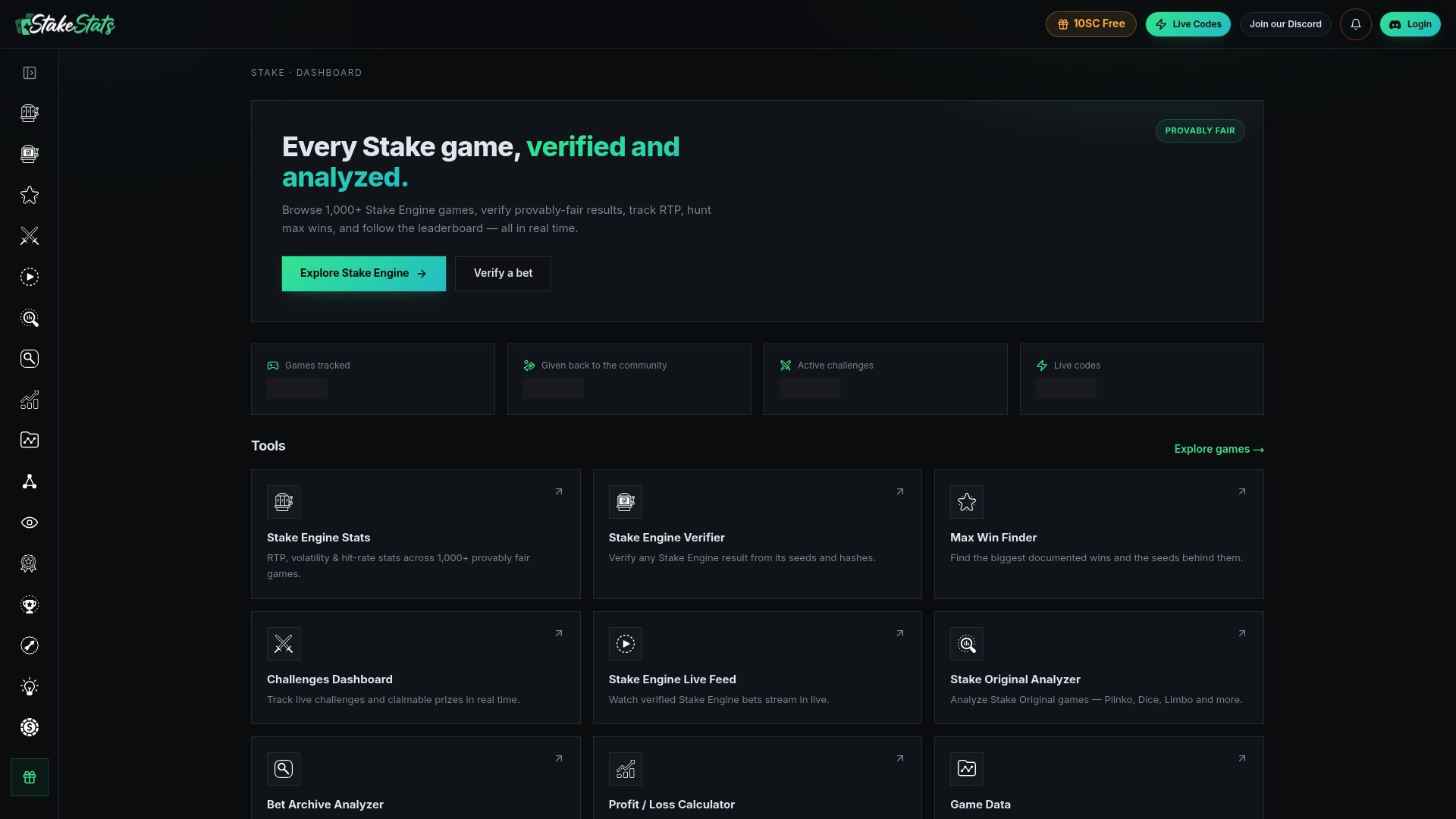
Pair that with our bankroll analyzer to see expected variance and drawdown for a given game before you commit a session to it. Start at our Stake tools overview and run a quick check before your next session or redemption attempt.
This article is general information, not a substitute for advice from a qualified lawyer. Consult a qualified legal professional about your own circumstances before acting on anything here.
FAQ
Does Stake Casino Pay Real Money?
Stake.us can allow Stake Cash to be redeemed for cash prizes under specific conditions, including meeting playthrough and KYC requirements, while Gold Coins carry no cash value at all. Stake.com, the separate offshore crypto casino, pays real money but is blocked for U.S. players entirely.
Is Gambling Legal in the USA?
Gambling legality in the U.S. depends on the state and the activity, since there's no single federal law that governs all forms of betting uniformly. Sweepstakes platforms like Stake.us argue they fall outside gambling definitions because they remove the "consideration" element, though that argument is actively being challenged by state regulators and city attorneys in multiple jurisdictions.
How Much Is 100 Stake Cash Worth?
Stake Cash redemption value and thresholds are set by the platform's own terms, which can include minimum balances and playthrough conditions before any cashout is processed. Check the current terms directly on Stake.us before assuming a specific dollar equivalence, since redemption rules have been a focus of regulatory scrutiny and can change.
Why Is Gambling Being Legalized?
Many states have moved toward regulating and taxing online gambling rather than leaving it in a legal gray area, since licensed frameworks generate state revenue and allow for consumer protections like age verification and dispute resolution. Sweepstakes casinos exist partly in response to this patchwork, operating under a different legal theory in states where traditional online gambling isn't licensed.
What Documents Do I Need to Verify My Account?
Most platforms, including Stake.us, require a government-issued photo ID and sometimes a proof-of-address document before processing a withdrawal, as outlined in their terms of service. This know-your-customer process is standard across the sweepstakes and gambling industry and typically must be completed before any redemption clears.
Sources
- Restricted states on the platform | Stake Help Center
- Cease and Desist Letter - Stake (stake.us) (2026.02.04)
- LA City Attorney Hydee Feldstein Soto Files Lawsuit Against Online Gambling Enterprise, Stake.us | City Attorney
- Stake.com vs Stake.us: Real money vs sweepstakes | Legal Clarity