
Provably Fair Dispute: What to Verify and Where to Report

A provably fair dispute has two halves. First you prove, with the seeds and nonce from your own bet, whether the recorded result matches the game math. Then, only if it does not, you report the bet to the operator, and to your state regulator if the operator is licensed and the complaint goes unresolved. Skip the first half and you are arguing from a feeling. Skip the second and a real discrepancy goes nowhere. At Stakestats we build the verification tools and guides for exactly this first half, so you walk into any dispute with a result you can reproduce.
TL;DR
- A provably fair dispute starts with verification: the client seed, the revealed server seed and the nonce must reproduce the result the casino recorded.
- If the check matches, the result was fixed before your bet. A loss that verifies is a loss, not evidence of cheating.
- If it does not match, re-check your inputs first. If they are correct, save the verifier output and bet record and report it.
- Withdrawals, bonuses and account access are handled through the operator's complaint process, and licensed US operators answer to a state regulator after that.
- A card chargeback is a separate track. It covers payment errors, not game outcomes.
Table of Contents
- What a provably fair dispute actually is
- Step 1: Save the bet before anything changes
- Step 2: Rotate the server seed to reveal the old one
- Step 3: Recompute the result and compare
- Why most mismatches are input errors
- A verified loss is not a fairness failure
- Step 4: Build the evidence file for a real mismatch
- Step 5: Report to the operator first
- Step 6: Escalate to your state regulator
- Card disputes are a different track
- Promo: verify first, then decide
- Perspective
- FAQ
- Sources
What a provably fair dispute actually is
In a provably fair game, the casino commits to a hidden server seed by showing you its hash (a fixed-length fingerprint) before you bet. You supply a client seed. Each bet combines the server seed, your client seed and a nonce, which is simply a counter that goes up by one with every bet. After you rotate the server seed, the old one is revealed, and anyone can recompute every bet that used it.
That gives you something ordinary online casinos cannot: a way to check a single result yourself. A dispute, in this setting, means one of three things:
- The recomputed result differs from what the casino recorded.
- The payout does not match the recorded result and the game's paytable.
- You cannot get a verifiable record at all, for example the server seed is never revealed.
Everything else, such as a slow withdrawal, a voided bonus or a locked account, is a real problem but not a fairness problem, and it goes down a different path. We cover that split below.
Step 1: Save the bet before anything changes
The first move is also the easiest to forget. Before you touch your seed settings, record:
- the bet ID or round ID, the game and the time
- your stake, the recorded result and the recorded payout
- a screenshot of your bet history showing those values
- the hashed server seed that was active, and your client seed and nonce
Rotating a seed changes what the fairness screen displays, so capture the screen first. If you later report the bet, this record is the backbone of the complaint.
Step 2: Rotate the server seed to reveal the old one
The active server seed stays hidden so that nobody can predict your future bets. To check past bets, you rotate (replace) the seed in the casino's fairness settings. The previous seed is then revealed in plain form, and you can see that its hash matches the one you were shown before betting.
Two common errors waste hours here. People copy the hash instead of the revealed seed, and people rotate the seed and then try to verify a bet that belongs to a different seed pair. Our walkthrough on how to rotate a server seed and verify your bets shows the exact screen flow, and the SHA-256 and HMAC guide explains what the hash check is really confirming.
Step 3: Recompute the result and compare
Copy the client seed, the revealed server seed and the nonce from the disputed bet into a verifier. Re-run the game's formula and compare two things: the recomputed outcome and the payout that outcome should produce under the game's rules.
The verification tools at Stakestats are built for this server seed and nonce check, and the guides explain each game's logic. For a concrete example, the dice verification in four steps shows how a roll is derived from the inputs, and five browser checks on bet hashes covers the hash side.
There are three possible outcomes:
| What you see | What it means | What to do |
|---|---|---|
| Match | The recorded result follows from the committed inputs and the game math | The result stands. Nothing to dispute on fairness grounds |
| Mismatch | Either an input is wrong or the record is wrong | Re-check inputs, then save evidence and report |
| Cannot verify yet | The server seed is still hidden or an input is missing | Rotate the seed and gather the missing input |
This three-way reading follows the player-help material from ProvablyFair.org on verification results, which also notes that a verified loss can still happen.
Why most mismatches are input errors
Before you call anything a discrepancy, rule out your own mistakes. The usual culprits:
- Wrong nonce. Nonces often start at 0 in the verifier but are displayed from 1 in the casino's history, or the reverse.
- Wrong seed pair. The bet was placed under an earlier client seed or server seed than the one you pasted.
- Hash instead of seed. The hash is public from the start. Only the revealed seed reproduces the result.
- Trailing spaces or copied line breaks in the seed strings.
- Wrong game version or formula. Some games add steps, such as ordering or multiple draws, after the first number is derived.
Our article on why seed and nonce verification won't match goes through each of these with examples. Fixing the input is how you turn an apparent mismatch into either a match or a clean, reportable one.
A verified loss is not a fairness failure
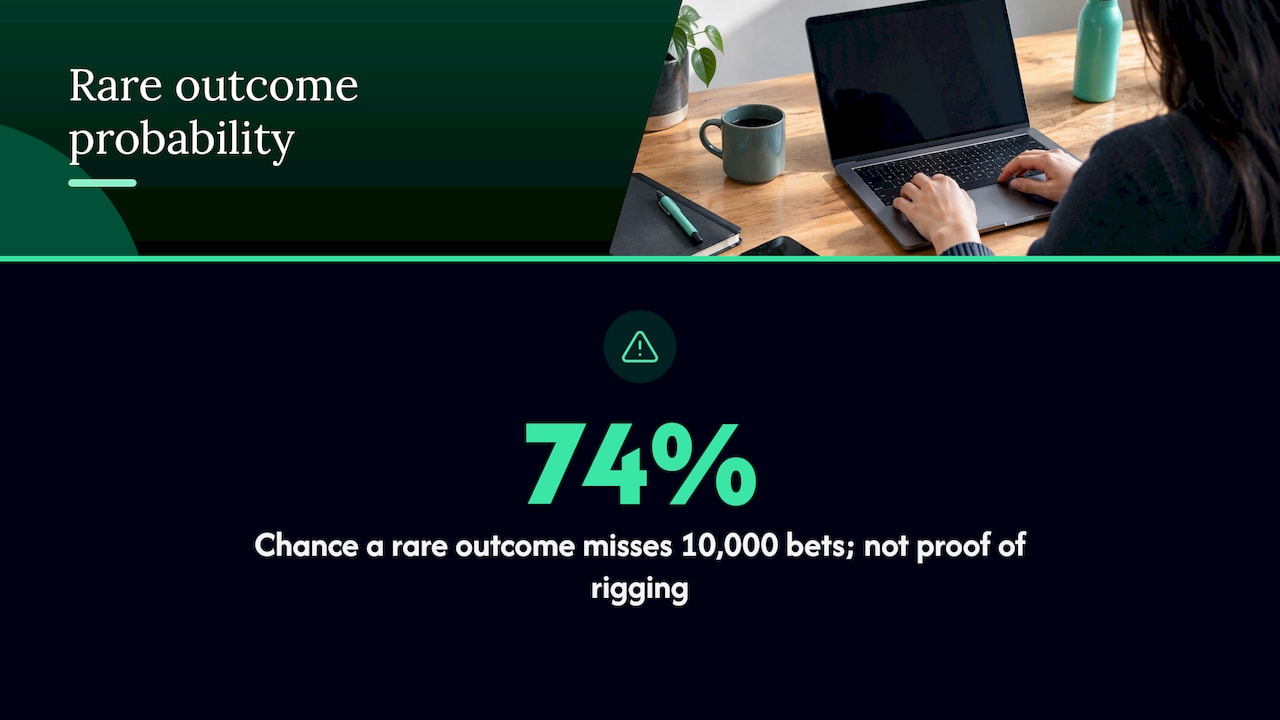
This is the point that frustrates players most, and understanding it protects you from a dispute that will go nowhere. Provably fair games are random. A rare outcome can stay away for a very long time. Take a 1-in-32,768 outcome: the chance that it never appears across 10,000 bets is roughly 74%, by simple probability. Waiting a long time for a feature is not proof of rigging.
What verification does prove is narrower and still valuable: the result was determined by values fixed before your bet and was not altered afterward. A successful check says nothing on its own about the house edge, licensing, withdrawals or how the operator handles complaints, a point also made in this plain-language explainer on what provably fair means. It also helps to know that if you never change the client seed, the operator supplied every input. Setting your own client seed before betting makes the protection stronger. Our guide on seed entropy explains why the quality of the seed matters.
We also cover what an audit can and cannot show in what a fair play audit proves. If you want to understand whether two games share mechanics before you suspect one of them, the game similarity guide helps.
Step 4: Build the evidence file for a real mismatch
If the check fails after you have ruled out input errors, report it with a file that someone else can reproduce. Include:
- the casino name, game, and bet or round ID
- the stake, the recorded result and the recorded payout
- the client seed, the revealed server seed and the nonce
- the verifier's output showing the recomputed result
- screenshots, timestamps, and a short note on what you expected instead
The aim is a reproducible issue, not an accusation. A reviewer should be able to paste your inputs and see the same number you saw. This matches the report requirements on the ProvablyFair.org report page, which also separates fairness reports from account problems.
If the dispute grows into something wider, also stop depositing while it is unresolved and keep every email and support message, as suggested in this guide to checking casino fairness. Write down the date, time and who you spoke with each time, the same habit that American Bettors Voice recommends for complaints.
Step 5: Report to the operator first
Every route runs through the operator before anyone else. Open a written ticket with your evidence file and state plainly what you are asking for: a review of the bet against the recorded seeds, and a corrected payout if the record is wrong. Keep the ticket number.
Licensed US operators are required to have a process for this, and the response windows are short. They differ by state:
| State | Operator response | Regulator step |
|---|---|---|
| Michigan | Written response within 10 calendar days | The Michigan Gaming Control Board cannot consider the complaint until it has the operator's response |
| New Jersey | Response within five calendar days | Unresolved complaints about accounts or game outcomes go to the Division of Gaming Enforcement, with documentation, under the internet gaming rules |
| Colorado | Response within 10 business days | The Division of Gaming accepts a written sports betting patron complaint afterward and focuses on complaints with a fraud component |
| North Carolina | Typically within 10 days for licensed sports and pari-mutuel wagering | Exhaust the licensee's procedures before using the Commission's complaint process |
| Pennsylvania | Not specified here | File with the Gaming Control Board within 30 calendar days of the incident |
Pennsylvania draws a useful line: a complaint is a difference of opinion that does not involve money, while a dispute is a claim for a specific amount of cash or merchandise. Name the dollar amount in your report if you are asking for one.
Step 6: Escalate to your state regulator
Once the operator has answered, or the deadline has passed, you can take the case to the regulator in the state where you placed the bet. Attach the same evidence file, the ticket number and the operator's reply. Two things to know in advance:
- Regulators review compliance. North Carolina's Commission says it cannot mediate, make final dispute decisions or order refunds, and Colorado's Division has no authority to order compensatory damages or restitution.
- A regulator can only act on operators it licenses. Many crypto casinos that run provably fair games operate offshore, so whether a US state agency has any jurisdiction depends on the operator and where you are. If the operator holds no license from your state, the operator's own process and the license it does hold are your channels.
If you suspect a cloned site, a fake license or identity theft, that moves beyond a game dispute and belongs with financial or cybercrime authorities, as the guide linked above notes.
Card disputes are a different track
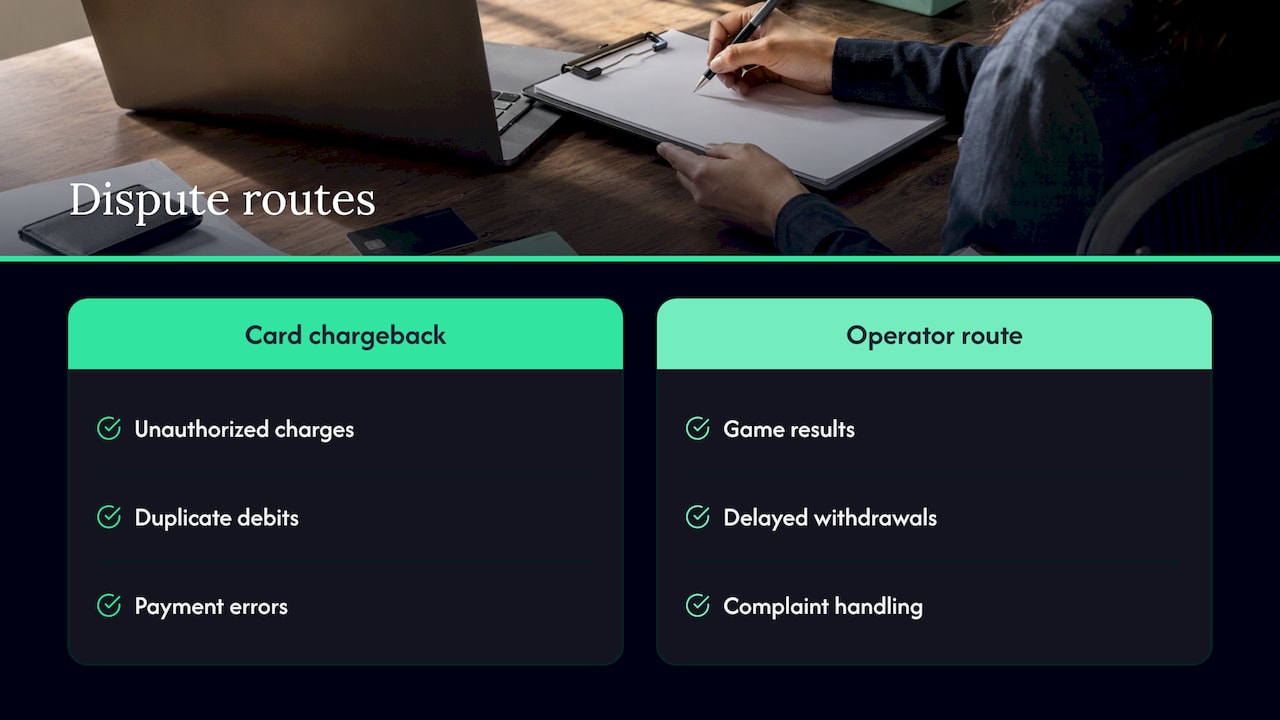
People often search for a way to get money back through their bank. A chargeback addresses a card transaction: an unauthorized charge, a duplicate debit or a payment error. It does not rule on whether a game result was fair. A result, a delayed withdrawal or the handling of a complaint goes through the operator and, where licensed, a regulator-approved route, as BetTimes explains.
Be careful with the idea that you can reverse a bet you authorized and lost. Banks are seeing this. In one case reported by Independent Banker, a customer disputed roughly $140,000 in sports betting deposits, claiming her phone was hacked. The bank and operator data showed the transactions came from near her home and the same IP address as her earlier winning transactions. The bank withdrew the provisional credit and closed the account, as detailed by Independent Banker. If you are struggling with gambling losses, contact the National Problem Gambling Helpline at 1-800-GAMBLER for support.
Promo: verify first, then decide
A dispute is only as strong as the proof behind it. Stakestats gives you the server seed and nonce bet verification tools, real-time RTP, volatility and hit rate stats across 2500+ Stake Engine games, and max win and bet replay lookup, so you can tell an unlucky streak from a record that does not add up. Our guides walk through each verification step in plain language.
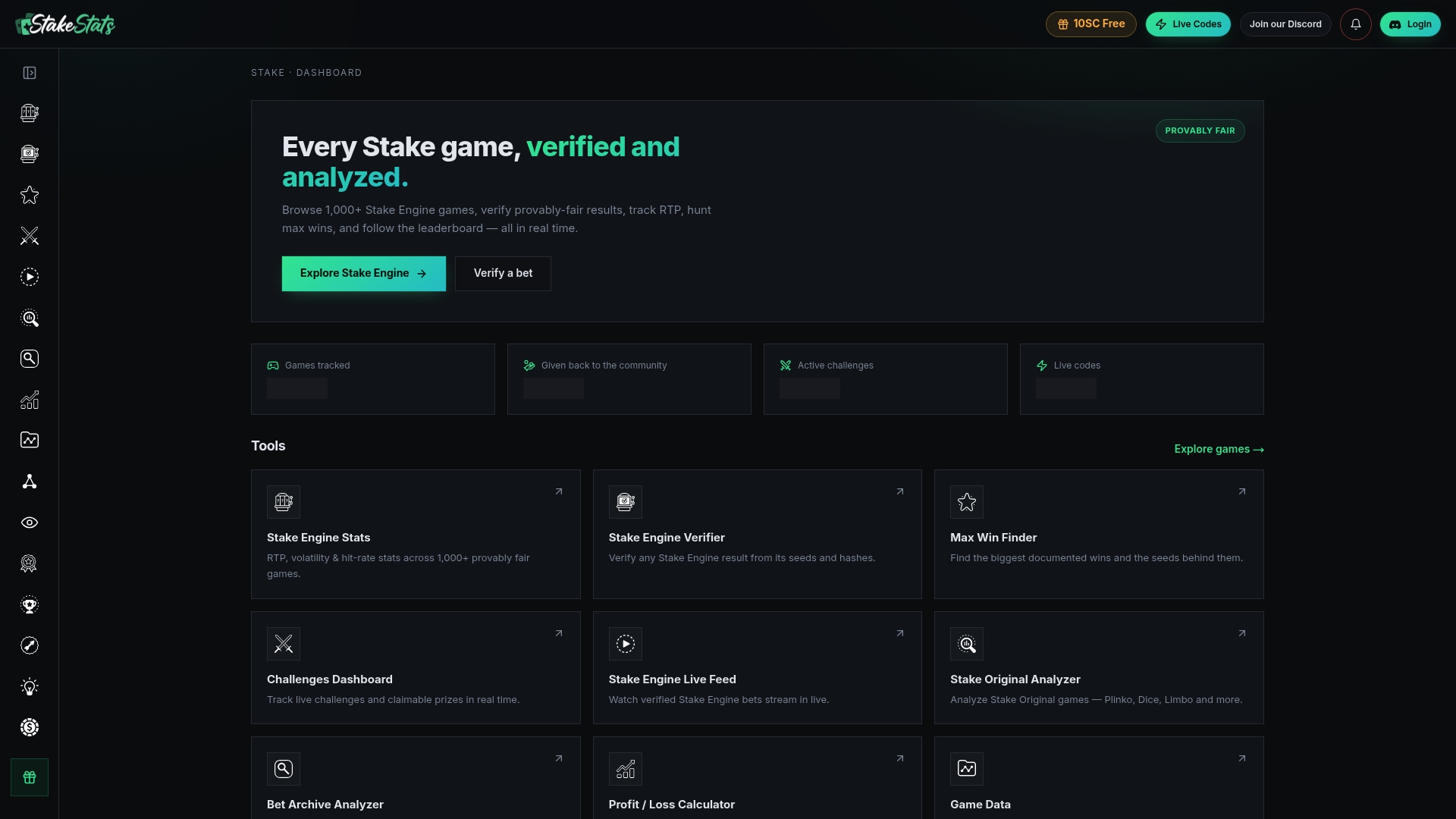
Start at Stakestats, or read how to audit on-chain bet proofs for Stake.com if you want to check a specific bet right now.
Perspective
Most disputes we see described by players fall apart for the same reason: the player never had a reproducible number. "It felt rigged" cannot be checked. A client seed, a revealed server seed and a nonce can.
That is why we built our tools around the verification step. Our position is simple: transparency is only useful if the player can act on it. Checking a bet should take minutes, and the result should be clear enough to paste into a support ticket or a regulator's form.
We also think players deserve honest expectations. Verification proves a result was fixed before your bet. Setting your own client seed, rotating seeds on a regular basis and keeping a bet log make that proof stronger, and our RTP, volatility and hit rate stats show what a game should do over thousands of rounds, so a short run does not mislead you.
Verify first. Document second. Report third. In that order, a dispute is a case instead of an argument.
Ian
FAQ
Can I dispute a provably fair result if the verification matches?
A matching verification means the recorded result follows from the committed seeds and the game math, so there is no fairness discrepancy to report. If your issue is a withdrawal, a bonus or account access, raise it with the operator's support and complaint process instead.
What do I do if the server seed is never revealed?
Rotate the server seed in the casino's fairness settings, which reveals the previous one. If the seed does not appear or its hash does not match the one shown before you bet, save screenshots and the bet ID and report that to the operator in writing.
Do US regulators handle provably fair complaints?
States that license online betting, such as Michigan, New Jersey, Colorado, North Carolina and Pennsylvania, publish complaint processes, and all expect you to go to the operator first. They review compliance and generally cannot order refunds, and they only cover operators they license.
Can my bank reverse a bet I lost?
A card dispute covers unauthorized charges and billing errors, not an authorized bet that lost. Disputing a legitimate losing bet can get your account closed and can carry legal risk, so use the card route only for a real payment error.
Sources
- ProvablyFair.org: Understand Bet Verification Results
- ProvablyFair.org: Report a Bet Verification or Payout Problem
- What Does Provably Fair Mean? (Avoidance of Doubt)
- Are Online Casinos Rigged and How to Check Fairness
- American Bettors Voice: What to do if you have a complaint
- Michigan Gaming Control Board: Patron Disputes
- New Jersey Chapter 69O Internet and Mobile Gaming
- Colorado Division of Gaming: Filing a Sports Betting Patron Complaint
- North Carolina Complaints
- Pennsylvania Gaming Control Board: File a Complaint/Dispute
- BetTimes: Refund vs chargeback in gambling payment disputes
- Independent Banker: How One Bank Tackled Online Gambling Friendly Fraud