
Verified Slot Clones: 3 Tiers of Mechanical Matches

This list groups verified slot clones and close mechanical equivalents by how tightly they copy the original's math and features, from exact reskins to games that just borrow the vibe. A reskin swaps art but keeps the same engine, while a mechanical derivative rebuilds the feel with different code. Start with the Gates of Olympus family for Pay-Anywhere clones, then check Supersized and Space Wars if you want to see "clone" as an actual in-game mechanic rather than a marketing label.
TL;DR:
- True reskins share the same engine and math, resulting in identical RTP, hit frequency, and bonus structures, unlike mechanical derivatives which diverge in math profiles.
- Confirming whether a game is a reskin or a mechanical clone requires checking the provider, engine, paytable, RTP, and bonus rules, not just visual similarities or themes.
- Slot mechanics labeled as "cloning" inside a game, such as reel duplication or symbol capturing, are separate from the industry term for game copies and do not imply the game itself is a clone.
- Operator-selected RTP settings can vary significantly even for identical code, so verifying the actual RTP and configuration is essential before wagering.
- Tools that verify RTP, engine details, and bonus rules directly at the operator level help players protect their bankrolls more effectively than relying solely on reviews or marketing claims.
Table of Contents
- What Counts as a Slot Clone, and Why the Term Has Two Meanings
- How to Tell a Reskin From a Mechanical Clone
- Reel Duplication and Cloning Pods: What "Clone" Means as a Mechanic
- Why the Same Mechanics Can Play Differently at Different Casinos
- A Verification-First Note on Slot Clone Lists
- How Slot Clones Became a Genre of Their Own
- Is Copying a Slot's Mechanics Actually Legal?
- How Clones Change the Way Players Choose Games and Casinos Pick Lineups
- Do Clones Actually Outperform the Originals They're Based On
- What Makes Building a Convincing Slot Clone Harder Than It Looks
- The Real Skill Isn't Finding Clones, It's Reading Them Correctly
- Verify Before You Stake: Tools for Checking Clone Configurations
- Sources
What Counts as a Slot Clone, and Why the Term Has Two Meanings
Ask ten players what a "slot clone" is and you'll get two different answers, and both are technically correct. The first meaning is the strict one: an exact reskin, where a studio takes an existing game's engine, paytable, and reel math and repaints it with new symbols and a new name. The second meaning is looser: a thematic or mechanical derivative that plays similarly (same cascade style, same multiplier logic) but runs on its own math model with its own RTP and volatility profile.
That distinction matters more than it sounds like it should. A true reskin should behave identically to its source game in terms of hit frequency and long-run return, because the underlying code hasn't changed. A mechanical derivative might feel like the original for the first ten spins and then diverge completely once you hit a bonus round with a different multiplier ceiling. The reliable way to tell them apart is checking the provider and engine behind each title, not just eyeballing the reels.
Below, entries are sorted into three tiers based on how closely they match: direct clones (same engine, reskinned art), mechanical equivalents (independent code, matching feature logic), and clone-feature games (titles where a "Clone" symbol or mechanic exists inside the game, unrelated to whether the whole game is a clone of something else).
Direct clones and same-engine reskins
- Gates of Olympus family reskins: Pragmatic Play has released several titles that share Gates of Olympus's tumbling-reel, ante-bet, and multiplier-scatter structure closely enough that specialist comparison sites treat them as the same design lineage. SlotRandomizer's alternatives list groups these by mechanical closeness rather than theme, which is the right way to judge a reskin.
- Starlight Princess: Built by the same studio on comparable tumble mechanics and multiplier scatter logic, Starlight Princess is frequently cited as the closest sibling to Gates of Olympus, differing mainly in theme and bonus buy pricing rather than core math.
Mechanical equivalents and Pay-Anywhere relatives
- Sweet Bonanza: Runs the same Pay-Anywhere cluster/tumble format popularized by the Gates of Olympus line, but with its own paytable and a candy theme instead of Greek mythology. It's an equivalent, not a reskin, since the underlying provider built separate math for it.
- Cluster and charge-meter relatives: Titles that mimic Reactoonz's cluster-pay and charge-meter bonus structure fall into this same equivalence category. SlotRandomizer's Reactoonz alternatives list organizes these by DNA match rather than skin, which is useful if cluster mechanics are what you're actually chasing.
Clone-feature titles
- Supersized (Nolimit City): Not a clone of another game at all, but it literally has a symbol called "Clone" that duplicates entire reel columns, expanding the grid from 5 reels up to 10 during its Fat Spins bonus tiers. Supersized's review breaks down how the Germinator mechanic and reel duplication interact, and it's one of the most volatile plays on this list.
- Space Wars (NetEnt): Features a Cloning Pod that captures winning symbols and replicates them across the reels during respins, chaining wins in a way that has nothing to do with copying another slot's design. The full review of Space Wars covers exactly how the pod fills and triggers.
How to Tell a Reskin From a Mechanical Clone
Confirming whether a game is an exact copy or just a cousin takes about five minutes if you know what to check.
- Identify the provider and engine. Two games from the same studio sharing an engine signature (visible in release notes or provider documentation) is the strongest reskin indicator.
- Compare the paytable line by line. If symbol payouts, multiplier ranges, and bonus triggers match exactly, you're looking at a reskin. If even one bonus rule differs, it's a mechanical equivalent at best.
- Check documented RTP and max-win ceilings. Identical math should produce identical published RTP ranges. A gap of even 1 to 2 percentage points signals separate math, not a reskin.
- Look at the bonus economy. Accumulating multipliers, tumble rules, and charge-meter thresholds need to match precisely, not just resemble each other, to count as a true clone.
- Cross-check with review sites and RTP trackers. Independent reviews and provably fair verification tools often catch configuration differences that provider marketing glosses over.
Pro Tip: Check the game's release notes and asset library before trusting a "clone" label. Studios frequently reuse animation assets and sound files across unrelated titles just to save development time, which can trick you into thinking two games share math when they only share art.
Reel Duplication and Cloning Pods: What "Clone" Means as a Mechanic
The word "clone" shows up inside plenty of slots as a literal game mechanic, and it's easy to confuse that with the industry term for a copied game. They're unrelated concepts that happen to share a name.
Supersized uses a dedicated Clone symbol that duplicates an entire reel column when it lands, and the reel grid can expand from its base 5 columns up to 10 during the Fat, Fatter, or Fattest Spins tiers. Every duplicated column adds fresh symbol positions, which mechanically multiplies your ways to win without touching the base paytable. Space Wars takes a different route: its Cloning Pod scoops up winning symbols mid spin, holds them, then replicates them back onto the reels during a respin sequence, chaining additional wins from the same trigger.
Neither mechanic makes the host game a "clone" in the reskin sense. Supersized isn't a copy of another slot, and neither is Space Wars, even though both games named a feature after the concept.
- Supersized's grid expansion is documented in its own review, alongside its Fat Spins tier structure.
- A second Supersized writeup notes it runs extreme volatility alongside the Germinator mechanic, which feeds the Clone symbol's duplication behavior.
- Space Wars pairs its Cloning Pod respins with published RTP and win-cap figures worth checking before you play.
Why the Same Mechanics Can Play Differently at Different Casinos
Identical code doesn't guarantee identical outcomes, because operators frequently license multiple RTP configurations for the same title and choose which one to deploy. A provider might build a game with three or four RTP settings baked in, and the casino you're playing at picks one without necessarily disclosing that other configs exist elsewhere.
A gap of just 1 to 2 percentage points in RTP compounds meaningfully across a long session, shifting your realistic loss rate more than the flashy bonus features usually do. Before staking anything sizable on a title you assume is a straight clone of a favorite, run through this short checklist:
- Check the provider's own paytable page for the RTP range it publishes for that title.
- Cross-reference reputable review sites, since comparison lists often flag when a listed alternative's RTP or max win diverges from the original.
- Use provably fair verification tools where available to confirm the game's actual configuration at your specific operator.
A Verification-First Note on Slot Clone Lists
Compiling a list like this means chasing provider paytable pages and cross-referencing review sites rather than trusting a game's title or theme at face value. The Supersized and Space Wars entries above hold up because their mechanics are documented directly by reviewers who broke down the reel and respin behavior, not just described in marketing copy.
One honest caveat: RTP and max-win figures shift by operator, so treat every number here as a starting reference point, then confirm it wherever you actually play.
How Slot Clones Became a Genre of Their Own
Slot cloning isn't a new phenomenon born from online casinos. Land-based manufacturers copied popular mechanical and video slot formats for decades before online gambling existed, often by simply adjusting paytables on near-identical cabinet hardware. What changed online was speed. A physical slot machine took months to manufacture and ship; a digital reskin can go from concept to live casino floor in weeks, sometimes days, once a studio has a working engine to repaint.
The Pay-Anywhere cluster format that Gates of Olympus popularized is a clear case study in how fast this cycle now moves. Within a relatively short window after its release, multiple studios and even the same provider released titles running comparable tumble and multiplier-scatter logic, chasing the same player base that had already proven it liked that structure. This isn't unique to one provider or one era. Cascading-reels games followed a similar path after early cluster-pay titles found an audience, and Megaways style mechanics spawned a wave of licensed and unlicensed lookalikes once the format proved it could hold player attention.
What's shifted more recently is transparency. Specialist comparison sites now do the work of sorting real mechanical clones from games that just share a theme, which gives players a way to judge a "new" release against what actually powers it under the hood. That's a meaningful change from a decade ago, when a reskin's true math was often impossible to verify without a provider's internal documentation.
Is Copying a Slot's Mechanics Actually Legal?
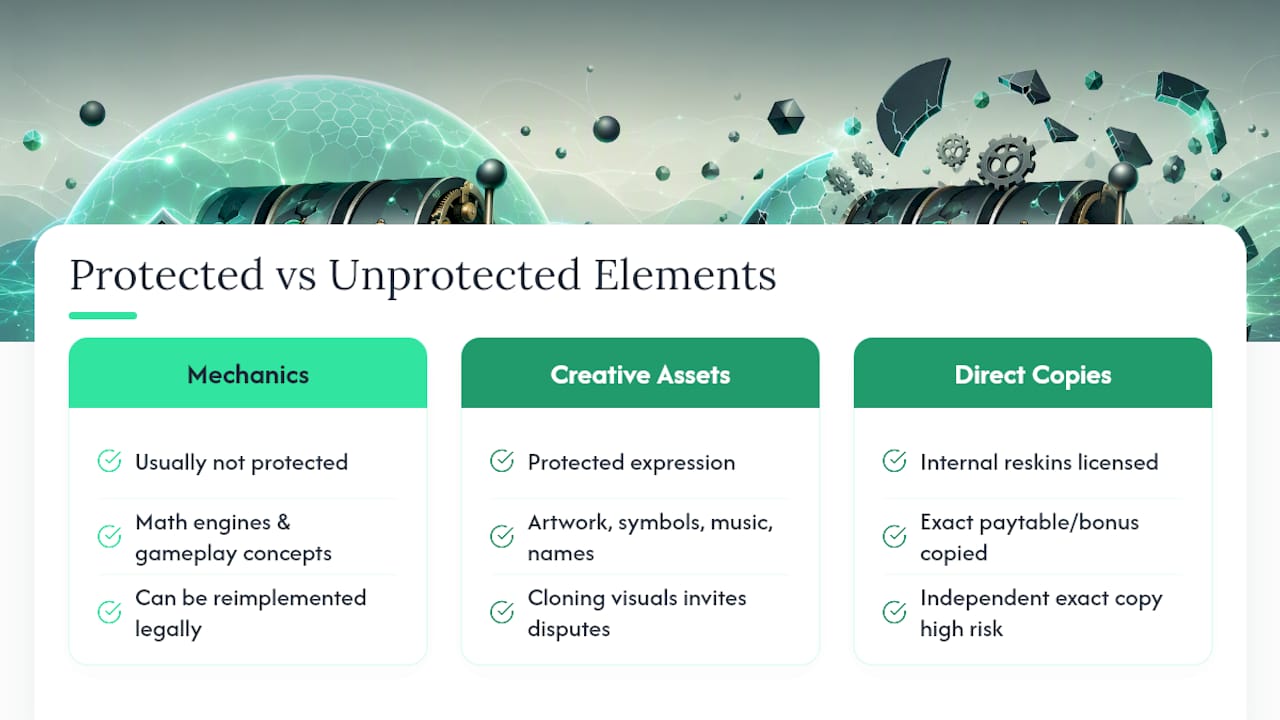
Slot mechanics themselves sit in a gray area that trips up a lot of players who assume a close copy must be illegal. Game mechanics, mathematical models, and general gameplay concepts are generally not protected the same way specific artwork, character names, or exact code are. A studio can build a tumbling-reel, ante-bet cluster game without infringing on another provider's copyright, provided it writes its own math engine and doesn't copy protected assets like symbol art, sound design, or branded characters.
What is protected, and what does trigger real legal disputes, is the specific creative expression: original artwork, distinctive symbol designs, music, and any trademarked names or characters. This is why "clone" games in the mechanical-equivalent tier almost always ship with entirely different visuals and themes even when their core math is functionally similar to a bigger competitor's hit. The theme is the legally exposed layer; the math underneath usually isn't.
Where this gets murkier is with direct reskins released by the same provider or its subsidiary studios, since those are typically licensed internally and raise no copyright question at all, just a business decision about market segmentation. Independent studios copying another company's exact paytable and bonus structure without building original math is the scenario that can actually invite legal action, though enforcement in practice is inconsistent across jurisdictions. None of this is legal advice specific to your situation, and copyright law around game mechanics continues to evolve as regulators catch up with the pace of releases.
How Clones Change the Way Players Choose Games and Casinos Pick Lineups
For players, clones solve a real problem: finding more of what you already like without waiting for a sequel that may never come. If Gates of Olympus's tumble mechanic hooked you, a mechanical equivalent like Sweet Bonanza gives you that same rhythm with fresh visuals, which extends the shelf life of a favorite feature set far beyond what the original title alone could offer.
The flip side is decision fatigue. When a lobby has a dozen titles running near-identical Pay-Anywhere logic, picking one becomes less about gameplay preference and more about theme, provider reputation, or which one happens to be running a promotion that week. That's not a small thing for casino operators, either. Lineup strategy increasingly leans on clustering mechanically similar titles together, both to keep players inside a genre they've shown they enjoy and to give newer, lesser-known providers a foothold by attaching their game to a proven mechanic.
There's also a trust dimension that specifically affects clone titles. A player who's tracked their RTP experience on an original game brings expectations into a mechanical equivalent that may not hold, since the two games' math is independent even if the feel is nearly identical. That's part of why verifying RTP per title, rather than assuming parity across a mechanical family, matters more with clones than with any other slot's you might mix into your session.
Do Clones Actually Outperform the Originals They're Based On
Originals still tend to win on brand recognition and long-term community trust, but clones frequently outperform on specific niches the original never targeted. A player who wants a lower-volatility version of a beloved high-volatility original will often gravitate toward whichever equivalent title dialed the swing down, even if that equivalent's name means nothing to a casual player.
Reception data across specialist review and comparison sites shows a consistent pattern: originals hold the top search volume and the most user reviews, but individual clone entries can post surprisingly strong return-play rates among players who found the original's volatility or bonus buy pricing unappealing. This is less about one game beating another outright and more about market segmentation. The original captures the players who want the "real" version and the cultural cachet of playing the title everyone talks about. The clones capture players optimizing for a specific stat, whether that's a lower minimum bet, a different max-win ceiling, or a bonus economy that pays out more incrementally instead of in rare massive spikes.
Popularity metrics on affiliate and review sites also tend to favor originals simply because they've had longer to accumulate reviews and search history, which can make a genuinely strong mechanical equivalent look underperforming purely due to age, not quality.
What Makes Building a Convincing Slot Clone Harder Than It Looks
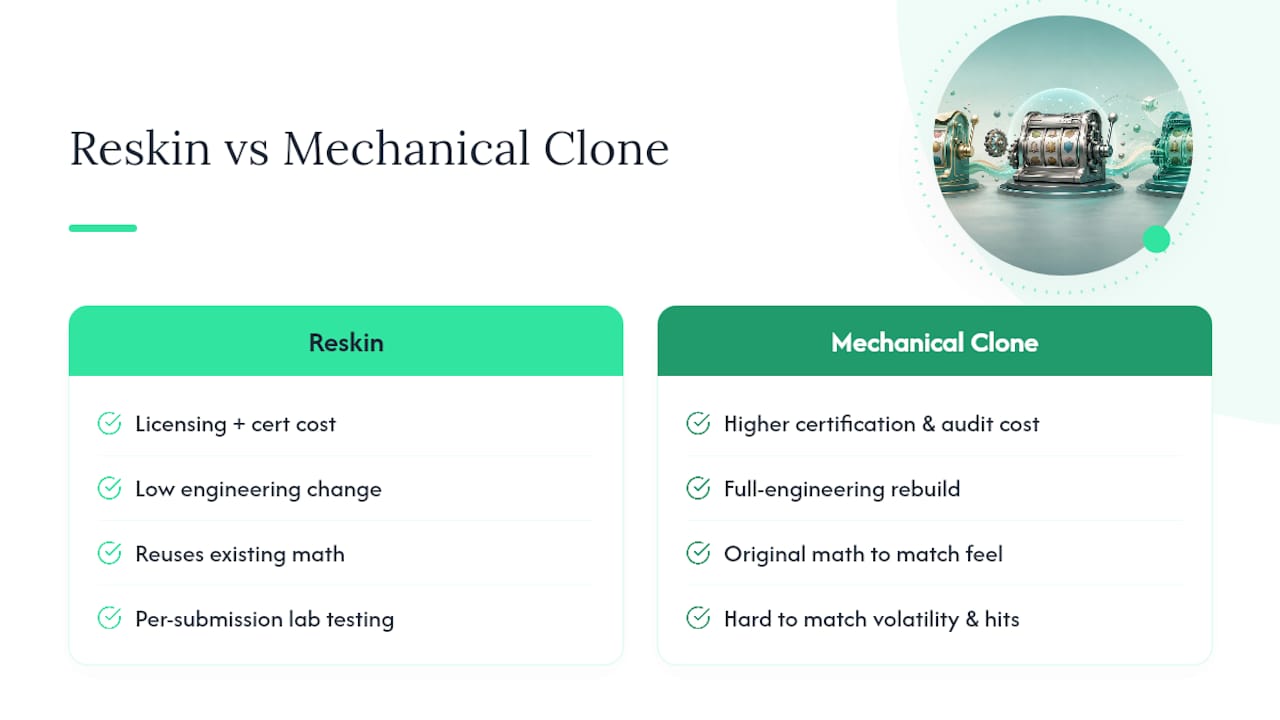
Reskinning an existing engine sounds simple until you account for licensing, math auditing, and jurisdictional certification, each of which adds real cost and time even when the underlying code barely changes. A studio releasing a reskin still needs the new title to pass independent testing lab certification in every jurisdiction it launches in, because regulators evaluate each game submission separately regardless of how similar it is to a prior release.
Building a true mechanical equivalent from scratch is harder still. Reproducing the feel of a hit tumble or cluster mechanic without directly copying protected code means engineers have to reverse-engineer the experience, not the math, and then build entirely original math that produces a comparable player experience. Getting volatility and hit frequency to feel right without the benefit of the original's years of live data tuning is where a lot of derivative titles fall short and end up feeling slightly off compared to the format they're chasing.
The advantage studios get in return is real, though. A mechanical equivalent lets a smaller studio enter a proven, already-popular genre without the years of trial and error the genre's pioneer spent finding the right balance. It also lowers marketing risk considerably, since players already understand the core loop and don't need to be taught a new mechanic from zero. That tradeoff, lower design risk against higher certification and differentiation cost, is the real calculation behind most clone development decisions, not simple copying laziness.
The Real Skill Isn't Finding Clones, It's Reading Them Correctly
Most "best slot clones" content treats mechanical similarity as the whole story, and that's the gap worth calling out directly. Knowing that Sweet Bonanza runs a Pay-Anywhere format like Gates of Olympus tells you almost nothing about whether it'll play like it at your specific casino, because RTP configuration and bonus buy pricing can diverge even between two games from the same provider's own catalog.
The conventional approach of matching games by theme or surface mechanic alone leads players to false confidence. You end up expecting one game's volatility from another simply because they share a tumble animation. What actually matters is treating every clone entry as its own unverified claim until you've checked the provider's published RTP range and confirmed the bonus economy rules match what you're used to.
Prioritize verification over discovery. Finding ten games that resemble your favorite is easy; finding out which three of them actually match its math is where the real value sits. That's a different skill than browsing a list, and it's the one that protects your bankroll when a "close enough" clone turns out to run a meaningfully lower RTP than the original you fell in love with.
— Ian
Verify Before You Stake: Tools for Checking Clone Configurations
Reading a review is a good start, but confirming a specific game's RTP, engine, and bonus rules at the exact operator you're playing on is what actually protects your bankroll. That's a gap that verification tools fill for players working through a slot clones list: instead of trusting a provider's marketing page, users can check real-time RTP, volatility, and hit-rate stats across many Stake Engine titles and see how a mechanical equivalent compares to the original it's echoing.
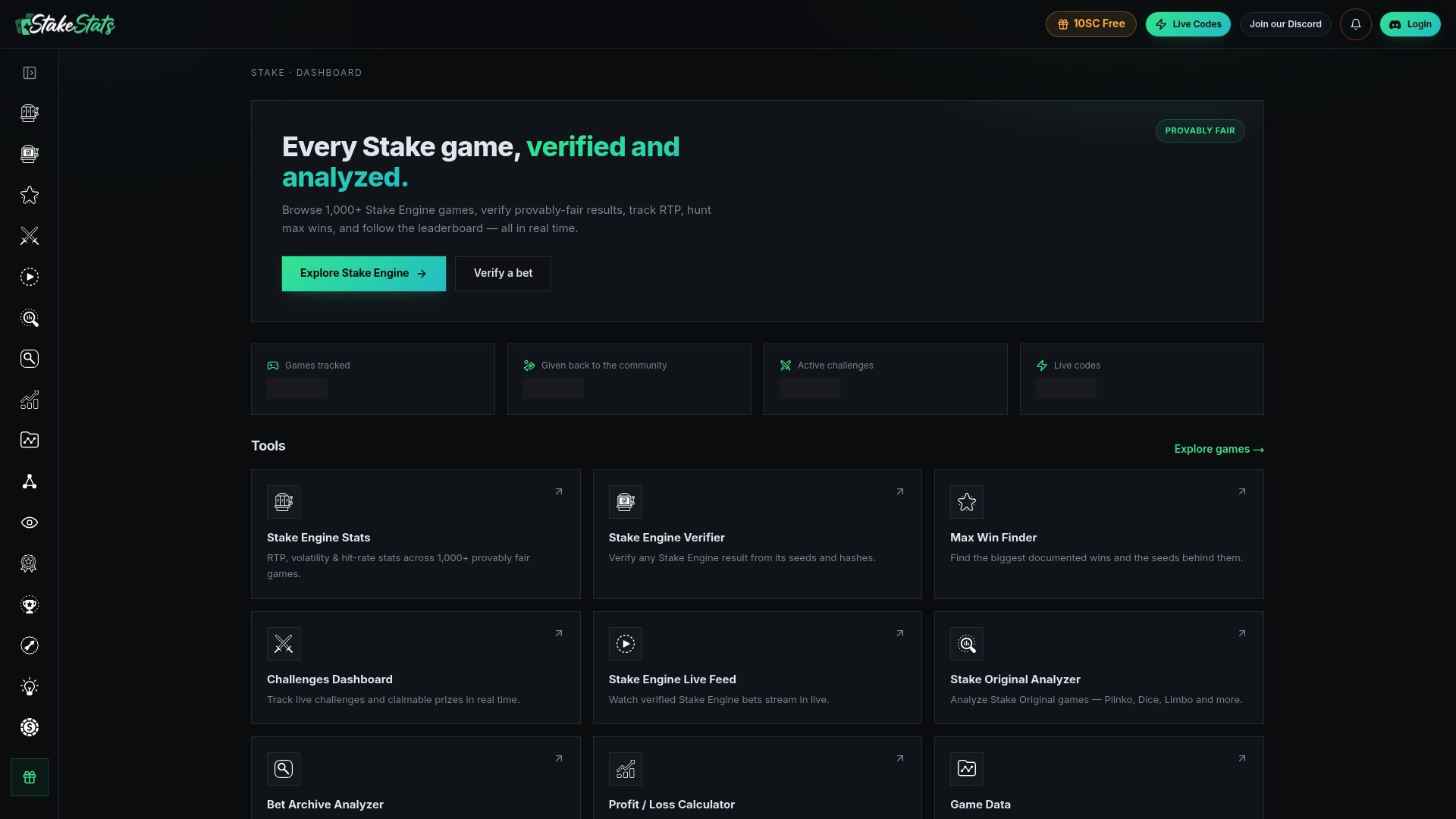
Stakestats' provably fair verification tool lets you check server seed and nonce data directly, so you're not relying on a review site's word for how a game actually resolves outcomes. If bonus buy pricing or promo terms are part of your decision between a clone and its source game, the bonus verification tool breaks down contribution rules before you commit real funds. Run the numbers on your bankroll against a given title's documented RTP and volatility using the bankroll analyzer before you size your first bet.
Sources
- Supersized Slot Review 2026 ᐈ Free Demo Game
- Space Wars (NetEnt) Demo Play and Full Review
- Slots Like Gates of Olympus: 20 Verified Alternatives (2026)