
Protect Your Bankroll: 1.5x–2x Stake Crash With Provably Fair Checks

The most effective Stake Crash strategy combines modest auto-cashout targets (roughly 1.5x to 2x), fixed stake sizing of 1% to 2% of your bankroll, and hard session stop rules. Predictors and bots cannot reliably forecast provably fair rounds, so don't rely on them. Verify suspicious results with a provably fair verification tool instead of guessing.
TL;DR:
- Using modest auto-cashouts between 1.5x and 2x reduces risk, but yields thin profits, suitable for small bankrolls or beginners.
- Medium-risk strategies targeting 2x to 3x can lead to significant streaks, requiring sufficient bankroll resilience and patience.
- Progressive betting systems like Martingale are extremely risky and can wipe out accounts during long losing streaks, often hitting platform bet caps.
- Strict pre-set session limits, fixed stake sizes, and verification tools are essential to avoid emotional decisions and ensure fair play.
- Betting history patterns and timing offer little forecasting value, but behavioral cues can help manage fatigue and reduce costly impulsive bets.
Table of Contents
- Stake Crash Strategies for Every Risk Level
- Bankroll Management and Session Rules That Actually Hold Up
- Crash Math and Provably Fair Mechanics: Why You Can't Predict Rounds
- Using Auto-Cashout, Auto-Bet, and Hotkeys Without Losing Control
- Mistakes That Kill Bankrolls Fast
- How verification tools keep your play honest
- What Timing and Player Behavior Actually Tell You
- Comparing Crash Variants and Platform Differences
- My Approach to Playing Crash
- Try These Stakestats Tools Before Your Next Session
- Sources
Stake Crash Strategies for Every Risk Level
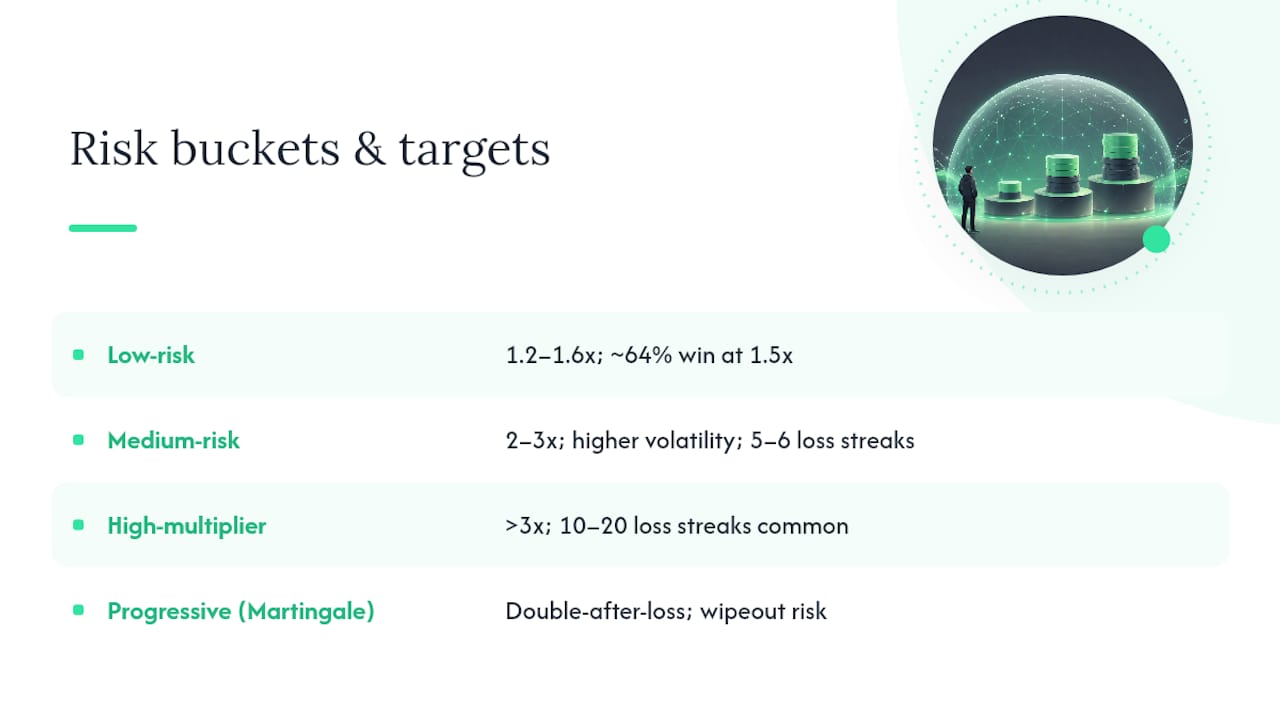
Every workable approach to Stake Crash falls into one of four buckets: low-risk, medium-risk, high-risk multiplier hunting, or progressive betting systems like Martingale. Picking the wrong one for your bankroll size is the fastest way to burn through it in a single session.
1. Low-risk, high-frequency cashouts (1.2x to 1.6x)
This is the entry point for anyone new to crash betting techniques or working with a smaller bankroll. You set an auto-cashout at something like 1.4x and let the round hit it almost every time it clears that threshold. A 1.5x target lands a win close to 64% of the time, which means long stretches without a loss but also thin profit per round. On a $100 bankroll, that's a $1 to $2 stake per round, aiming for steady, boring gains rather than a jackpot.
2. Medium-risk targeting (2x to 3x)
Here you accept more volatility for a better payout per win. Rounds crashing below 2x happen often enough that you'll eat a real losing streak, sometimes five or six rounds in a row, before a hit lands. This range makes sense once you've got a bankroll that can absorb that swing without forcing you to change your stake mid-session. It's a rational middle ground for someone who has played enough rounds to know their own patience threshold.
**3. Chasing big multipliers is closer to lottery behavior than betting strategy. Losing streaks of 10, 15, even 20 rounds are normal at this range, and a single win rarely offsets what came before it. Only attempt this with money you've mentally already written off, and never with a stake size above the smallest unit your bankroll rules allow.
4. Progressive systems (Martingale and variants)
Martingale means doubling your stake after every loss so a single win recovers the whole deficit. It works on paper. In practice, a run of eight straight losses turns a $1 opening stake into a $256 bet, and most platform bet caps or bankroll limits will stop you before recovery happens. This is the strategy most responsible for wiped-out accounts, because the math looks safe until the losing streak runs one round longer than your budget allows.
5. Hybrid rotation
Split your bankroll into segments. Switch entirely to low-risk mode the moment you notice frustration creeping into your decisions.
Pro Tip: Write your target multiplier down before the session starts, not while you're mid-round. Deciding your cashout point in real time is exactly when tilt takes over.
Bankroll Management and Session Rules That Actually Hold Up
Stake management tips only work if they're set before you start playing, not adjusted on the fly after a bad round.
Session limits matter just as much as stake size. If a $200 session bankroll drops to $160, you're done for the day. If it climbs to $280, take the win and log off rather than pushing for more.
Raising your bet after a loss feels intuitive, but it's the same trap Martingale sets: it assumes the next round somehow owes you a win. It doesn't. Provably fair rounds don't remember what happened before them, so a losing streak is not "due" to end.
Quick worksheet: bankroll ÷ 100 = base stake size. Write these three numbers down before you place a single bet.
Crash Math and Provably Fair Mechanics: Why You Can't Predict Rounds
Every crash game runs on a rough 1/x probability curve: the chance of a round reaching multiplier x is approximately 1 divided by x.
Stake Crash uses a hash-chain plus a public block salt model to prove fairness, an architecture that confirms the outcome was locked before the round started but never tells you what the next one will do. Stake Crash also carries roughly a 99% RTP, or 1% house edge, which means the platform keeps about 1% of total wagered volume over the long run, regardless of any short-term hot or cold streak you experience.
Predictor tools that show you the last 50 rounds aren't predicting anything. They're just visualizing history, which is useful for understanding volatility but useless for forecasting an independent, provably fair round.
Using Auto-Cashout, Auto-Bet, and Hotkeys Without Losing Control
Automation enforces discipline better than willpower does, but only when it's configured conservatively. Set your auto-cashout at a fixed target you decided before the session, not one you adjust after a near-miss.
- Auto-bet with stop-on-loss and stop-on-profit conditions turns your session rules into something the platform enforces instead of you.
- Hotkeys reduce speed-induced mistakes during fast-paced rounds, but they can also let you place a bet before you've registered what just happened. Use them only once your target and stake are already locked in.
- Practice new patterns in demo or social modes first, and never download unofficial "predictor" apps or APKs. These carry real security risk and offer zero actual predictive value.
- Automation checklist: set a stake cap, set stop-on-loss, set stop-on-profit, and review your session log afterward.
Pro Tip: If an auto-bet progression doubles your stake more than three times in a row without a hit, that's your signal to stop the sequence manually, not to trust the system to save you.
Mistakes That Kill Bankrolls Fast
- Chasing losses by raising your stake after a bad round, which turns one loss into a much bigger one.
- Trusting a "hot streak" in the history strip. Rounds are independent; the gambler's fallacy is not a strategy.
- Downloading third-party predictor tools or APKs that promise guaranteed multipliers. Treat these as security threats, not shortcuts.
- Playing without a session log, which makes it impossible to notice you're on a downward trend until the bankroll is already gone.
- Playing solo with no accountability. A simple cooling-off rule, like stepping away for 24 hours after hitting a stop-loss, keeps one bad session from becoming a bad week.
How verification tools keep your play honest
Verification tools remove the guesswork that fuels bad decisions. Stakestats' provably fair explanation page walks through how to check a round's hash against its outcome, so a surprising crash doesn't automatically feel rigged.
- Use a provably fair checker to confirm a specific round's result matches its committed hash.
- Run your numbers through the bankroll analyzer to test stake sizing before you play, not after a losing session.
- Check historical volatility on the Stake Originals Analyzer to see how a game's multiplier distribution has actually behaved.
It confirms fairness, not a forecast. These tools support analysis and transparency. They don't predict outcomes or guarantee profit.
What Timing and Player Behavior Actually Tell You
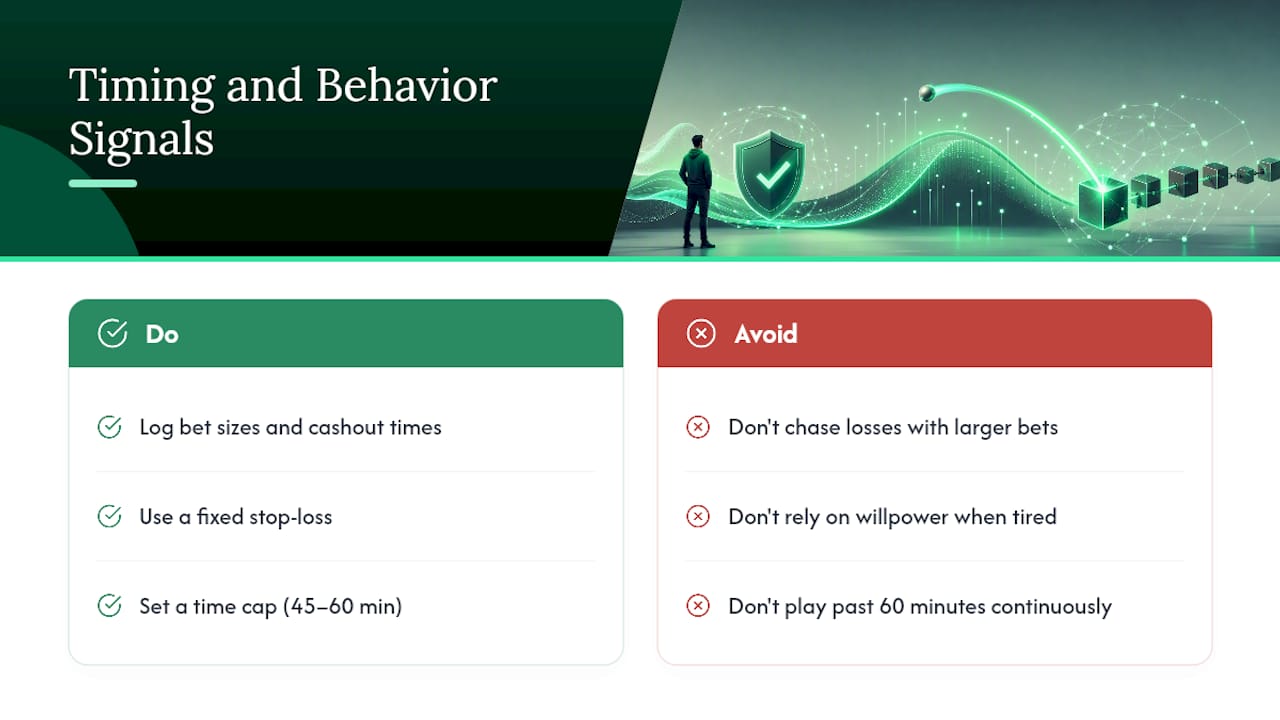
Watching bet timing patterns won't help you predict the next crash point, but it will tell you a lot about your own decision-making. Players tend to place larger, faster bets in the seconds right after a big loss, a pattern that shows up across nearly every fast-paced betting format, not just crash games.
Session data also tends to show a clear drop-off in decision quality after roughly 45 to 60 minutes of continuous play. Reaction time to cash out slows, and bet sizing becomes less consistent. This isn't about the game changing. It's about fatigue changing you.
The practical takeaway: log your bet sizes and cashout timing for a handful of sessions. If you notice your stakes creeping up late in a session, or right after a loss, that's a behavioral pattern worth correcting with a hard rule rather than willpower. A fixed stop-loss and a time cap solve this more reliably than trying to "concentrate harder" once fatigue has already set in.
Comparing Crash Variants and Platform Differences
Not every crash game runs the same math or the same interface, and the differences matter for strategy. Some platforms cap the maximum multiplier a round can reach; others let it climb without a ceiling, which changes how realistic high-risk multiplier hunting actually is. Auto-bet functionality also varies. Some platforms support layered stop conditions (stop on profit, stop on loss, stop after X rounds), while others offer only a basic cashout toggle.
Interface details count too. Games with visible bet history strips make it easier to fall into pattern-spotting habits that don't actually improve your odds, while cleaner interfaces without prominent history can nudge players toward more disciplined, target-based play. Before committing real money to any variant, check its stated RTP and provably fair verification method. Those two facts tell you more about a game's fairness than anything in its visual design.
My Approach to Playing Crash
I ignore predictor tools entirely and trust discipline over pattern-spotting. If a session stops feeling like entertainment and starts feeling like chasing a deficit, that's my signal to close the app.
— Ian
Try These Stakestats Tools Before Your Next Session
If you've read this far, you already know the strategy that works: fixed targets, small stakes, and verification over guesswork. Stakestats gives you the tools to execute that plan without relying on gut feeling. The provably fair explanation page shows you exactly how to check a round's hash against its result, and the bankroll analyzer lets you plug in your bankroll and get a stake size and session cap back in seconds.
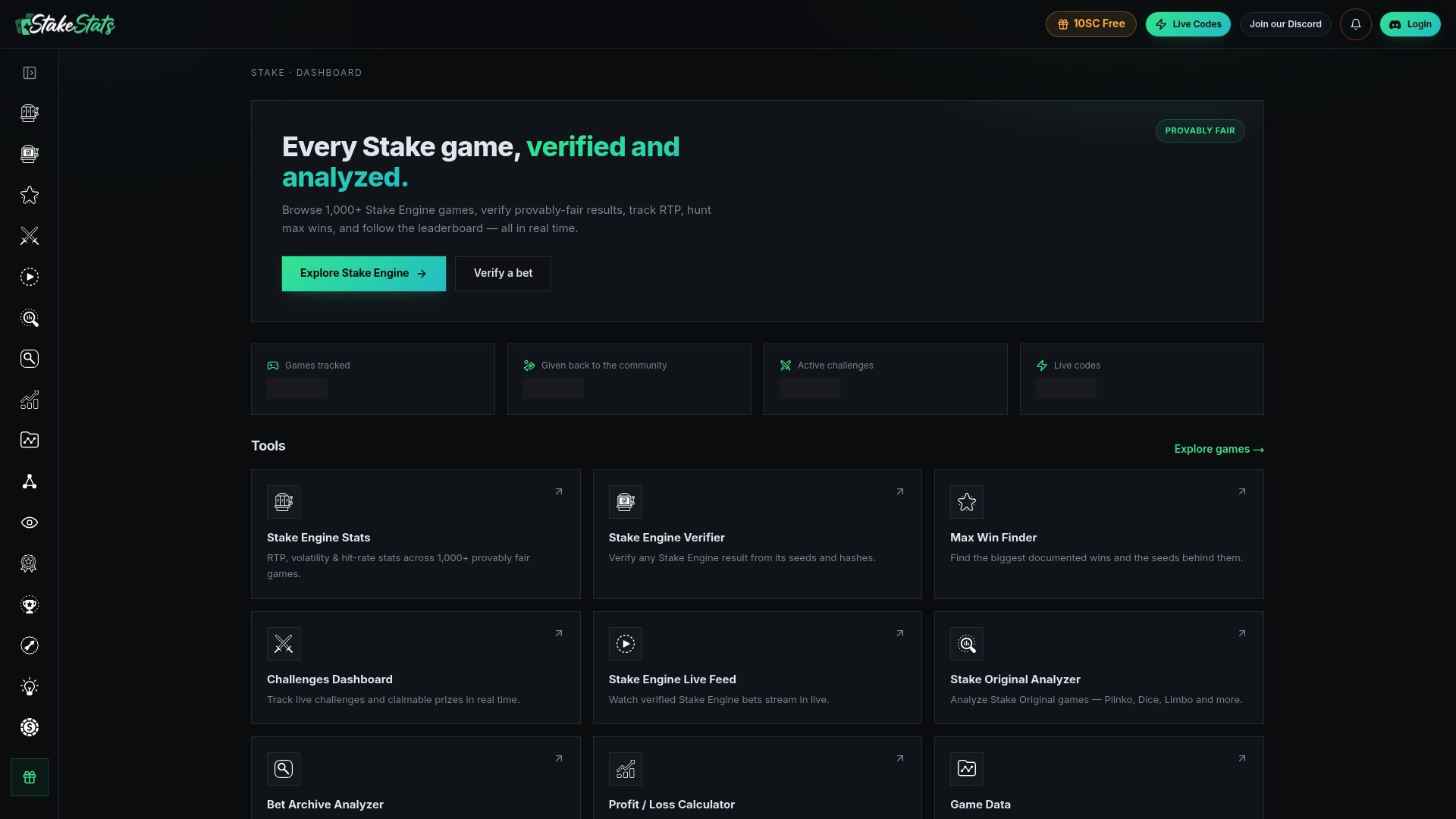
Start by pasting a round's hash into the verification tool the next time a result feels off. Then run your bankroll numbers through the analyzer before your next session, not after a rough one. Neither tool predicts the future. Both remove the guesswork that leads to bad decisions, which is the entire point of playing with discipline instead of hope. Visit Stakestats to get started.
This article is general information, not a substitute for advice from a qualified financial advisor. Consult a qualified financial professional about your own circumstances before acting on anything here.
Sources
- Stake Crash Predictor Explained: Crash Game Strategies & Myths
- Stake Crash Guide for 2026: How to Play Crash on Stake