
Types of Competitive Gaming Wagers: 2026 Guide

Esports wagering is defined as placing bets on the outcomes of competitive video game matches, tournaments, and in-game events. The types of competitive gaming wagers available today span from simple match winners to granular micro-markets and prediction market shares. Titles like Counter-Strike 2, League of Legends, Dota 2, and Valorant account for roughly 75% of total esports betting handle worldwide. That concentration means most of the liquidity, the tightest odds, and the widest market selection all live inside those four games. Whether you are new to wagering on gaming tournaments or looking to sharpen your esports betting strategies, knowing each bet format is the foundation of every profitable decision.
1. Types of competitive gaming wagers: the full map
Competitive gaming bets fall into two broad categories. The first is match-based markets, which cover outcomes at the series or map level. The second is micro-markets and proposition bets, which target individual in-game events. Headline markets carry lower hold percentages and higher liquidity. Micro-markets carry hold percentages of 6–8%, reflecting their pricing complexity. Understanding where each wager type sits on that spectrum tells you how much edge you need before a bet makes sense.

2. Match winner (moneyline)
The match winner bet is the simplest online gaming wager type available. You pick which team wins the series, and the sportsbook pays out at fixed odds. In a Counter-Strike 2 best-of-three, that means your team must win two maps. Moneyline markets on top-tier CS2 events carry the tightest spreads because CS2 features deep market depth with established leagues and high betting volume. Start here if you are learning how to bet on esports, since the outcome is binary and easy to evaluate.
3. Map winner
Map winner bets let you wager on a single map within a series rather than the full match. A team can lose the series but still win the map you backed. This format is popular in CS2 and Valorant, where individual maps have distinct tactical identities and team strengths vary by map pool. Map winner markets offer more granular control than moneyline bets without the complexity of micro-markets. They are a strong middle ground for bettors who have done map-specific research.
4. Handicap and spread betting
Handicap betting adjusts the result by a set margin before settling the wager. A common example is a map handicap of -1.5, meaning the favored team must win the series 2-0 for your bet to pay. This format adds value when one team is a heavy favorite and the moneyline odds are too short to be worth the risk. Handicap markets are widely available across CS2, League of Legends, and Dota 2. They reward bettors who have a strong read on how dominant a team actually is, not just whether they will win.
Pro Tip: On handicap bets, check a team's recent map win rates by opponent tier. A team winning 2-1 repeatedly against weaker opponents is a poor candidate for a -1.5 map handicap.
5. Totals (over/under)
Totals bets ask you to predict whether a combined stat will go over or under a set number. The most common version in esports is total maps played in a series. A best-of-three set at 2.5 maps means you are betting on whether the match ends 2-0 (under) or goes to a deciding map (over). CS2 round totals are another popular format, where you bet on the total rounds played across a map. Totals markets sit alongside moneyline and handicap as the core of match-based wagering and generally carry competitive hold percentages.
6. Micro-markets and player props
Micro-markets are bets on specific in-game events rather than match outcomes. Common examples include first blood, first tower, pistol round winner, and player props like kills, deaths, headshot percentage, and average damage per round. These markets exist because esports generates a high volume of micro-events per match, giving sportsbooks many pricing opportunities. The tradeoff is that micro-markets carry hold percentages of 6–8%, making them harder to beat consistently.
Common micro-market categories by game:
- CS2: Pistol round winner, first kill, knife round, map total rounds
- League of Legends: First blood, first tower, first dragon, first baron
- Valorant: First round winner, first blood, total rounds on a map
- Dota 2: First Roshan kill, first blood, total kills over/under
Pro Tip: Treat micro-markets as small-unit plays. Allocate no more than 1–2% of your bankroll per bet in these markets to account for the higher variance and wider hold.
7. Live (in-play) betting
Live betting is the fastest-growing segment in esports wagering, with odds updating in real time as kills, rounds, and objectives occur. You can bet on match winner, map winner, round winner, and event props while the game is in progress. The appeal is that you can react to what you are watching rather than committing before the match starts.
The challenge is stream latency. Most viewers watch on a broadcast delay of 30–180 seconds. Stream delay creates a pricing gap where bettors with faster data feeds can act on events before the sportsbook updates its odds. For most bettors, this means the opposite risk: you may be betting on stale information without realizing it.
Strategies for live esports betting:
- Watch the game directly on the tournament's official stream for the fastest available feed.
- Focus on markets that update slowly, such as match winner, rather than round-by-round props.
- Use momentum shifts, like a team winning a pistol round, as signals for map winner bets.
- Avoid chasing losses in live markets. Odds move fast and emotional bets compound quickly.
- Track team performance across maps in real time to identify when a favorite is underperforming their expected win rate.
8. Futures and outright tournament bets
Futures bets are long-term wagers on outcomes that resolve at the end of a tournament or season. Common examples include tournament winner, regional split champion, and player MVP awards. Futures markets offer thinner liquidity and slower-moving odds, but they can carry genuine value when you identify a team before the market catches up. Placing a futures bet on a dark horse team before a major tournament can return significantly better odds than betting on them match by match.
The risk is capital lockup. Your stake is tied up until the tournament concludes, sometimes weeks later. Futures also carry roster change risk, since a single player transfer can completely alter a team's competitive strength.
9. Prediction markets
Prediction markets are a structurally different format from traditional sportsbooks. Platforms like Polymarket operate as exchanges where users trade shares on outcomes, priced dynamically between 0¢ and $1. A share pays out $1 if the outcome is correct and $0 if it is not. You can exit your position before the match ends by selling your shares at the current market price.
This format creates flexibility that fixed-odds sportsbooks do not offer. Prediction markets use crowd-sourced pricing that reflects real-time collective judgment rather than a bookmaker's margin. The tradeoff is that liquidity on esports prediction markets can be thin outside of major events like The International or CS2 Majors.
| Feature | Traditional sportsbook | Prediction market |
|---|---|---|
| Pricing model | Fixed odds set by bookmaker | Dynamic crowd-sourced share price |
| Exit before settlement | No | Yes, by selling shares |
| Hold percentage | Varies by market | Determined by bid/ask spread |
| Liquidity | High on headline events | Thinner, event-dependent |
| Best for | Match-based and micro-market bets | Long-form and tournament outcome bets |
Key takeaways
The most effective esports betting strategy combines match-based wagers for core volume with selective micro-market and live bets where you hold a clear knowledge edge.
| Point | Details |
|---|---|
| Match-based bets are the foundation | Moneyline, map winner, handicap, and totals carry the best liquidity and lowest hold. |
| Micro-markets demand smaller stakes | Hold percentages of 6–8% mean you need a larger edge to profit; keep unit sizes small. |
| Live betting rewards game knowledge | Real-time odds create opportunity, but stream latency is a real risk to manage. |
| Futures offer value before markets adjust | Early tournament bets on undervalued teams can return better odds than match-by-match wagering. |
| Prediction markets add flexibility | Share-based trading lets you exit positions before settlement, unlike fixed-odds bets. |
Why I think most bettors pick the wrong market first
Most people who start wagering on gaming tournaments go straight to micro-markets. The prop bets look exciting, the odds seem generous, and the events happen constantly. That is exactly the wrong starting point.
The blended skillset required for esports betting is real. You need game knowledge and market knowledge at the same time. Micro-markets punish you for gaps in either. A first blood bet in CS2 is priced by a team of analysts who watch more matches than you do. The 6–8% hold on those markets is not an accident. It reflects how hard those outcomes are to price.
My recommendation is to build your edge in match-based markets first. Learn how CS2 map pools work. Track League of Legends team performance across patches. Game meta changes triggered by patches can instantly shift competitive balance, so your research needs to be current, not historical. Once you can consistently identify value in moneyline and handicap markets, then layer in live betting and selective micro-markets.
Futures and prediction markets are where I find the most underexplored value right now. Sportsbooks are slower to update futures odds after roster changes. Prediction markets on major Dota 2 and CS2 events often misprice teams in the early registration window. That is where patient, research-driven bettors have a real edge over casual volume.
Avoid spreading your bankroll across obscure regional tournaments. The data is thin, the rosters are unstable, and the sportsbook margins are wider. Stick to the four major titles and the top-tier events where information is available and markets are competitive.
— Ian
Stakestats and smarter esports wagering
Knowing the different gaming bet formats is only half the equation. The other half is having the right tools to verify fairness and track your results with clarity.
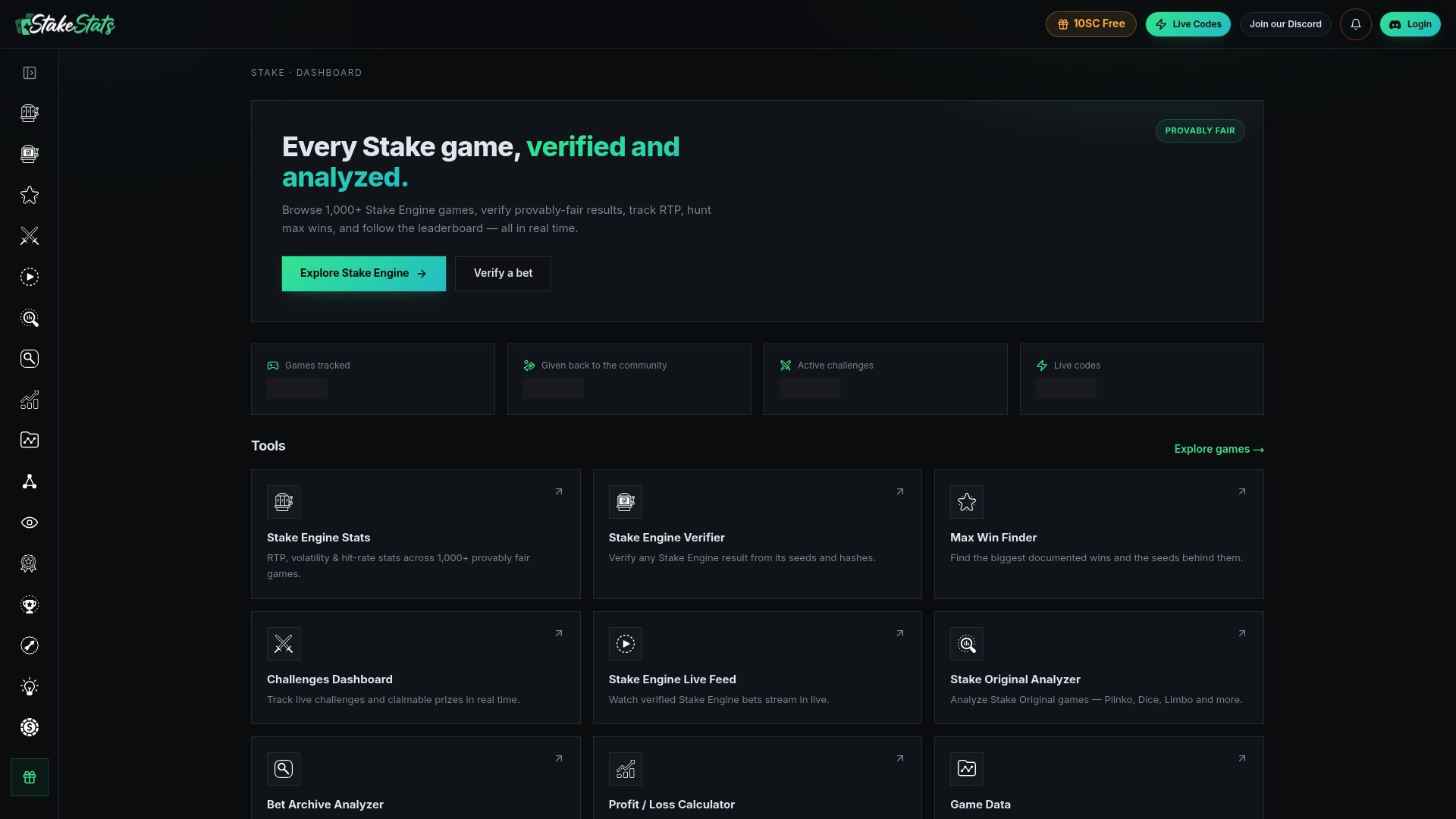
Stakestats provides transparency and utility for bettors using Stake.com and other provably fair platforms. The bankroll analyzer tool helps you track stake sizing across high-variance markets like micro-markets and live bets. The provably fair verification tool lets you confirm game outcomes are legitimate before you commit real money. For bettors who want to go deeper, the Stakestats platform also covers bonus analysis and bet archive tools that give you a clear picture of your wagering history. Data-driven decisions start with clean, verifiable data.
FAQ
What are the main types of competitive gaming wagers?
The main types are match winner (moneyline), map winner, handicap, totals, micro-markets, live bets, futures, and prediction market shares. Each type targets a different level of match granularity and carries different hold percentages and liquidity.
What is the difference between micro-markets and match-based bets?
Match-based bets cover series or map outcomes, while micro-markets target specific in-game events like first blood or pistol round winner. Micro-markets carry hold percentages of 6–8%, making them higher variance and harder to beat than headline markets.
How does live betting work in esports?
Live betting lets you place wagers while a match is in progress, with odds updating in real time after kills, rounds, and objectives. Stream latency is a key risk, since broadcast delays can mean you are acting on outdated information.
What is a prediction market in esports betting?
A prediction market is a share-based exchange where users buy and sell outcome shares priced between 0¢ and $1. Unlike fixed-odds sportsbooks, you can exit your position before the match ends by selling your shares at the current market price.
Which esports titles have the most betting markets?
Counter-Strike 2, League of Legends, Dota 2, and Valorant account for approximately 75% of global esports betting handle. CS2 in particular features deep market depth with moneyline, map winner, handicap, totals, and a wide range of prop markets.