
Types of In-Game Currency Gambling: 2026 Player Guide

In-game currency gambling is defined as any digital wagering system that uses specialized virtual currencies to replicate real-money gambling mechanics within a game or casino platform. The three dominant models are entertainment-only virtual coins, sweepstakes dual-currency systems, and blockchain tokens. Each carries distinct rules, legal exposure, and risk profiles that every gambler needs to understand before playing. Tennessee's 2026 statewide ban on sweepstakes casinos and the FATF Travel Rule's reach into crypto gambling show just how fast regulators are moving on these systems.
1. What are the main types of in-game currency gambling?
Virtual currency gambling runs on three core models. Understanding each one shapes every decision you make about where to play and what to expect.
Entertainment-only virtual coins (often called Gold Coins or social tokens) carry no cash value. You buy or earn them, use them to play, and cannot redeem them for real money. They exist purely for entertainment and face minimal regulatory scrutiny because no prize of real value changes hands.

Sweepstakes dual-currency models pair Gold Coins with a second currency, typically called Sweeps Coins. Gold Coins have no cash value; Sweeps Coins operate under promotional contest rules and can be redeemed for cash after meeting specific conditions. This structure is designed to sidestep gambling laws by framing play as a free promotional contest.
Blockchain tokens exist on public ledgers, trade on exchanges, and represent governance rights, utility functions, NFTs, or platform access. Unlike traditional in-game coins, blockchain tokens give players real ownership and the ability to trade outside the game. That tradeability creates genuine financial exposure and triggers AML and KYC compliance requirements.
| Currency type | Cash redeemable | Regulated | Player ownership |
|---|---|---|---|
| Virtual coins (Gold Coins) | No | Minimal | No |
| Sweeps Coins | Yes, with conditions | Moderate | Limited |
| Blockchain tokens | Yes, via exchange | High | Yes |
Pro Tip: Always check whether a platform's secondary currency is redeemable before depositing. The difference between a Gold Coin and a Sweeps Coin determines whether you can ever see real money from your play.
2. How do legal frameworks impact in-game currency gambling today?
Regulators define gambling by three elements: prize, consideration, and chance. Removing any one element typically removes the activity from gambling regulation. Sweepstakes platforms exploit this by offering free entry methods, eliminating the "consideration" element on paper.
That legal workaround is closing fast. Tennessee banned sweepstakes casinos in may 2026, targeting platforms that use virtual currencies to replicate casino games without a license. The legislation signals a broader state-level shift toward treating dual-currency gambling as unlicensed gambling regardless of the promotional framing.
Crypto gambling faces a separate regulatory layer. The FATF Travel Rule and EU MiCA regulations impose AML standards and licensing requirements on crypto casino tokens globally. These rules affect token issuance, player identity verification, and withdrawal processing. Certain U.S. states, including Kentucky, Vermont, Illinois, and New Hampshire, allow crypto-to-cash funding for sportsbooks but require wagers to be placed in fiat currency as of Q1 2026.
Key regulatory factors affecting each currency type:
- Virtual coins: Low regulatory risk because no real prize is offered; platforms can operate freely in most jurisdictions.
- Sweeps Coins: Subject to state-level sweepstakes laws; increasingly targeted as unlicensed gambling in states like Tennessee.
- Blockchain tokens: Subject to FATF Travel Rule, EU MiCA, and national crypto licensing laws; KYC and AML compliance required.
- Crypto sportsbook funding: Permitted in select U.S. states but wagers must convert to fiat before placement.
- Platform availability: Regulatory changes can shut down access overnight, leaving players unable to redeem balances.
3. What are the risks of gambling with different in-game currencies?
Every currency type carries a distinct risk profile. Knowing those risks before you play is the difference between a calculated bet and a costly surprise.
Blockchain token risks center on volatility and the absence of consumer protections. Lack of a unified legal framework in crypto gambling leaves players without chargeback rights or deposit insurance. Token values can collapse between a wager and a withdrawal, meaning you can win in token terms and still lose in dollar terms.
Traditional virtual coins carry what analysts call the "black hole effect." Traditional in-game currencies are stored in company databases with no external market value. If an account is banned or a server shuts down, those coins disappear permanently. Players have zero legal recourse in typical cases of currency loss.
Sweepstakes models create friction through redemption rules. Sweeps Coins require a 1x playthrough and a $50 minimum cash withdrawal. That structure encourages extended play before any cash-out, which increases exposure to losses.
Key risks across all currency types:
- Cryptocurrency price swings can erase winnings between play and withdrawal.
- Account bans or platform closures permanently destroy non-blockchain currency balances.
- Playthrough requirements on Sweeps Coins delay and limit access to winnings.
- Hacking vulnerabilities on blockchain platforms can drain token wallets without recourse.
- Digital formats reduce friction in gambling, which research links to higher problem gambling rates.
Pro Tip: Before playing on any platform, read the full terms for playthrough requirements, withdrawal minimums, and what happens to your balance if the platform closes. That five-minute check can save you real money.
4. How to use in-game currency strategically to maximize benefits
Smart play with virtual currencies starts with matching your strategy to the currency type. Each model rewards a different approach.
With entertainment-only coins, the goal is simple: extract maximum play value from free promotional bonuses without spending real money. Most platforms offer daily free coin distributions. Tracking your bonus accumulation across sessions helps you identify which promotions deliver the most play time per dollar spent.
Sweepstakes models reward patience. The 1x playthrough requirement on Sweeps Coins means you need to cycle your balance through games once before cashing out. Players who understand this mechanic can plan sessions around meeting that threshold efficiently rather than chasing losses trying to build a larger balance first.
Blockchain tokens offer the most complex opportunity. Their tradeability means a winning session can be converted to real money on an exchange. The risk is that token prices move independently of your gameplay. Monitoring your profit and loss in both token and fiat terms gives you a clearer picture of actual gains.
Practical tips for in-game currency gambling success:
- Claim all free promotional coins daily before spending real money.
- Read playthrough and redemption terms before depositing Sweeps Coins.
- Track blockchain token values in fiat currency, not just token units.
- Set a session loss limit in dollar terms before converting to any virtual currency.
- Verify platform transparency and provably fair certification before trusting any RNG outcome.
- Use bankroll management tools to separate entertainment spending from investment-style token plays.
- Check your jurisdiction's current laws before engaging with sweepstakes or crypto gambling platforms.
5. How currency mechanics and game economics actually work
Every virtual gambling economy runs on two forces: taps and sinks. Taps are the sources that add currency to the system, such as daily bonuses, purchases, and promotional distributions. Sinks are the drains that remove currency, including wagers, entry fees, and expired bonuses. A well-designed system keeps these in balance so the currency retains perceived value.
Wagering mechanics work the same way across currency types. A player places a bet, an RNG engine determines the outcome, and the currency balance adjusts accordingly. The difference lies in what happens after a win. With virtual coins, winnings stay locked in the platform. With Sweeps Coins, winnings accumulate toward a redeemable balance. With blockchain tokens, winnings can be withdrawn to an external wallet and traded.
Settlement speed varies significantly. Blockchain token payouts can settle in minutes on-chain. Sweepstakes cash redemptions typically take several business days for identity verification and processing. Virtual coin "winnings" never settle at all because they have no external value.
Sustainable game economies require that currency inflows and outflows stay in balance. When platforms flood the system with promotional coins to drive sign-ups without matching sinks, the perceived value of winnings collapses and player trust follows. The most durable gambling platforms treat their virtual economy with the same discipline as a central bank treats monetary supply.
| Mechanic | Virtual coins | Sweeps Coins | Blockchain tokens |
|---|---|---|---|
| Currency source | Purchase or free bonus | Free entry or purchase | Purchase or earn in-game |
| Wagering process | RNG decrement | RNG decrement | On-chain RNG decrement |
| Winnings credited | Platform balance only | Redeemable balance | External wallet |
| Settlement speed | Instant (no cash value) | 3–7 business days | Minutes (on-chain) |
Key takeaways
The most effective approach to in-game currency gambling is understanding which currency type you are using, because the rules, risks, and real-money potential differ completely across virtual coins, Sweeps Coins, and blockchain tokens.
| Point | Details |
|---|---|
| Three distinct currency types | Virtual coins, Sweeps Coins, and blockchain tokens each carry different rules and real-money potential. |
| Regulatory risk is rising | Tennessee's 2026 ban shows sweepstakes models face growing legal exposure across U.S. states. |
| Redemption friction is intentional | Sweeps Coins require a 1x playthrough and $50 minimum withdrawal, designed to extend play sessions. |
| Blockchain tokens carry volatility risk | Token values move independently of gameplay, meaning wins can lose dollar value before withdrawal. |
| Transparency is non-negotiable | Verifying provably fair certification and platform terms protects you before any currency is spent. |
The currency type you choose is the bet itself
After spending years analyzing how online gambling platforms structure their economies, the single most overlooked decision gamblers make is choosing a platform without understanding which currency model it runs on. Most players focus on game selection or bonus size. The currency type is the more important variable.
Sweepstakes models are not free gambling. They are promotional contests with real friction built in. The 1x playthrough and $50 withdrawal minimum are not incidental. They are the mechanism. Players who treat Sweeps Coins like instant cash are consistently disappointed.
Blockchain tokens are the most honest model in one sense: the value is visible, tradeable, and yours. But that transparency cuts both ways. A token worth $1.00 when you win can be worth $0.60 when you withdraw. I recommend tracking token positions in fiat terms from the moment you acquire them, not after you decide to cash out.
The regulatory picture in 2026 is moving fast. Tennessee's ban will not be the last. Players relying on sweepstakes platforms in states with active legislative sessions should monitor local laws closely. Platform shutdowns can happen with little warning, and non-blockchain balances disappear with the platform.
My honest recommendation: use provably fair verification on every platform you play, regardless of currency type. Transparency in RNG outcomes is the baseline standard. Any platform that cannot demonstrate it does not deserve your time or money.
— Ian
Stakestats tools for smarter currency gambling
Gambling with virtual currencies gets complicated fast, especially when playthrough requirements, token volatility, and platform transparency all affect your real returns.
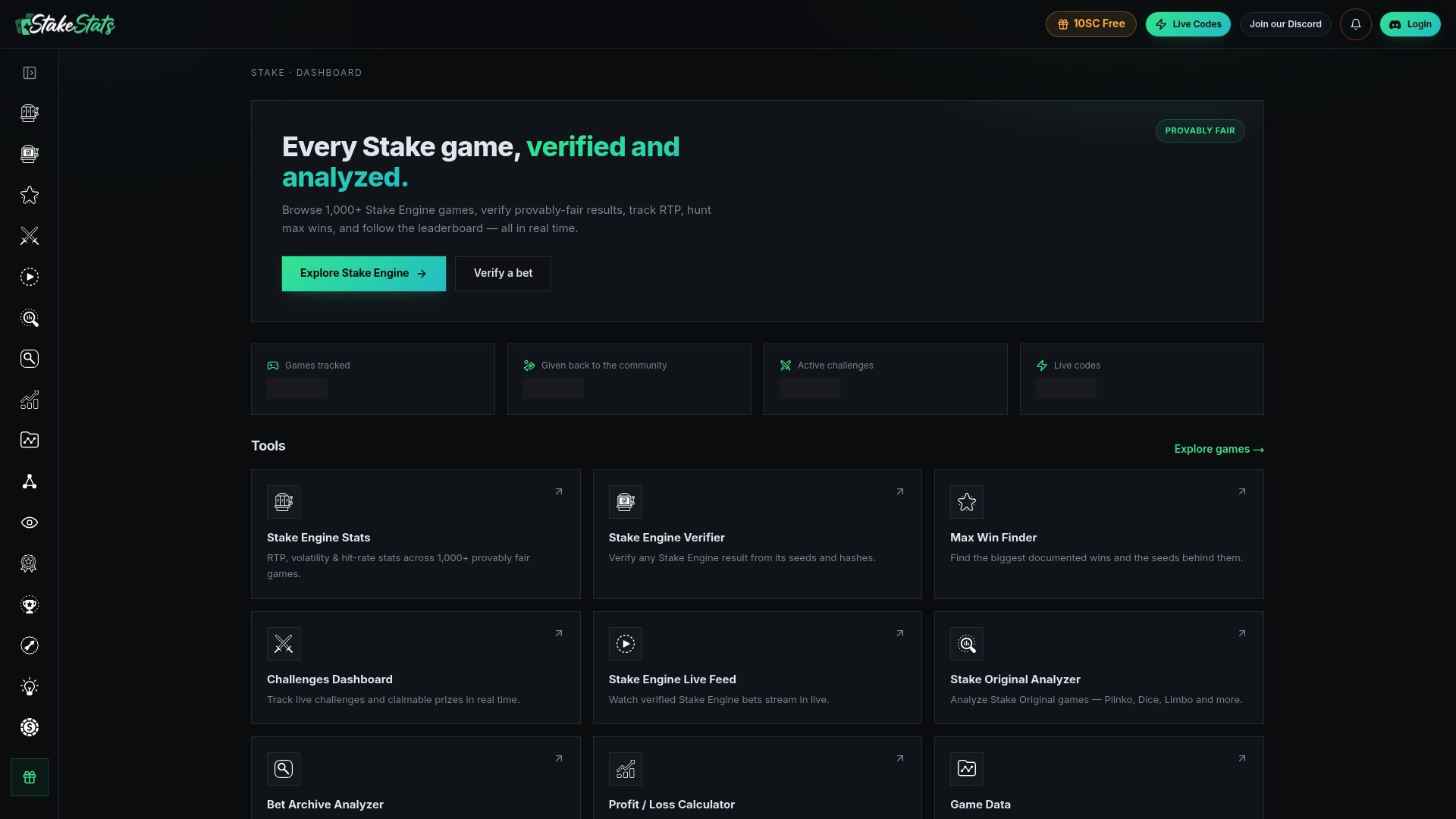
Stakestats provides a set of tools built specifically for players on provably fair platforms. The bankroll analyzer tracks your session performance across currency types so you always know your actual position in dollar terms. The provably fair verification tool lets you audit RNG outcomes directly, removing any doubt about whether a platform's results are genuine. The bonuses tracker helps you capture every promotional coin distribution without leaving value on the table. These tools exist because informed players make better decisions, and better decisions protect your bankroll over the long run.
FAQ
What is in-game currency gambling?
In-game currency gambling uses specialized virtual currencies to replicate real-money gambling mechanics within digital platforms. The three main models are entertainment-only virtual coins, sweepstakes dual currencies, and blockchain tokens.
Are sweepstakes casinos legal in the United States?
Sweepstakes casinos operate legally in most U.S. states by framing play as a free promotional contest, but Tennessee banned them outright in may 2026. Legal status varies by state and is changing rapidly.
Can you lose real money gambling with virtual currencies?
Yes. Sweepstakes models require real purchases to acquire Sweeps Coins in most cases, and blockchain token values fluctuate with market prices. Entertainment-only coins carry no direct financial loss but represent real spending on purchases.
What is the difference between Gold Coins and Sweeps Coins?
Gold Coins are entertainment-only with no cash value. Sweeps Coins are redeemable for cash after completing a 1x playthrough and meeting a $50 minimum withdrawal threshold.
How do blockchain tokens differ from standard in-game currencies?
Blockchain tokens exist on public ledgers, trade on external exchanges, and give players true ownership. Standard in-game currencies are stored in company databases and are permanently lost if an account is closed or a platform shuts down.