
What Is a Ranked Wager? Your Complete Betting Guide

A ranked wager is a competitive betting format where players earn positions on a leaderboard based on their wager volume or prediction accuracy, with prizes distributed across multiple finishing tiers rather than paid to a single winner. Unlike traditional fixed-odds betting, where your return depends only on your own bet and the house's margin, a ranked wager puts you in direct competition with every other participant in the event. The industry term for this format is a "wager race" or "leaderboard tournament," and both phrases describe the same core mechanic. Understanding ranked wagering explained clearly is the first step to participating without leaving money on the table.
What is a ranked wager and how does the ranking system work?
A ranked wager event ranks players by their total wager volume during a fixed promotional window, then awards prizes to multiple tiers of finishers, from the top 50 up to the top 500 depending on the operator's scale. That tiered structure is what separates this format from a winner-take-all contest. Even a mid-table finish can return real value.
The leaderboard updates in near-real-time throughout the event. You can watch your position shift as other players place bets. However, final results carry a settlement delay of up to 24 hours after the event closes, because operators must verify transaction logs before confirming any ranking as official. Your position on the live board is provisional until that audit completes.

Qualification rules matter more than most players realize. Minimum wager thresholds of $10–$50 are common, and your bets must be placed on designated eligible games during the promotional period. A single wager on a non-qualifying game does not count toward your total. Events typically run from 24 hours up to a full week.
One detail that catches players off guard: platforms use hidden algorithmic weights that often prioritize certain featured games for wager points, not just raw total volume. These weighting factors appear in the fine print, not the marketing banner. Reading the full terms before you start is not optional.
Key mechanics to know before entering any ranked wager event:
- Wager volume tracking: Every qualifying bet adds to your running total in real-time.
- Tiered prize pools: Prizes are pre-set and distributed across multiple ranks, not drawn from a shared pool.
- Eligible games: Only bets on designated titles count toward your leaderboard score.
- Qualification threshold: You must hit the minimum wager amount to be eligible for any prize.
- Settlement window: Final rankings are confirmed after a post-event audit, not at the moment the clock expires.
Pro Tip: Read the eligible games list before you start wagering. Betting on a non-qualifying title for an hour can cost you a top-10 position without you realizing it until the event ends.
How do ranked wagers compare to traditional betting systems?
The clearest way to understand ranked wagering is to set it against parimutuel betting, the oldest pool-based wagering system in existence. Parimutuel betting pools all bets together and pays winners from the total pool minus a house commission, typically 10–20%. Every bettor competes against every other bettor, and the final odds are not known until betting closes.
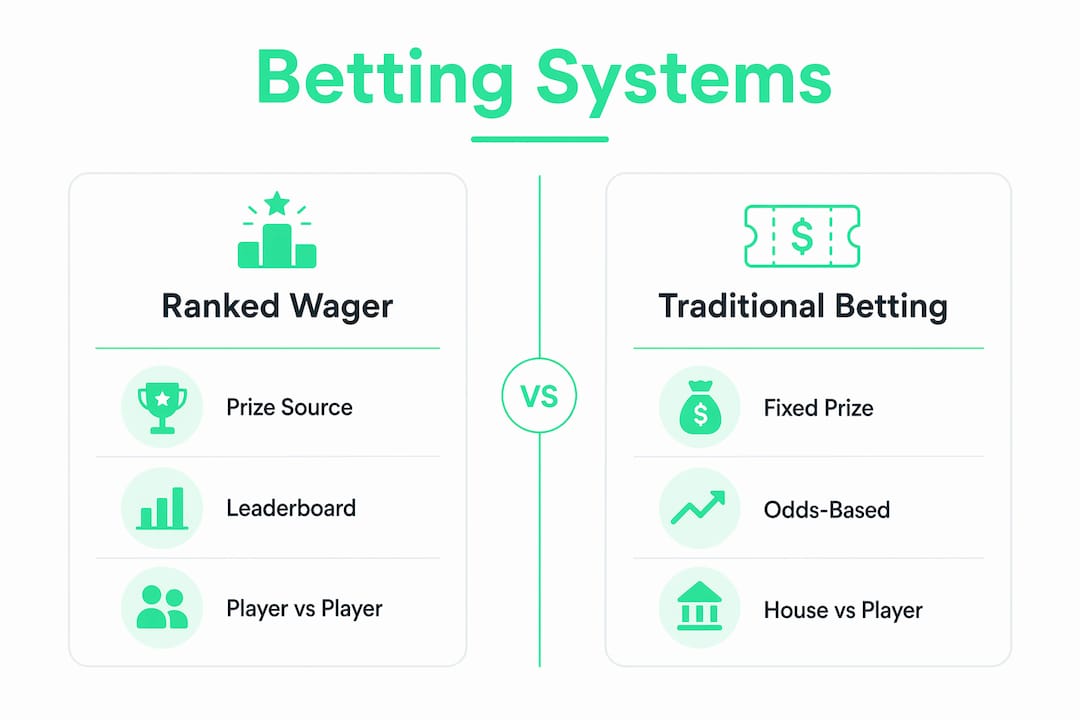
Ranked wagers share that player-versus-player dynamic but differ in one critical way. The prize pool in a ranked wager is pre-set by the operator, not built from participant stakes. Your return does not shrink because more players joined. What changes is how hard it is to reach a prize-paying position.
| Feature | Ranked wager | Parimutuel betting | Fixed-odds betting |
|---|---|---|---|
| Prize source | Operator-funded, pre-set | Pooled from all bets | Operator margin |
| Odds known upfront | No (position-dependent) | No (pool-dependent) | Yes |
| Competitors | Other leaderboard players | Other bettors in pool | The house |
| Skill factor | Bankroll management, game selection | Handicapping, form analysis | Outcome prediction |
| Payout trigger | Finishing rank | Picking the winner | Correct outcome |
Returns in ranked wagers depend on all participants' performance, not a fixed multiplier agreed at the time of your bet. That makes volume management and game selection the core skills, not handicapping. In traditional sports betting, knowing the form of a horse or team is everything. In a ranked wager, knowing how the scoring algorithm weights your bets matters just as much.
What are the main types of ranked wagers?
Ranked wager formats vary by what the platform measures and rewards. Knowing the format before you enter changes your entire approach.
Wager volume races. The most common format. Your total qualifying wager amount across the event window determines your rank. Consistency beats single large bets in most cases. A player who places 500 small bets often outranks one who places 10 large ones, depending on the algorithm.
Highest multiplier competitions. Your rank is determined by the single biggest win multiplier you hit during the event, not your total volume. One lucky spin on a high-volatility slot can put you at the top of the board. This format rewards risk-taking over consistency.
Prediction ranking events. A less common but growing format, particularly in esports betting. Systems allow bettors to rank predicted finishing orders of competitors in a multi-participant event, then score each bettor based on how closely their predicted order matches the actual result. Prizes go to the most accurate predictors.
Hybrid tournaments. Some operators combine volume and multiplier scoring, weighting both into a composite score. These events reward players who can sustain volume while also hitting strong individual wins.
Game-specific leaderboards. Certain events restrict participation to a single title or a small group of featured games. These formats often carry higher per-point weighting for bets on that game, making them more efficient for players who already favor that title.
The format you choose should match your bankroll and play style. A volume race suits a player with a large bankroll and a disciplined approach. A multiplier competition suits a player willing to take concentrated risk on a single session.
Ranked wager strategies that actually work
Handicapping skills drive success in traditional sports betting, but ranked wagers in online slots require a different toolkit entirely. Bankroll management and an understanding of promotional mechanics replace form analysis as the primary skills.
The most important decision you make before an event starts is your total budget for the promotional period. Operators design ranked wager events as loyalty promotions, and chasing a leaderboard position aggressively often costs more than the prize is worth. Set a fixed budget before the event opens and treat it as a marketing expense, not an investment.
Game selection is the second lever. Low-volatility strategies of small, consistent wagers can outrank high-volatility aggressive betting depending on the platform's point-calculation algorithm. A player grinding a low-variance slot at $1 per spin for six hours may accumulate more qualifying volume than a player betting $50 per spin for 30 minutes, even though the second player spent more money.
Timing matters in longer events. Leaderboard positions shift most dramatically in the final hours as players make late pushes. If you enter a week-long event on day one and hit a strong position, check the board in the final 12 hours before deciding whether to defend your rank with additional volume.
Practical guidelines for ranked wager participation:
- Set a hard budget before the event starts. Never add funds mid-event to chase a position.
- Confirm eligible games before your first bet. One wrong game can cost you hours of qualifying volume.
- Check the scoring algorithm in the terms. Some platforms weight featured games at 2x or 3x the standard rate.
- Use the bankroll analyzer to model your session before committing.
- Monitor the leaderboard in the final hours, not throughout the entire event, to avoid decision fatigue.
- Avoid the top-position trap. Finishing 10th with a net-positive session beats finishing 3rd at a net loss.
Pro Tip: In a volume-based race, bet size consistency matters more than bet size. Fifty bets of $2 each often scores higher than five bets of $20 each on platforms that weight frequency alongside volume.
Key Takeaways
A ranked wager is a competitive, leaderboard-based betting format where your prize depends on your finishing position among all participants, not on a fixed payout from the house.
| Point | Details |
|---|---|
| Core definition | A ranked wager ranks players by wager volume or prediction accuracy, with prizes paid across multiple tiers. |
| Settlement timing | Final leaderboard positions are confirmed up to 24 hours after an event closes, pending an audit. |
| Algorithm awareness | Platforms weight certain games more heavily, so reading the fine print changes your game selection. |
| Budget discipline | Set a fixed event budget before you start; chasing positions aggressively produces net-negative results. |
| Format matching | Choose your event type based on your bankroll and risk tolerance, volume race or multiplier competition. |
Why ranked wagers changed how I think about online betting
Ranked wagers are the most misunderstood promotion in online gaming. Most players treat them like a bonus with extra steps. They are not. They are a structured competition with real strategy requirements, and the players who treat them casually are effectively subsidizing the prizes of the players who do not.
What I find genuinely interesting about this format is how it shifts your mental model. In standard betting, you are playing against the house's edge. In a ranked wager, you are playing against every other participant's behavior. That is a fundamentally different problem. The house edge is fixed and known. Your competitors' behavior is dynamic and unpredictable.
The transparency question matters here too. Provably fair platforms give you a meaningful advantage because you can verify the fairness of each underlying game result. That does not change your leaderboard position, but it does confirm that the game outcomes feeding your wager volume are not manipulated. That baseline trust is worth more than most players give it credit for.
My honest take: treat ranked wagers as a structured promotion with a defined cost, not as a path to outsized returns. The players who win consistently are the ones who enter with a plan, stick to eligible games, and walk away when their budget is spent. The leaderboard is a tool for engagement. Use it on your terms.
— Ian
Stakestats tools for ranked wager players
Ranked wager events reward preparation, and Stakestats builds tools specifically for players who want data before they commit a dollar.
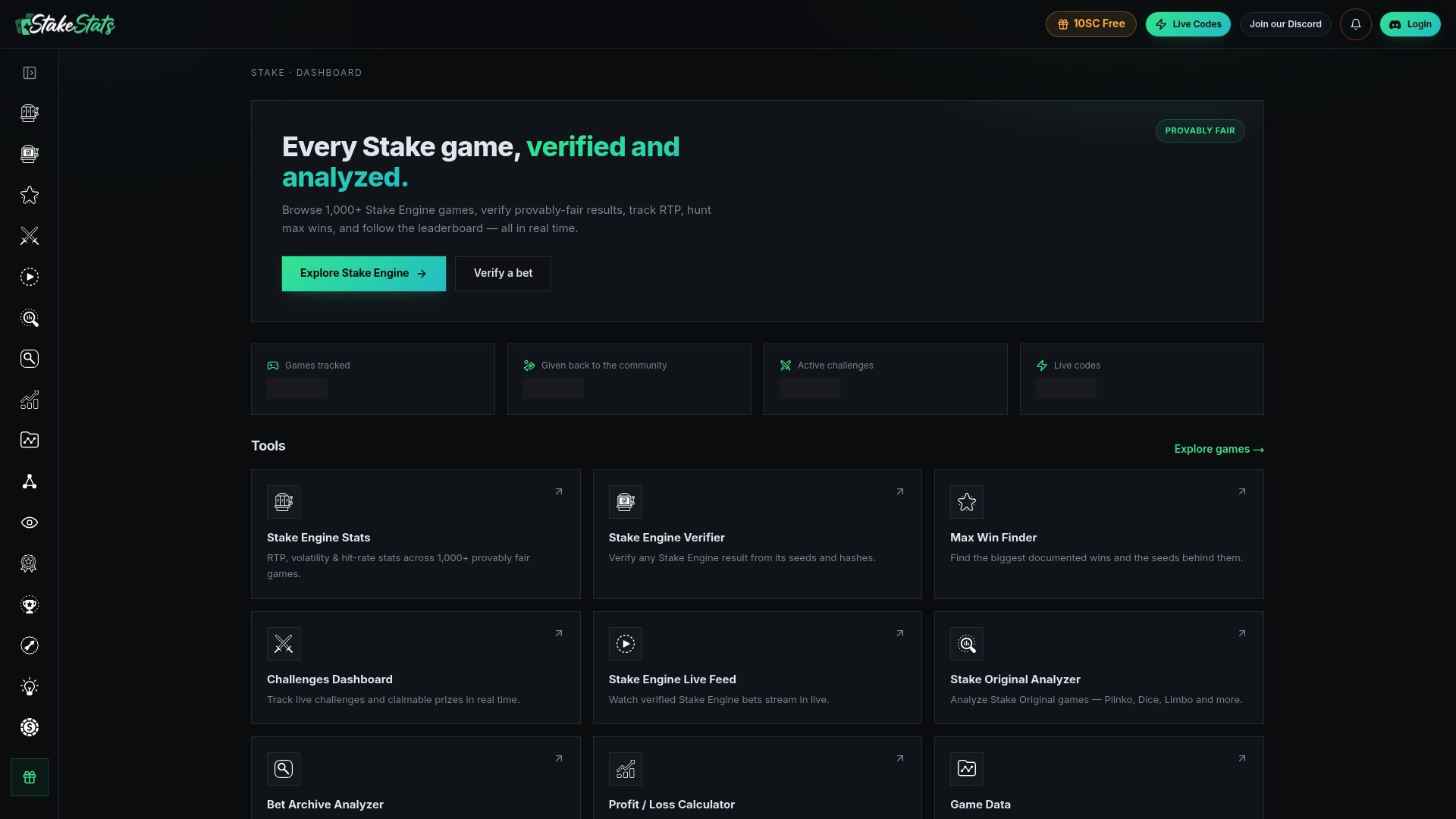
The leaderboard tracker shows you how prize distributions are structured across tiers, so you can calculate whether a target finishing position is worth the volume required to reach it. The bonuses and promotions section surfaces active ranked wager events on Stake.com, including eligible games and minimum qualification thresholds. Every tool on Stakestats is built around provably fair verification, which means you can confirm game integrity alongside your promotional strategy. Preparation is the only edge that compounds.
FAQ
What is a ranked wager in simple terms?
A ranked wager is a betting competition where players are placed on a leaderboard based on their wager volume or prediction accuracy, with prizes paid to multiple top finishers rather than a single winner.
How does a ranked wager differ from a standard bet?
A standard bet pays a fixed return based on your chosen outcome. A ranked wager pays based on your finishing position among all participants, making your return dependent on other players' activity.
Do ranked wager leaderboards update in real-time?
Leaderboards update in near-real-time during the event, but final rankings are not confirmed until up to 24 hours after the event closes, when operators complete their transaction audit.
What is the best strategy for a wager volume race?
Consistent, low-volatility betting on eligible games typically outperforms sporadic high-stakes bets, because many platforms weight bet frequency alongside total volume in their scoring algorithms.
Can I lose money participating in a ranked wager event?
Yes. Operators design ranked wager events as loyalty promotions, and aggressively chasing a leaderboard position often costs more than the prize value. Setting a fixed budget before the event starts is the most effective way to protect your bankroll.