
What Is a Seed in Gambling? Your 2026 Guide

A seed in gambling is a cryptographic input that determines game outcomes in provably fair systems. Online casinos that use this standard combine three distinct values — a server seed, a client seed, and a nonce — to generate every result. The system exists specifically so players can verify that no outcome was manipulated after the fact. Understanding the gambling seed meaning is the difference between trusting a platform blindly and knowing, mathematically, that you were treated fairly.
What is a seed in gambling and how does it work?
A seed in provably fair gambling is cryptographic data used as input for unbiased game outcomes. The casino and the player each contribute a piece of that input, and a counter tracks every individual bet. No single party controls the full picture, which is what makes the system trustworthy.
The three components work together in a specific way:
- Server seed. The casino generates this before any betting begins. It stays secret during play. The casino publishes a SHA-256 hash of the server seed upfront, which acts as a locked commitment. Changing the seed later would change the hash, and the player would immediately notice.
- Client seed. The player generates or customizes this value. You can change your client seed at any time through the casino's fairness panel. Changing it does not predict wins, but it does prevent the casino from pre-calculating results that target your specific inputs.
- Nonce. This is a simple counter that starts at zero and increases by one with every bet. Each round gets a unique nonce, so even if you use the same server and client seeds, every bet produces a different outcome.
The casino feeds all three values into an HMAC-SHA256 function to produce the raw output. That output then maps to a specific game result, such as a dice roll, a card draw, or a crash multiplier.
Pro Tip: Change your client seed before a new session to add your own randomness contribution. It does not change your odds, but it does confirm the casino cannot have pre-set results for your specific seed combination.

The two-seed system eliminates blind trust by requiring both the casino and the player to contribute inputs. Neither side can predict or manipulate outcomes alone. That cryptographic deadlock is the core promise of provably fair gaming.
How does the seed system guarantee fairness?
The fairness guarantee comes from a process called cryptographic commitment. Before you place a single bet, the casino publishes the SHA-256 hash of its server seed. Think of it as a sealed envelope. The casino cannot change what is inside without you noticing, because any change to the server seed produces a completely different hash.
The verification process follows these steps:
- The casino publishes the server seed hash before play begins.
- You place bets using your client seed and the incrementing nonce.
- When you trigger a seed rotation, the casino reveals the raw server seed.
- You hash the revealed server seed yourself and compare it to the published hash. If they match, the casino never changed it.
- You then run the revealed server seed, your client seed, and the exact nonce for each bet through a verification tool to confirm every result.
Seed rotation is the moment a new server seed cycle begins. Seed rotation allows players to audit bets by revealing the previous server seed, which is the only point at which full verification becomes possible. You cannot verify a bet while the server seed is still active and secret. Rotation is what unlocks the audit.
The hash function used is typically SHA-256 or HMAC-SHA256. The server seed hash is committed as a 64-character hexadecimal string before play. That specific format makes it easy to verify independently using any standard SHA-256 calculator.
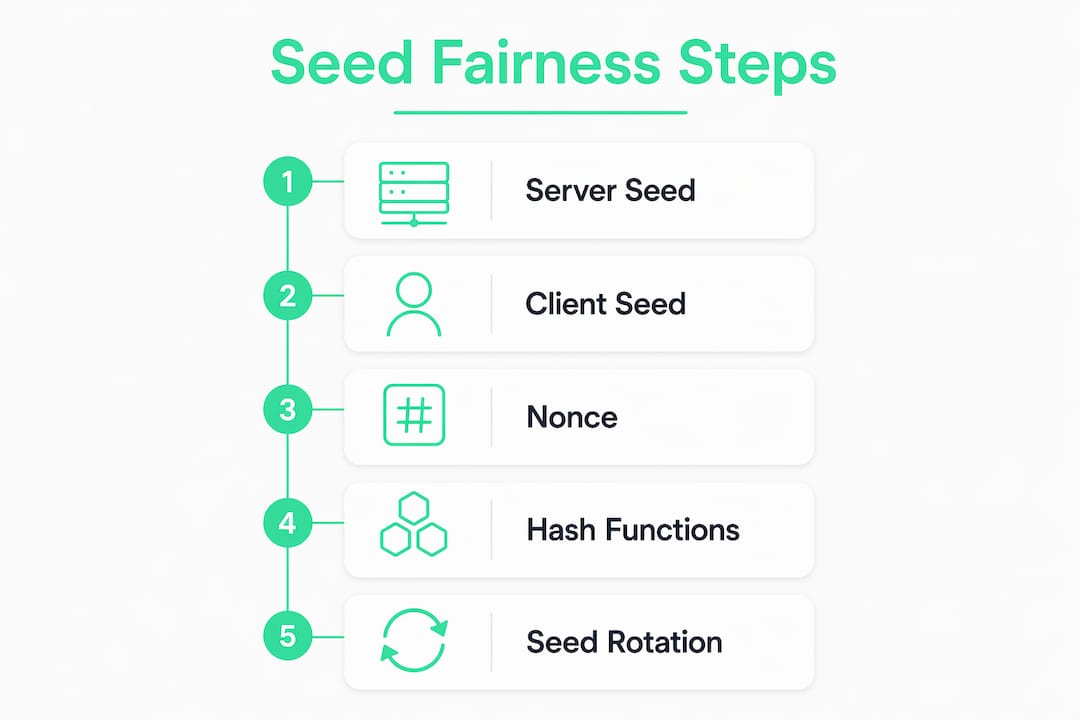
Robust implementations use hash chains for server seeds to prevent tampering and ensure sequence immutability. A casino that does not provide full seed history and verification logs cannot make a credible provably fair claim. Seed history is not optional. It is the audit trail.
Pro Tip: After triggering a seed rotation, save the revealed server seed, your client seed, and the nonce range from your bet history before closing the session. Verification tools need all three values.
Common misconceptions about seeds in gambling
The biggest misconception is that changing your client seed gives you control over outcomes. Changing the client seed does not give the player control or the ability to predict wins. It changes your randomness contribution, but the house edge remains mathematically consistent regardless of what client seed you use. The seed concept in gambling is about verification, not advantage.
Other common misunderstandings include:
- "A new seed means better luck." Seeds do not carry luck. Each combination of server seed, client seed, and nonce produces a fixed mathematical output. There is no hot or cold seed.
- "I can use my current nonce to verify old bets." The nonce must match the exact bet you are verifying. Using the incorrect nonce during verification causes the calculation to fail. Always pull the nonce from your bet history, not from your current session.
- "Provably fair means the casino has no edge." The seed system proves outcomes were not manipulated. It does not remove the house edge. The game rules set the edge, and seeds have no effect on that math.
- "If the casino uses seeds, I can trust everything." Transparency is only meaningful when players actively verify outcomes. Having provably fair technology available is not enough without player engagement. The system works when you use it.
Misunderstandings about client seed control lead to misplaced expectations. Education is key to understanding fairness versus advantage. Knowing what seeds do and do not control is what separates an informed player from one who blames a bad session on the wrong cause.
How to audit your bets using seeds and nonce
Auditing your own bets is straightforward once you know where to find the right values. Every provably fair casino stores the data you need in a fairness or bet history panel.
- Locate your bet history. Find the specific bet you want to verify. Record the bet ID, the nonce for that round, and the game result.
- Find your client seed. Your active client seed at the time of the bet is stored in the fairness panel. If you changed seeds after the bet, the old client seed is still logged.
- Trigger a seed rotation. This reveals the raw server seed for the completed cycle. You cannot verify bets from an active seed cycle.
- Run the verification. Input the revealed server seed, your client seed, and the exact nonce into a verification tool. The Stakestats provably fair explanation page walks through this process for Stake.com games specifically.
- Confirm the result. The tool produces a game outcome. Compare it to the recorded result. If they match, the bet was fair.
The table below shows what each value looks like and where to find it.
| Value | What it looks like | Where to find it |
|---|---|---|
| Server seed | 64-character hex string | Revealed after seed rotation |
| Client seed | Custom string you set | Fairness panel, bet history |
| Nonce | Integer (e.g., 1, 47, 203) | Bet history for each round |
| Server seed hash | 64-character hex string | Published before play begins |
After rounds complete, players can independently verify outcomes by hashing the revealed server seed and combining it with their client seed and nonce. The math confirms no tampering occurred after the bet was placed. For games like blackjack, the HMAC-SHA256 function runs multiple chained calls to generate each card in the hand, so the exact mapping of outputs to results varies by game type.
The Stake Originals Analyzer on Stakestats handles this process automatically for Stake.com original games, pulling the relevant seed data and running the verification without manual calculation.
Key Takeaways
A seed in gambling is a cryptographic input that, combined with a client seed and nonce, generates verifiable and tamper-proof game outcomes in provably fair systems.
| Point | Details |
|---|---|
| Seeds define outcomes | Server seed, client seed, and nonce together produce every game result. |
| Commitment prevents fraud | The casino publishes a SHA-256 hash before play, locking the server seed in place. |
| Rotation enables audits | Seed rotation reveals the server seed, making full bet verification possible. |
| Client seeds do not affect odds | Changing your client seed adds randomness but does not alter the house edge. |
| Nonce accuracy is critical | Always use the exact nonce from bet history, not the current session nonce, when verifying. |
Seeds matter more than most players realize
Most players treat provably fair as a checkbox. They see the label, assume it means the casino is honest, and never open the fairness panel once. That is a missed opportunity, and honestly, it is the reason some platforms get away with weak implementations.
What I have noticed is that the players who actually verify bets are rarely the ones who lose faith in a platform. They either confirm the game was fair and move on, or they catch something inconsistent and leave before losing more. Both outcomes are better than playing blind. The seed system hands you a tool. Not using it is like having a receipt and never checking your change.
The part that surprises most people is how simple verification actually is once you do it once. You do not need a cryptography degree. You need a nonce, two seeds, and a calculator. Stakestats makes that process even faster for Stake.com players by handling the technical steps automatically.
My honest recommendation: rotate your seed at the end of every session and spot-check three or four bets. You will build a real sense of whether a platform's fairness claims hold up. That knowledge is worth more than any bonus.
— Ian
Stakestats tools for provably fair verification
Stakestats builds transparency tools for players on Stake.com and other provably fair platforms. If manually pulling nonces and hashing server seeds sounds tedious, the bankroll analyzer and verification suite handle the heavy lifting automatically.
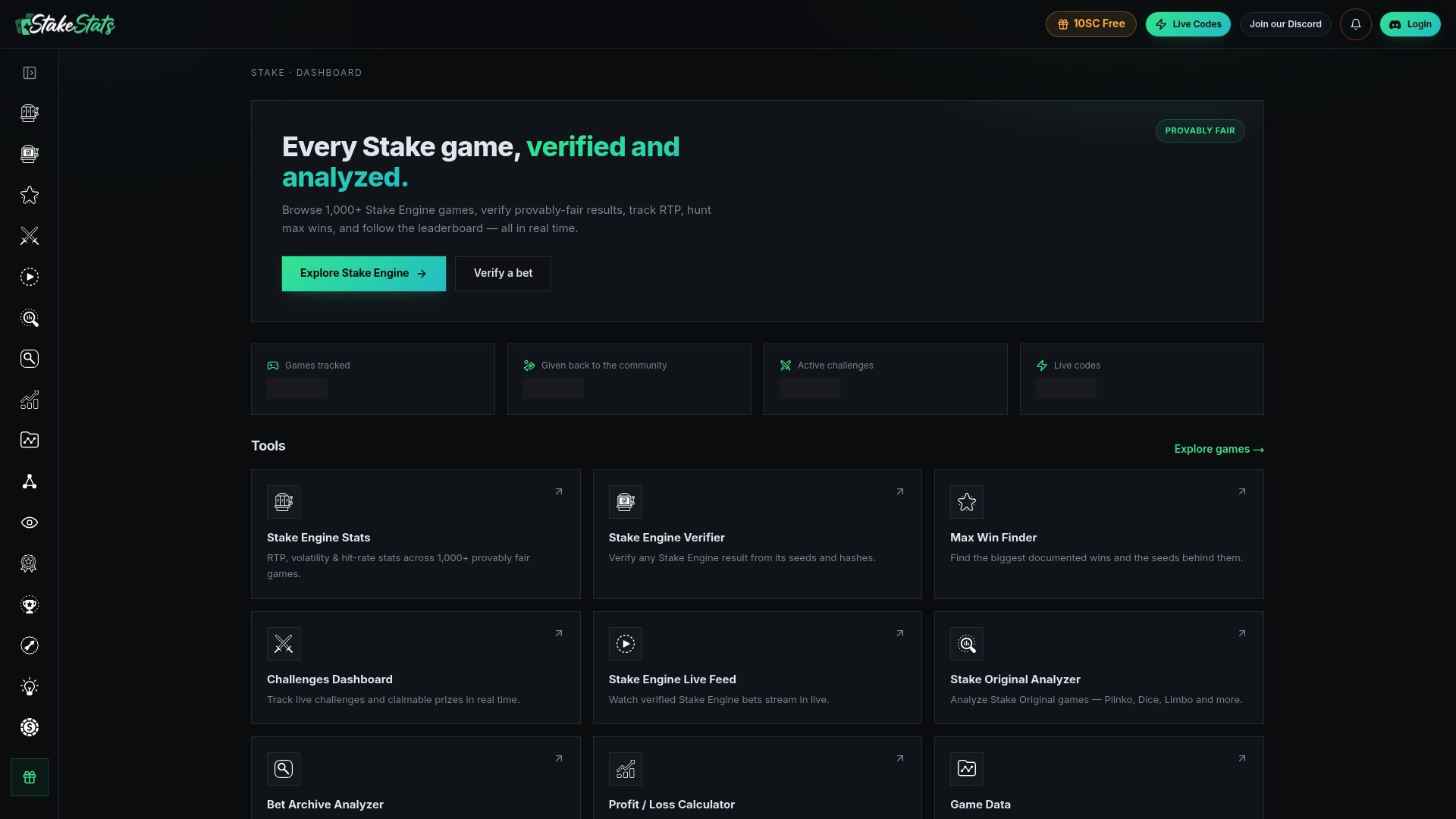
The provably fair verification tools on Stakestats let you audit bet history, confirm seed integrity, and track fairness across sessions without running a single manual calculation. For players who want full confidence in their results, these tools turn a technical process into a two-minute check. Visit Stakestats to start auditing your bets today.
FAQ
What does seed mean in betting?
A seed in betting is a cryptographic value used to generate game outcomes in provably fair systems. It combines with a client seed and nonce to produce a verifiable, tamper-proof result.
What is seed rotation in gambling?
Seed rotation is the process of ending one server seed cycle and starting a new one. It reveals the previous server seed so players can verify all bets from that cycle.
Can changing my client seed improve my chances of winning?
No. Changing your client seed affects your randomness contribution but does not alter the house edge or predict wins. The math behind the game rules sets the odds, not the seed values.
What is a nonce in provably fair gambling?
A nonce is a counter that increments by one with every bet, giving each round a unique identifier. Using the wrong nonce when verifying a bet will produce an incorrect result.
How do I verify a bet using seeds?
Trigger a seed rotation to reveal the server seed, then input the revealed server seed, your client seed, and the exact nonce for that bet into a verification tool. If the output matches the recorded result, the bet was fair.